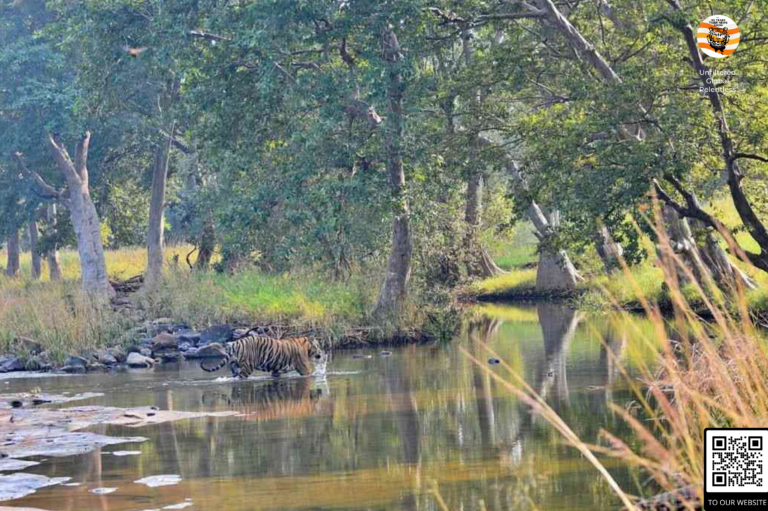
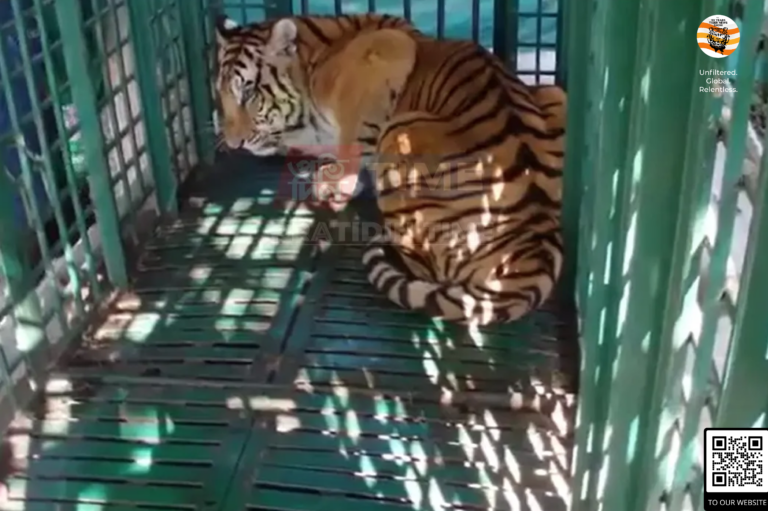
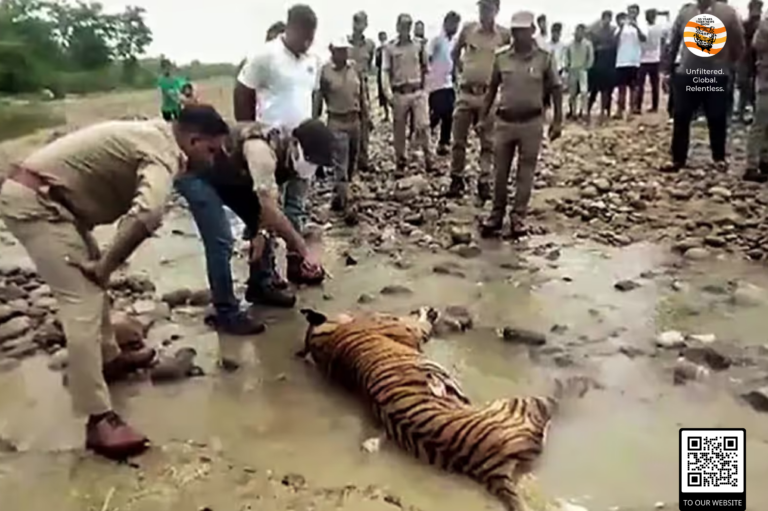
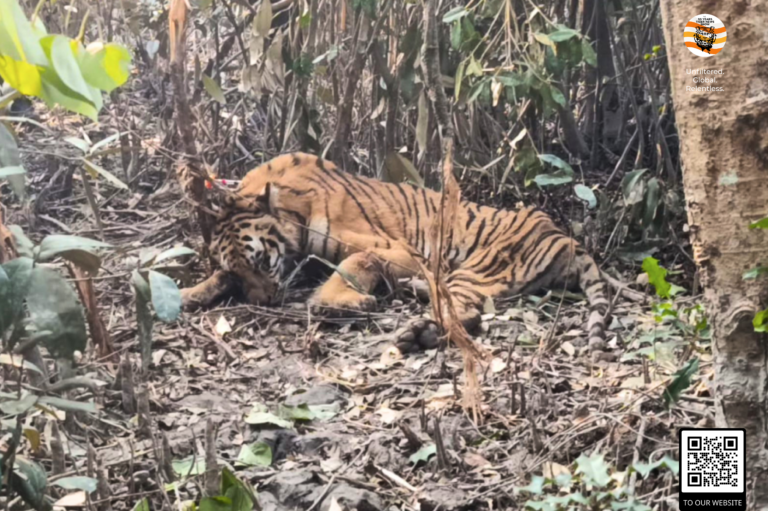
Paheli, a four-year-old tigress that entered Chhattisgarh’s Udanti-Sitanadi Tiger Reserve in January, has stayed through the scorching summer and brought new hope to a reserve where the resident tiger population had fallen to zero, as reported by The Indian Express. The article says officials view her decision to remain during the harshest season, when water and prey are scarce, as a sign that the habitat may again be capable of sustaining a breeding tiger population. Before her arrival, Udanti-Sitanadi had become largely a transit landscape for dispersing big cats.
The report states that Udanti Wildlife Sanctuary had 18 tigers in 1998, three by 2006, and no resident tiger by 2023 after a brief rise following its 2009 notification as a tiger reserve. Paheli does not match any tiger officially recorded by the Wildlife Institute of India, which is why officials named her Paheli, meaning riddle. Measures now include regular foot patrolling, camera traps, thermal drones, planned radio-collaring, grassland development across more than 500 hectares, new water bodies, removal of nearly 956 hectares of encroachment, anti-poaching operations, and preparation for future tiger translocations.
Paheli Is The Question The Reserve Must Answer
The name matters because she is the riddle. Will she stay, or will she go? We keep reading about wandering tigers, runaway tigresses, dispersing cats, animals crossing state borders, and reserves waiting for one female to change their future. The hope is always the same: stay. Stay long enough to claim territory. Stay long enough to breed. Stay long enough to prove the forest is not finished.
But hope cannot be confused with recovery. One tigress choosing to remain through summer is powerful, but it is also a warning. A reserve that once had 18 tigers should not need a single traveller to restore belief. If the forest lost its tigers before, the reasons must be confronted without romance.
Revival Needs More Than A Visitor
Udanti-Sitanadi’s decline was not only about tigers. The article describes collapsed populations of wild buffalo, panthers, gaur, sambar, nilgai, spotted deer, and wild boar. Today, only one wild buffalo survives in the reserve. That matters because tiger recovery depends on prey, water, cover, enforcement, and space. A tigress cannot rebuild an ecosystem alone.
The reported habitat work is encouraging: grasslands, water bodies, encroachment removal, patrols, drones, and anti-poaching action. These are the basics that should have been strong before the collapse, not emergency optimism after it. Paheli may be the spark, but officials must provide the fuel: prey recovery, protection, conflict planning, and political patience.
Staying Requires Safety, Not Sentiment
The reserve’s future will not be decided by celebration. It will be decided by whether Paheli can move, hunt, rest, and avoid danger. If she crosses into Odisha or other districts of Chhattisgarh, monitoring must follow her before risk does. Radio-collaring may help, but technology is only useful when backed by response teams, trained staff, and rapid decisions.
More than 100 villages lie within the reserve’s boundaries. That is not a detail to soften. It is the daily reality of conservation. If livestock losses, fear, or delayed compensation are ignored, tolerance will break. If poaching networks return, the forest will bleed again. If prey remains too thin, tigers will be forced toward easier targets.
Let The Riddle Become A Resident
The comparison with Achanakmar’s tigress Jhumri gives cautious hope. A single female can matter when a landscape is ready and protection holds. But turning Paheli into a symbol before the reserve is secure would be another human mistake. Tigers do not revive reserves because officials need a success story. They stay when the land gives them reason.
That is the lesson for Udanti-Sitanadi. The tigress has already done more than anyone could demand by staying through heat, scarcity, and uncertainty. Now the state must prove the reserve is worthy of her trust. This is where conservation practices either become real or collapse into slogans. Paheli asks the question plainly: will this be a home, or another place a tiger passes through because humans failed again?
Source: The Indian Express, India
Photo: The Indian Express, India