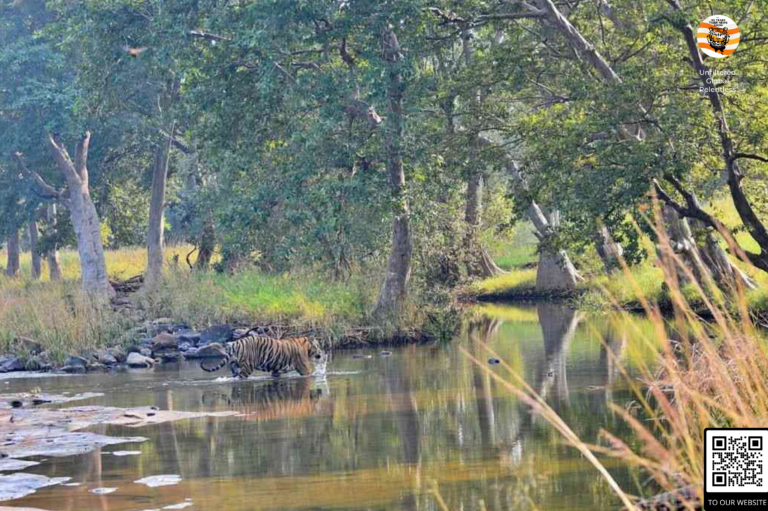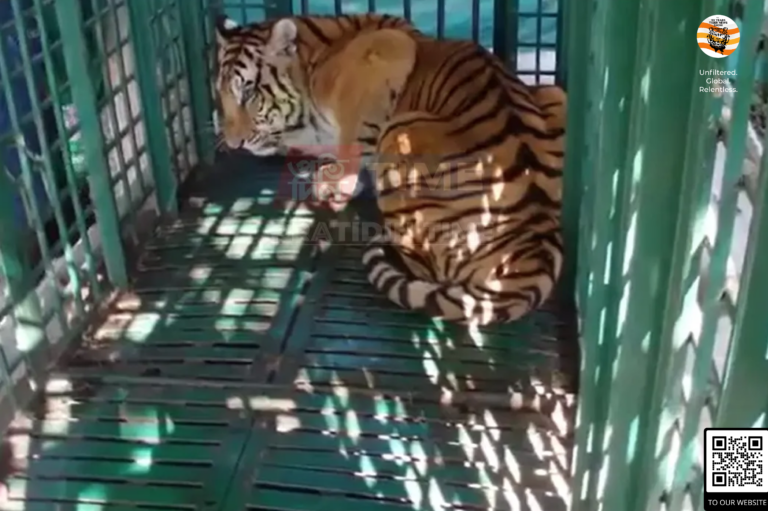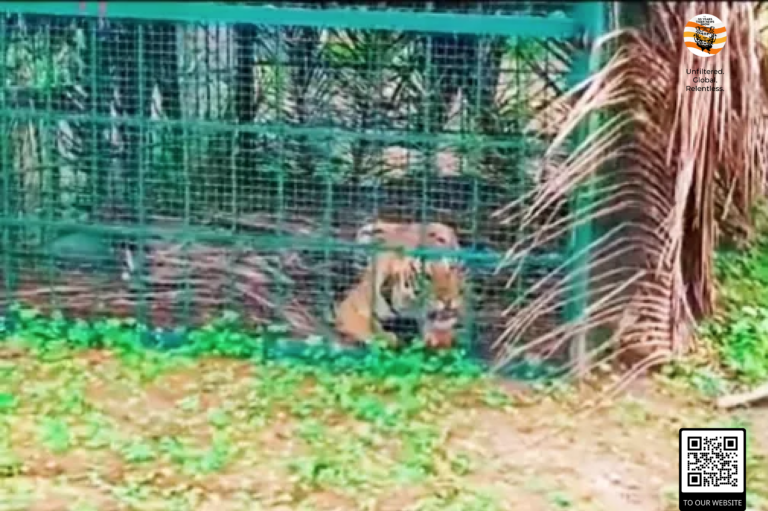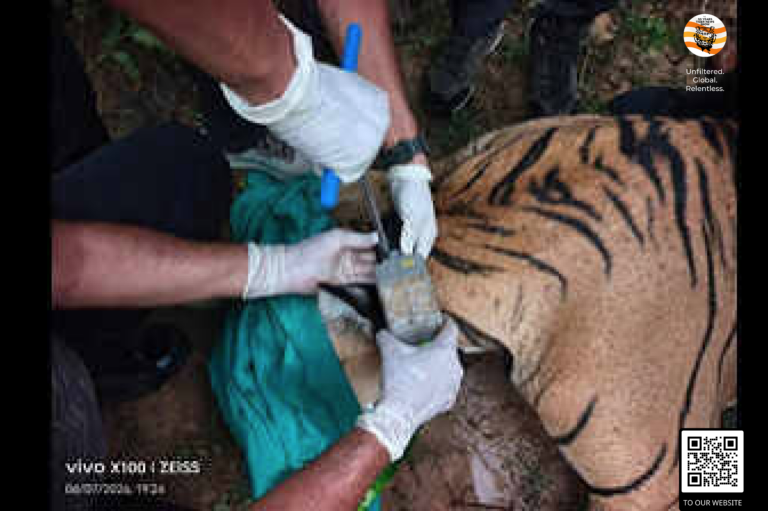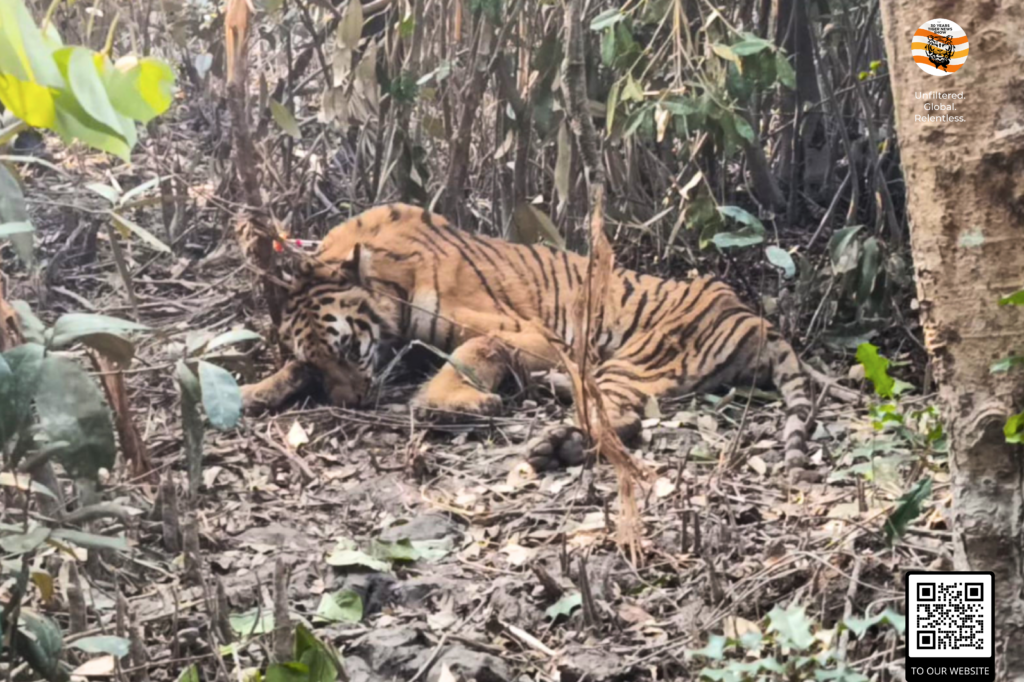
A release should remain a serious option for a rescued female Bengal tiger from the Sundarbans if science shows she has fully recovered, as argued in The Daily Star. The article describes her rescue, treatment, and recovery after severe injuries caused by a poacher’s snare as one of Bangladesh’s most significant recent wildlife conservation events. It says Forest Department personnel, veterinarians, field staff, and others deserve recognition for saving a globally endangered tiger, while stressing that her long-term future now requires careful conservation judgment.
The article states that about 125 adult tigers survive in the Bangladesh Sundarbans, making every adult female important to the breeding population. It argues that decisions should be guided by science, animal welfare, and long-term conservation value. If the tigress retains hunting ability and can adapt successfully, Release would require assessment of habitat quality, prey, freshwater, tiger density, and risks to wildlife and people. Tools such as camera traps, satellite telemetry, radio-collar monitoring, and long-term supervision could help measure success.
A Release Is Not Sentiment, It Is Conservation
This is where Bangladesh must be careful. Saving the tigress was the first achievement. Deciding her future is the harder test. A recovered wild tiger should not automatically become a lifelong captive because captivity feels safer to humans. Safety for officials is not the same as justice for the animal.
She was injured by a poacher’s snare. That is already human violence. If she recovers and still has the skills to live wild, permanent confinement would add another human decision onto the wound. Release must not be reckless, but it must remain the preferred conservation outcome when the evidence supports it.
A Breeding Female Cannot Be Wasted
The Sundarbans population is small enough that one adult female matters. She is not symbolic decoration. She is potential breeding strength, genetic value, territory, instinct, and future cubs. A country with roughly 125 adult tigers cannot casually remove a recovered female from the wild population unless science clearly says she cannot survive.
That is why the assessment must be honest. Can she hunt? Can she move strongly? Can she avoid people? Is there a suitable area with prey, water, cover, and monitoring? If the answers support Release, then Bangladesh should prepare carefully and act with courage. Conservation cannot praise wild tigers while choosing cages too quickly.
Captivity Must Not Become The Default
Temporary confinement during treatment is understandable. A wounded tiger needs veterinary care, space to recover, and protection from further injury. But treatment captivity should not quietly become permanent captivity through delay, caution, or institutional convenience. Large carnivores need space, movement, challenge, and natural behaviour. A cage cannot replace the Sundarbans.
If Release is impossible, the article’s suggestion of a semi-wild rehabilitation facility near the Sundarbans deserves serious consideration. But that should be a fallback, not the first emotional escape route. Bangladesh should build a modern rehabilitation framework that asks what the tiger needs first, not what is easiest for management.
Science Must Build The Path Back
A responsible return would need radio-collar monitoring, camera traps, veterinary follow-up, prey assessment, freshwater planning, and rapid response teams. It would also need community communication, anti-poaching security, and strict protection from people trying to turn her story into spectacle. Release is not opening a gate and hoping. It is a managed scientific commitment.
The research opportunity is real, too. Her genetics, health, behaviour, adaptation, and recovery can teach Bangladesh how to handle future injured tigers, elephants, dolphins, crocodiles, and other threatened wildlife. But research must never become an excuse to keep a wild tiger confined longer than necessary.
Bangladesh Can Set A Better Standard
The rescued tigress has already exposed two truths. First, poaching still reaches into the Sundarbans with deadly force. Second, Bangladesh has people capable of saving a tiger when the system responds. Now the country must prove it can make the next decision with equal seriousness.
If she can return, let Release be planned, monitored, and protected. If she cannot, let her live in the most natural, spacious, welfare-driven conditions possible. Either way, the decision must be transparent and science-based. This is where conservation practices stop being slogans. A recovered tigress should not disappear into captivity because humans are afraid to do the harder work of returning her to the wild.
Source: The Daily Star, Bangladesh
Photo: The Daily Star, Bangladesh