Greenwashing concerns around Malaysia’s palm oil sector have intensified after the Malaysian Palm Oil Green Conservation Foundation described efforts to integrate biodiversity conservation into oil palm plantation management, as reported by Free Malaysia Today. The article says MPOGCF wants plantations, forests, and wildlife managed as connected landscapes rather than separate systems. Its conservation and sustainability department manager, Ahmad Shahdan Kasim, said better planning could support coexistence, operational safety, livelihoods, ecological connectivity, and reduced human-wildlife conflict inside production landscapes.
The article states that MPOGCF was established in 2021 and continues conservation work initiated under the Malaysian Palm Oil Wildlife Conservation Fund in 2006. It has implemented 29 projects with government agencies, universities, NGOs, and industry players across reforestation, wildlife conservation, biodiversity management, and community engagement. Reported work includes forest restoration in Sabah, peatland rehabilitation in Sarawak, camera-trap research near forest corridors, a 10-hectare restoration project in Kelantan, elephant conflict programmes in Johor, and collaboration with Malaysia’s wildlife department on Malayan tiger conservation.
Greenwashing Begins Where Accountability Ends
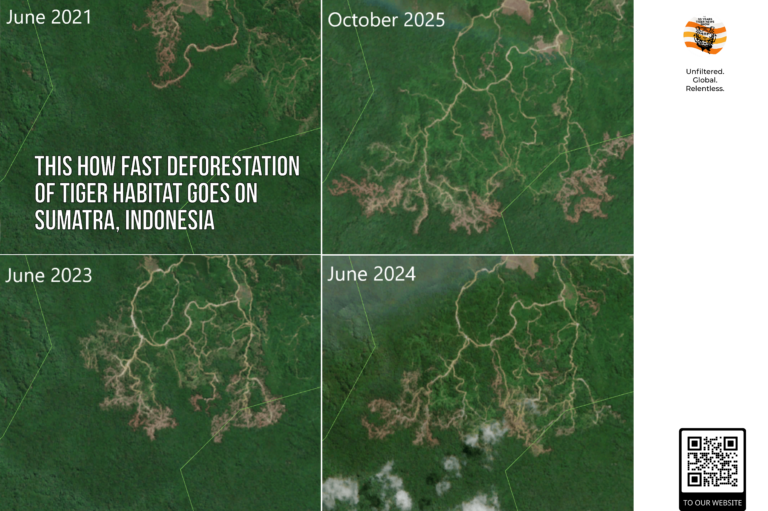
The problem is not that habitat restoration is bad. The problem is who is speaking, what is being softened, and what history is being pushed out of view. Malaysia’s palm oil industry helped carve up the forests that Malayan tigers needed to survive. It profited from landscapes where habitat became plantations, corridors narrowed, prey systems weakened, and tiger populations collapsed toward extinction.
Now the same industry-linked conservation world talks about “building biodiversity” into oil palm landscapes. That language is clean. Too clean. It suggests a balanced future without forcing the industry to fully pay for the damage that made such repair necessary. Greenwashing works by making partial restoration look like moral transformation.
Tigers Need Forests, Not Branding
A tiger does not need a plantation to become friendlier to biodiversity. A tiger needs large, connected, protected forest with prey, cover, water, quiet, and serious enforcement. Oil palm landscapes can include corridors and buffer zones, but they are not a replacement for the forests destroyed. Calling plantations, forests, and wildlife one connected system risks hiding the brutal imbalance between industrial production and ecological survival.
This is where the story becomes dangerous. If the public is told that palm oil can simply coexist with wildlife through better management, the industry gets a new image without carrying the full debt. The Malayan tiger did not decline because Malaysia lacked glossy biodiversity forums. It declined because habitat protection lost against profit, land conversion, weak enforcement, and political convenience.
Conservation Money Must Match The Damage
The article lists projects: peat rehabilitation, wildlife corridors, camera traps, restoration, conflict response, and species monitoring. Some of that work may help. But scale matters. Ten hectares restored here, a corridor study there, a forum with 500 attendees, and selected partnerships do not answer decades of habitat loss. The industry should not receive applause for repairing fragments after helping break the landscape.
If palm oil wants credibility, it should invest billions of US$ into habitat restoration, corridor recovery, land buybacks, prey restoration, anti-poaching capacity, Indigenous and local community protection, and long-term independent monitoring. Not token projects. Not industry-managed reputation work. Real repayment. Greenwashing turns responsibility into messaging. Conservation requires surrendering money, land, control, and excuses.
Malaysia’s Tigers Deserve More Than Coexistence Talk
The Malayan tiger is hanging by a thread, and every polished industry statement should be judged against that reality. If tiger conservation is mentioned by an oil palm foundation, the first question must be simple: how much tiger habitat was lost to this industry, and how much is being restored permanently with legal protection? Without that answer, the conversation is incomplete.
Malaysia does not need more proof that biodiversity can be discussed inside plantation planning. It needs proof that the palm oil industry will pay back what it helped destroy. Anything less is performance. The future of the Malayan tiger cannot be rescued by the language of coexistence while plantations remain the permanent winners. This is why palm oil destruction must stay central. Greenwashing should not be allowed to stand where accountability belongs.
Source: Free Malaysia Today, Malaysia