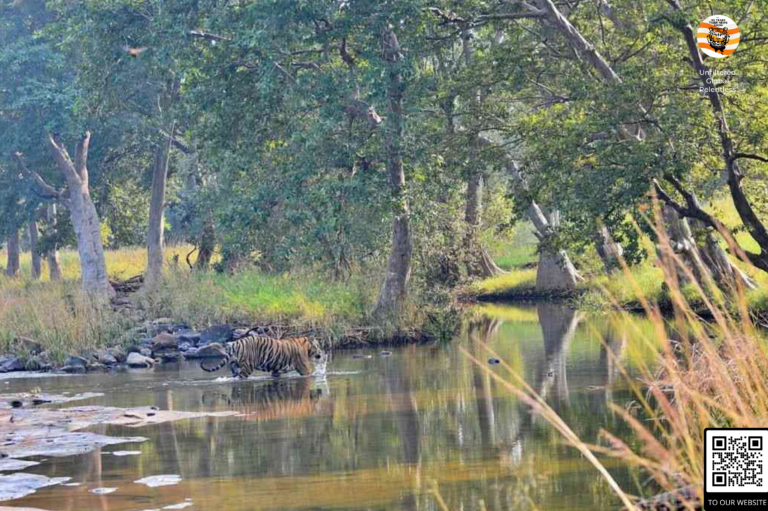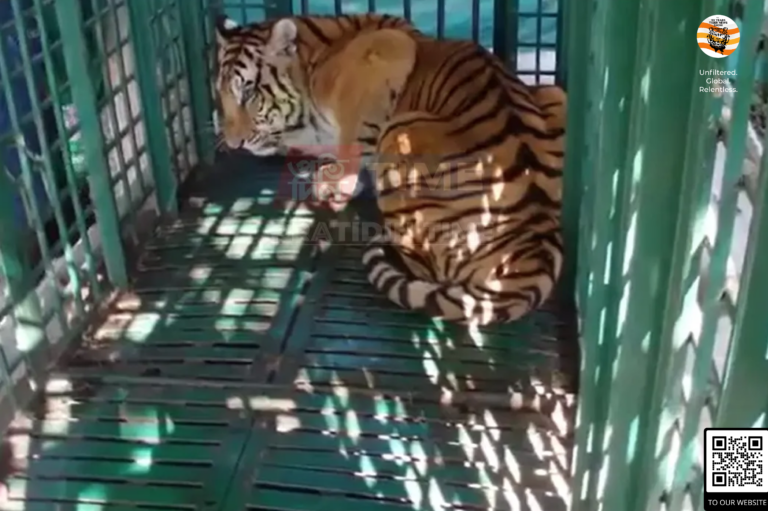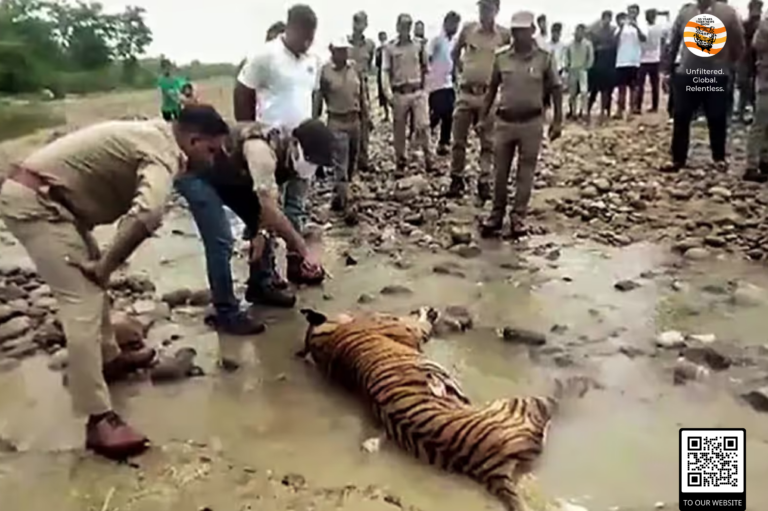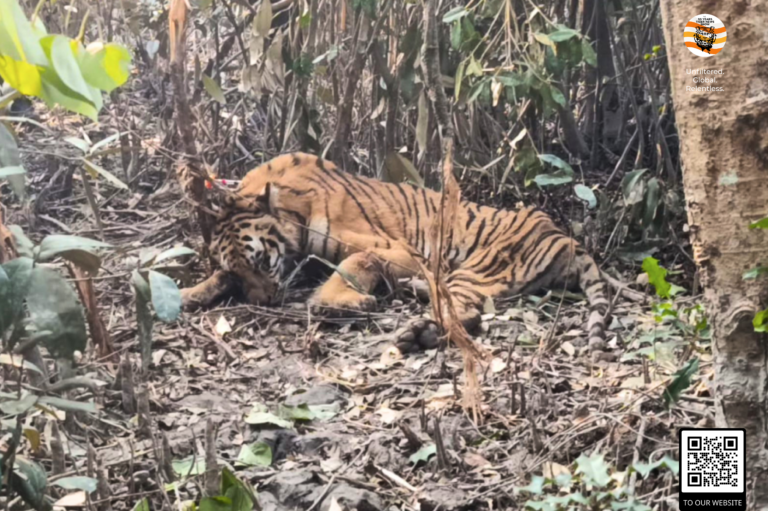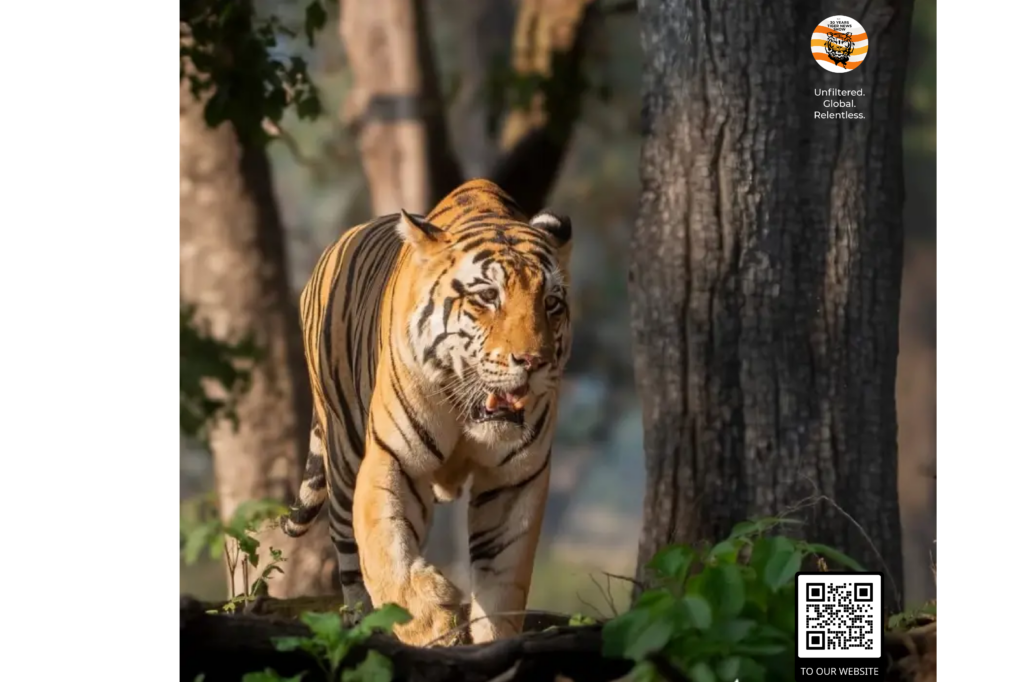
Balaghat has emerged as a crucial test for tiger conservation outside India’s formal reserve network, as reported by Ground Report. Camera traps documented 18 individual tigers and 27 leopards in forests managed mainly for timber and land, not as protected tiger habitat. The article cites an NGO and state Forest Department report showing breeding, territorial behaviour, and a functioning large-carnivore landscape between Kanha and Pench. This is no longer just a corridor on paper. It is habitat where tigers are living, breeding, and testing policy’s ability to follow reality.
The report says researchers deployed 71 camera traps across 215 square kilometers in South Balaghat’s Lalbarra and Katangi ranges in November 2021. The survey recorded 262 tiger images, 154 leopard images, 24 mammal species, and density estimated at 3.72 tigers per 100 square kilometers. Kanha holds 105 tigers, Pench holds 77, and overcrowding is pushing younger animals into territorial forests. The landscape also connects Achanakmar and Nawegaon-Nagzira. Experts cited in the article argued that wildlife cannot be protected only inside protected areas. The evidence supports them: tigers have moved beyond human lines.
Balaghat Proves The Reserve Model Is Too Small
This is good news, but not comfortable news. These findings show that tigers can use forests written off as movement spaces, timber divisions, or administrative gaps. The animals are doing what tigers do: dispersing, claiming range, following prey, and connecting populations. The failure is not theirs. The failure belongs to systems built around protected islands while pretending corridors can survive on leftovers.
A tiger outside a reserve does not become less valuable. It becomes more exposed. Roads, railway lines, mines, farms, electric fences, weak patrols, and delayed compensation press into the same landscape. If policy celebrates tiger expansion without funding protection, it is not conservation. It is public relations with claws.
Breeding Tigers Need More Than Praise
The Balaghat findings are especially important because breeding changes the responsibility. A corridor used briefly is one thing. A landscape where tigers establish territory and reproduce is another. Once cubs are born, the forest is no longer just a route. It becomes a home that demands protection, prey recovery, trained staff, conflict response, and honesty.
The article also highlights livestock dependence in tiger diets across the Kanha-Pench corridor. That is not a tiger problem. It is a planning problem. When wild prey is thin and cattle are available, conflict becomes predictable. Governments know this pattern, then act surprised when people lose livestock, farmers string illegal wires, and tigers die. Prevention must come first.
Mining, Roads And Weak Staffing Are Chosen Risks
The threats listed around Balaghat are not vague. NH-543 cuts through the division. A railway line fragments movement. The Malanjkhand copper mine and Bharveli manganese mine sit near forest land. Invasive lantana suppresses grasslands. Fires worsen habitat decline. These are not accidents. They are decisions, permissions, budgets, delays, and enforcement choices.
India cannot claim tiger success while allowing the next generation of habitat to be treated as expendable space. If ore transport, road expansion, rail traffic, and new mining blocks are placed above tiger movement, the outcome is deliberate. This landscape needs mitigation before clearance, protection before damage, and staffing before crisis. Conservation practices fail when they admire tiger numbers but refuse to defend the forests required.
Balaghat Must Become A Serious Conservation Priority
The article notes that Sonewani Conservation Reserve, 163 square kilometers within South Balaghat, was approved in May 2025. That is a start, not an answer. Protected status without community trust, rescue capacity, fast compensation, and field manpower can become another line on a map. People living with tigers need support, not slogans. Tigers need connected forest, not applause after camera traps prove they survived despite neglect.
This region should be treated as a priority for tigers outside reserves, with funding, patrols, prey recovery, conflict prevention, and community planning. This is where conservation practices become real or collapse into theatre. The tigers have already decided by living there. Now India must decide whether Balaghat is protected habitat or another warning ignored until the bodies appear.
Source: Ground Report, India
Photo: India Currents, India