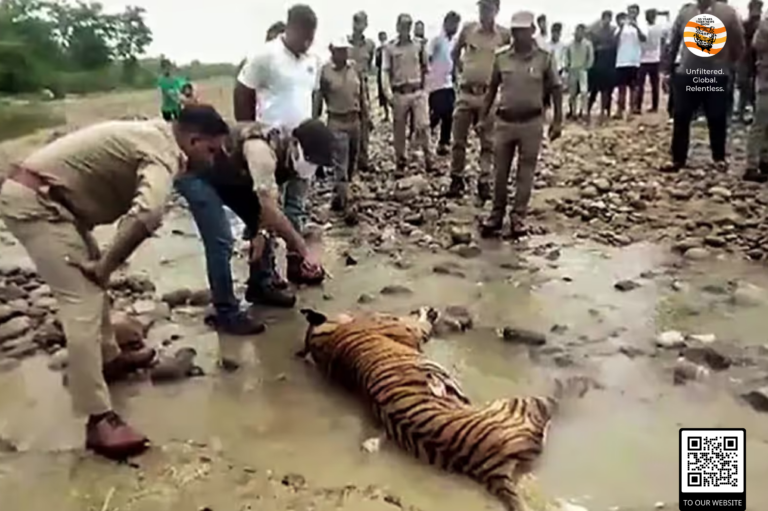
Cambodia is at the centre of serious wildlife trafficking allegations after Earth League International released findings from Operation Sandokan, a more-than-one-year undercover investigation into criminal networks across the Lower Mekong Region, as reported by The Phnom Penh Post. It alleges that one trafficking group slaughtered at least one tiger to order each week, while networks supplied exclusive restaurants and private clubs with endangered wildlife. Investigators documented illegal trade routes through ports, airports, border crossings, retail outlets, restaurants, and online platforms, with tiger products listed alongside pangolin, bear, rhinoceros, and other protected species, placing tigers at the centre of a wider commercial killing system.
The article states that ELI investigators spent more than a year inside active trafficking organisations, recruiting sources and documenting a criminal ecosystem linked to wildlife slaughter, political protection, scams, drugs, and human exploitation. The reported tiger trade included skeletons, meat, live cubs, tiger bone, tiger penis, and tiger cub wine. Listed prices included tiger bone at US$1,463 to US$1,975 per kilogram and tiger penis at US$2,194 to US$2,633 each. One supplier allegedly earned up to US$500,000 per month from one customer linked to a scam operation.
Cambodia Must Answer For Tiger Slaughter
Cambodia has not had a confirmed wild tiger population for years, yet the country is described as a market and transit hub for tiger body parts. That should shame every official treating wildlife crime as a side issue while traffickers convert dead tigers into private luxury. If one tiger is allegedly being slaughtered to order every week by a network operating in or through the country, this is not background criminality. It is a failure of state control.
The government cannot claim ignorance while traffickers reportedly speak openly about protection and elite connections. The public report does not name them, and some claims remain under investigation, but the pattern is ugly enough: endangered wildlife traded for status, money, and criminal appetite.
Tigers Reduced To Menus And Bottles
The details around tiger products are obscene. Tiger bone. Tiger penis. Tiger cub wine. Live cubs sold as pets or food. Every item means an animal stripped of life for wealth and superstition. Cambodia should be treating this as a national disgrace, not waiting for foreign investigators to expose what enforcement should have crushed long ago.
The trade shows why tiger trafficking is never only about one species. It moves through the same channels as scams, money laundering, drugs, timber crime, prostitution, and human exploitation. Criminal networks do not respect conservation categories. They follow profit. When enforcement is weak or corrupt, tigers become inventory.
Crackdowns Prove Enforcement Can Bite
Wildlife demand reportedly fell after Cambodia began cracking down on online scam operations in late 2025. That proves criminal economies are connected. Hit one money stream hard enough, and the wildlife trade can weaken. But it also exposes the disgrace. If action against scams reduced demand, then stronger action against wildlife traffickers, corrupt protectors, and elite buyers could do the same.
The government should be pressed to go further: name networks where legally possible, prosecute suppliers and buyers, seize assets, cooperate internationally, and protect investigators. Quiet statements and partial crackdowns are not enough when tiger parts are being priced in US$ and served to criminals with influence.
Cambodia Needs Enforcement, Not Excuses
ELI says intelligence has been shared with US law enforcement and other partners, while some findings remain withheld because investigations continue. That is understandable. Silence from government is not, especially when the allegations concern protected species, organised crime, and political protection. The Ministry of Environment was approached for comment and gave no full response by publication. For a country named in such serious allegations, that is not good enough.
Tigers are already absent from Cambodia’s forests. Now their bodies allegedly move through its criminal markets. That is the cruelty of extinction: first the animal vanishes, then its parts keep making money.
This is exactly how tiger poaching survives globally: through demand, corruption, silence, and governments that act too late. Cambodia must prove it is not protecting traffickers by failing to destroy them.
Source: The Phnom Penh Post, Cambodia