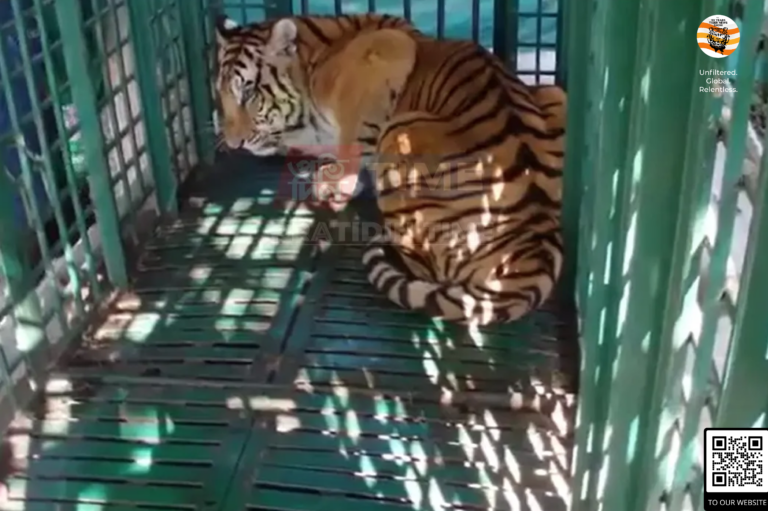
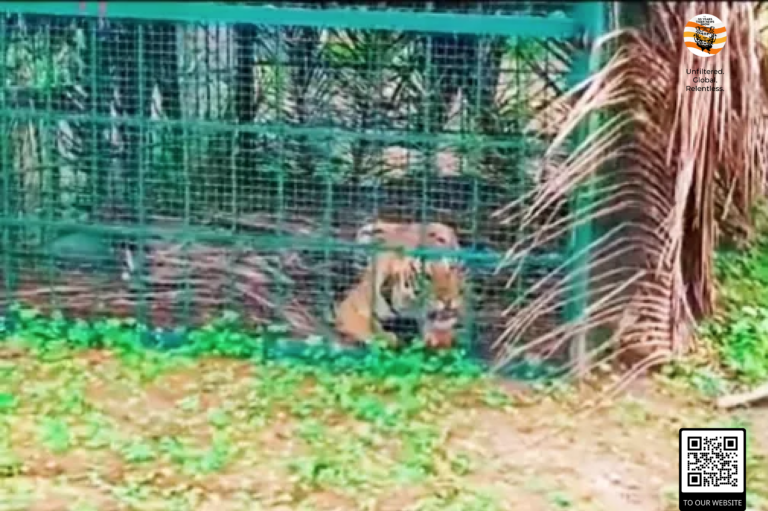
Stones thrown at a tiger inside Surat’s Sarthana Nature Park zoo in Gujurat have triggered public outrage after a short video showed a young visitor targeting the animal while it rested under a tree, as reported by Gujarat Samachar. The article says the clip went viral on social media and drew criticism from animal lovers and wildlife activists, who demanded strict action against the person responsible. The tiger was not described as attacking, pacing, or provoking anyone. It was lying quietly inside an enclosure until a human decided that even captivity was not enough control, and Stones became the chosen insult.
The report states that many viewers believed the act was meant to provoke the tiger and force a reaction for attention. It also raised concern that the disturbance may have lasted longer than the few recorded seconds. Several people were reportedly nearby, yet no one appeared to stop the individual or immediately report the incident. Animal lovers urged the Surat Municipal Corporation and zoo authorities to examine CCTV footage, identify the person involved, and take legal action. Wildlife experts warned that teasing, disturbing, or provoking animals can damage their health and behaviour.
Stones Reveal The Violence Behind Display
This is not a small visitor-management problem. It is the predictable result of putting a tiger behind barriers and inviting crowds to stare, shout, film, and demand performance. The young man in the video deserves condemnation because throwing anything at a confined animal is idiotic cruelty. There is no softer phrase needed. But the system also deserves scrutiny, because a tiger in a zoo is already trapped inside spectacle. When that spectacle teaches people that a living tiger exists for entertainment, some will push the cruelty further.
A wild tiger can leave. Or strike back. A captive tiger cannot. That difference matters. Stones thrown at an animal with nowhere to retreat are not mischief. They are domination by a person protected by fences, distance, and the lazy confidence that the animal cannot answer back.
Captivity Turns Respect Into Performance
The disturbing detail is not only the alleged act itself, but the silence around it. If several visitors were nearby and no one intervened, the problem is not one reckless youth alone. It is a crowd culture trained to watch first and act later. Someone films, someone laughs, someone waits for the tiger to move, and the animal absorbs the stress. That is how normalized disrespect works.
Zoo authorities often promise education, but education without enforcement is theatre. Signs do not protect tigers. Real-time monitoring, trained staff, removal, fines, prosecution, and public accountability do. Stones should never reach a tiger enclosure, and any person who tries should be removed immediately and barred. The animal did not choose the crowd. The crowd chose to enter its prison.
Outrage Must Become Enforcement
Public anger is useful only if it becomes pressure. The Surat Municipal Corporation and zoo authorities should review CCTV footage, identify the offender, and explain what action follows. They should also answer this: how did a visitor have enough confidence to disturb a tiger without immediate intervention? That question points beyond one clip and into daily management.
Tigers in captivity live under constant human gaze. Noise, provocation, crowd pressure, heat, confinement, and boredom are not harmless background details. They shape behaviour and welfare. When people throw Stones, the law should treat it as animal abuse, not childish behaviour. When institutions fail to prevent it, they should not hide behind outrage after the footage spreads.
Captive Tigers Deserve Protection From People
This incident also exposes the hypocrisy at the heart of captivity. The public is told that zoos build love for wildlife, yet a visitor can throw objects at a tiger resting under a tree. Love does not look like that. Conservation does not look like that. Respect does not need a viral video before it becomes urgent.
The deeper lesson of this idiot throwing stones is simple. Tigers do not become safer because humans place them behind walls. They become vulnerable to human power: boredom, entitlement, mockery, and institutional excuses. The animal in Surat should have been left in peace. Instead, it became another example of why captivity cruelty cannot be separated from the behaviour captivity attracts. Stones at a tiger are not isolated.
They are spectacle answering itself.
Source: Gujarat Samachar, India
Photo: Gujarat Samachar, India