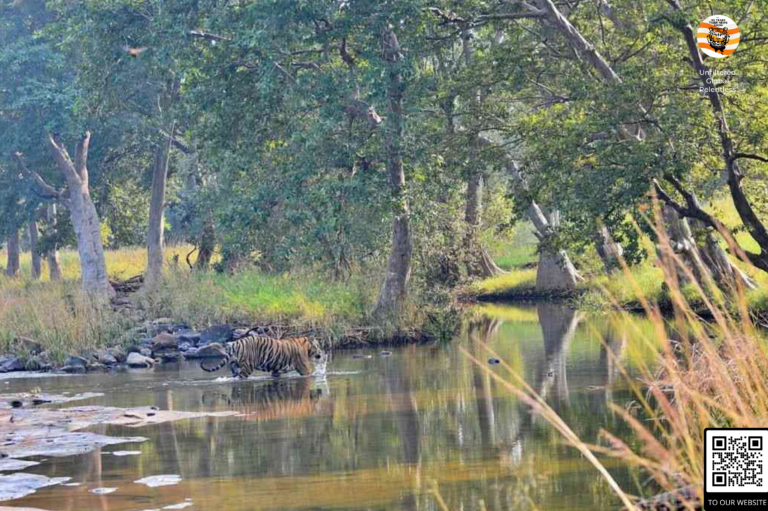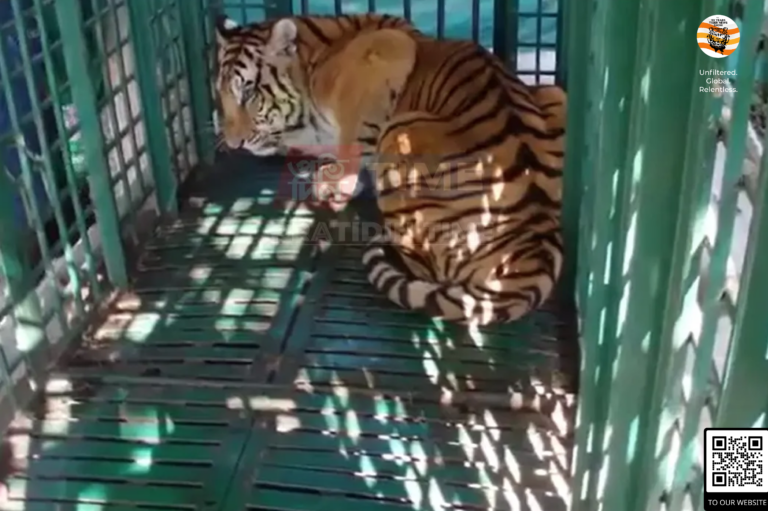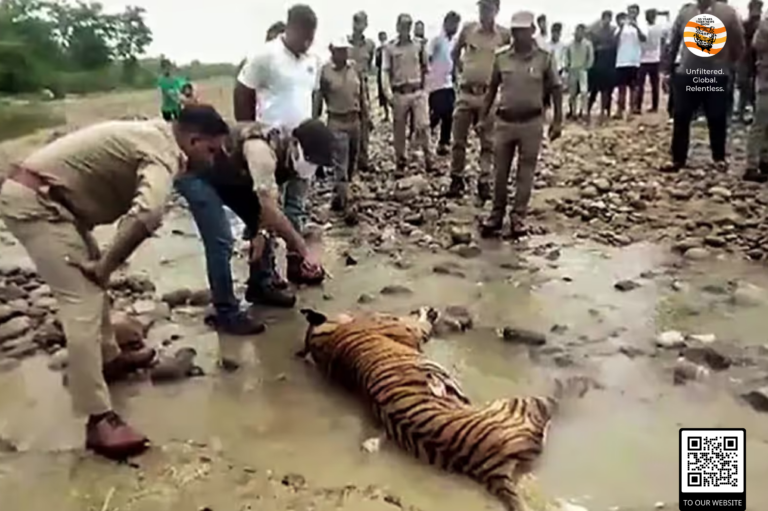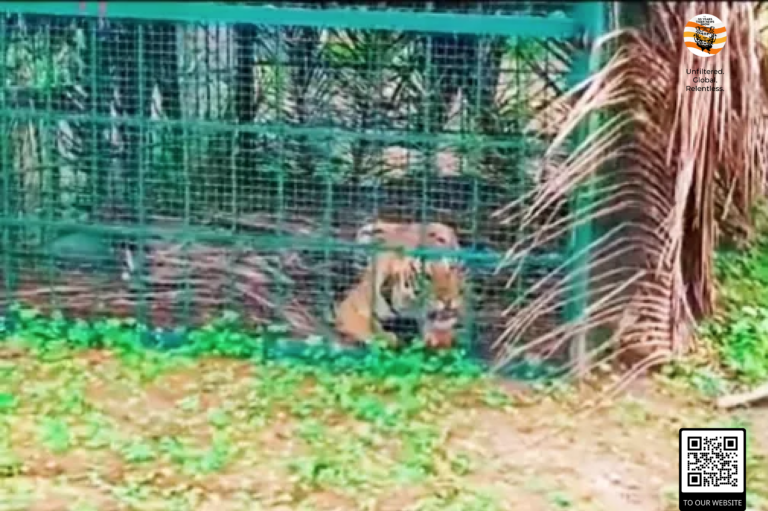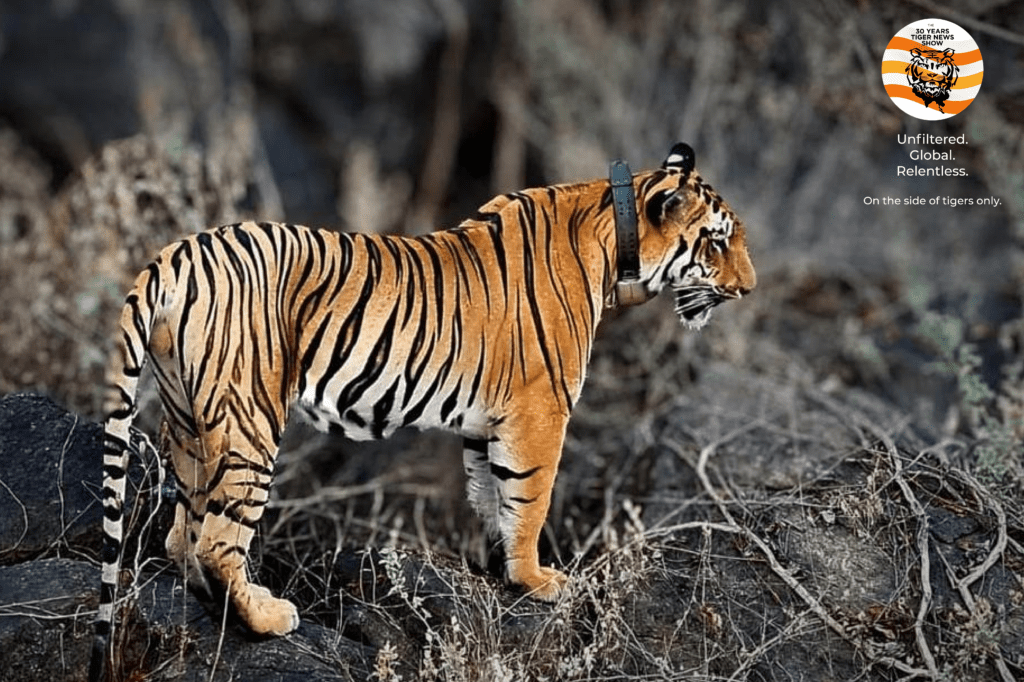
Explorer is the kind of nickname humans invent when they want to make a tiger sound like a wandering cartoon instead of a wild predator being pushed through a broken conflict system, as reported by The Hindu. The male tiger, moving through the Rajavommangi forest area in Polavaram district, is now being searched for by the Forest Department after reportedly killing nine cattle across Pedarelangipadu, Chikilintha, and Vathangi Beat on May 27. No human attack has been reported. Yet the order is already capture: tranquilise the animal, remove the problem, call it management.
Explorer Was Already Handled Once
Explorer had already been tranquilised on February 6 at Kurmapuram village in Dr. B. R. Ambedkar Konaseema district, kept for a week at the Animal Rescue Centre in Visakhapatnam, and released in Papikonda National Park on February 14. Now, months later, the same tiger is again the target of capture after cattle kills. That sequence should embarrass the authorities more than the tiger. If an animal is captured, treated, moved, released, and then returns to conflict, the question is not why the tiger explored. The question is why the release, monitoring, livestock protection, and village planning were not strong enough.
Calling him Explorer makes the situation worse. It turns a serious failure into a nickname with a tourism brochure aftertaste.
Cattle Kills Are Not A Death Sentence
Explorer reportedly killed nine cattle, including eight in two villages and one in Vathangi Beat. That is a real loss for local families, and compensation must be fast, fair, and complete. But cattle kills are not human attacks. They are also not proof that a tiger has become a monster. They often show exposed livestock, weak protection, risky grazing patterns, poor response systems, and habitat edges where people and predators meet without proper planning.
The Deputy Chief Minister and Forests Minister directed authorities to capture the tiger to prevent untoward incidents in tribal habitations. Prevention matters, but capture is the bluntest tool when used without deeper correction. A serious response would ask what changed after February, where the tiger moved, how cattle were being protected, whether alerts worked, and whether communities received practical support before panic returned.
There is another uncomfortable point. Officials know cattle losses can quickly become political pressure, especially near tribal habitations where fear spreads faster than verified movement data. That is precisely why the first response should not be a performance of control. It should be prevention that protects people without turning the tiger into the convenient villain. If compensation is slow, if livestock owners feel abandoned, and if field teams arrive only after repeated kills, anger will always move toward the animal first. Explorer is not the architect of that anger. Weak planning is. Again.
Explorer Should Not Carry Human Failure
Forest officials say personnel, wildlife experts, veterinary teams, locals, and police are involved in the operation. Coordination is necessary, but coordination around removal is not the same as coexistence. If every cattle-killing tiger is treated as a capture case, the system teaches villages that coexistence means waiting until a dart team arrives. That is not a future for tiger landscapes. It is emergency theatre repeated until the next animal crosses the next village edge.
Explorer is being punished for moving like a tiger through country where humans have not secured livestock, corridors, or response systems properly. The nickname makes him sound adventurous. The decision makes him sound guilty. Neither framing is honest. He is a tiger navigating a human-made conflict zone, and officials are again choosing removal over admitting that previous intervention did not solve the conditions around him.
The right response starts before cattle die: protected grazing, night shelters, rapid compensation, village alerts, camera monitoring, corridor planning, and calm public communication. Real human-tiger conflict work does not wait for livestock loss and then rename the animal like a mascot. Explorer does not need another human nickname. He needs a landscape where people stop turning predictable conflict into another excuse to drag a tiger out of the wild.
Source: The Hindu, India
Photo: The Hindu, India