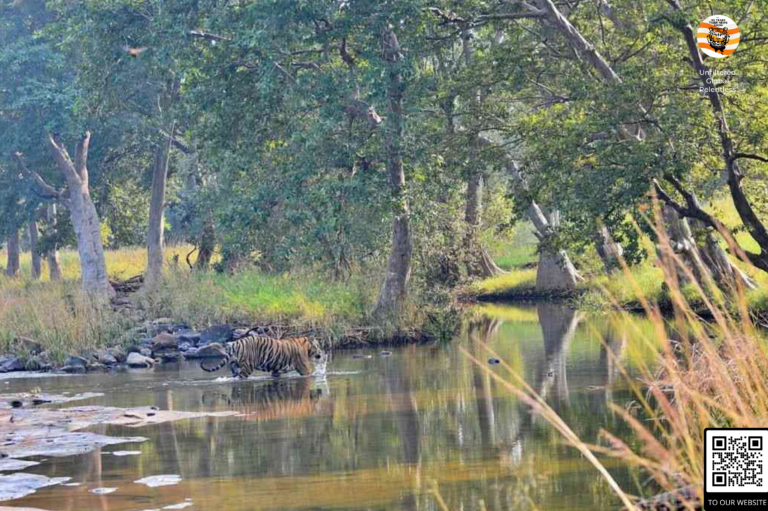
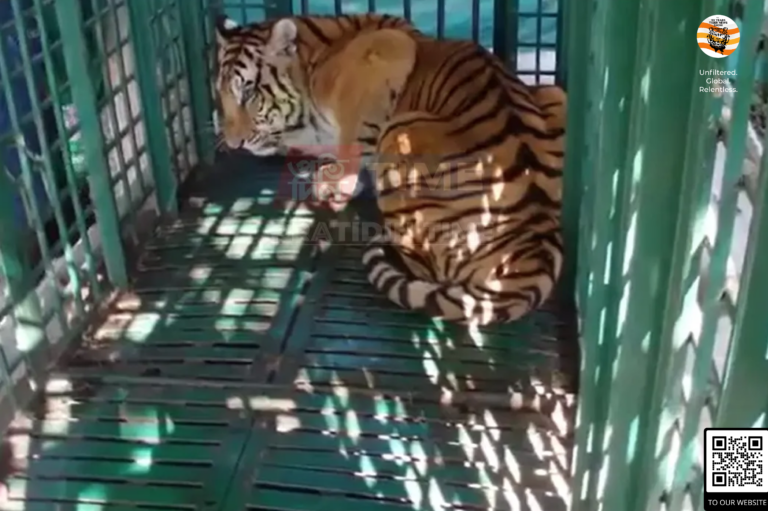
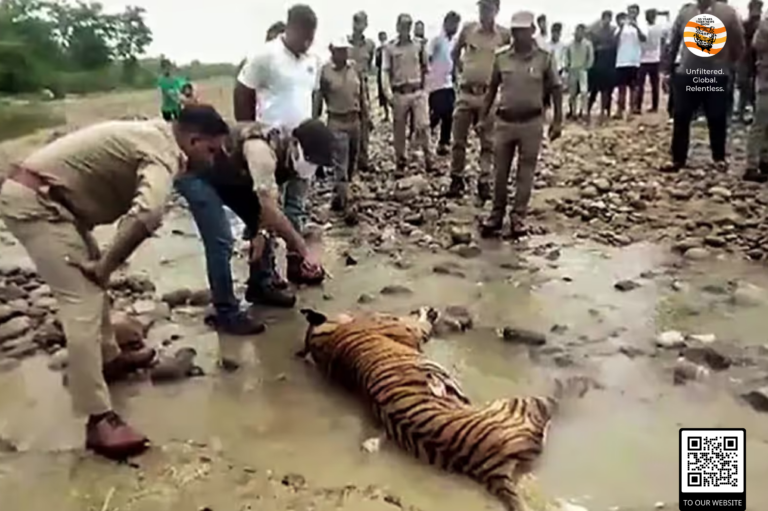
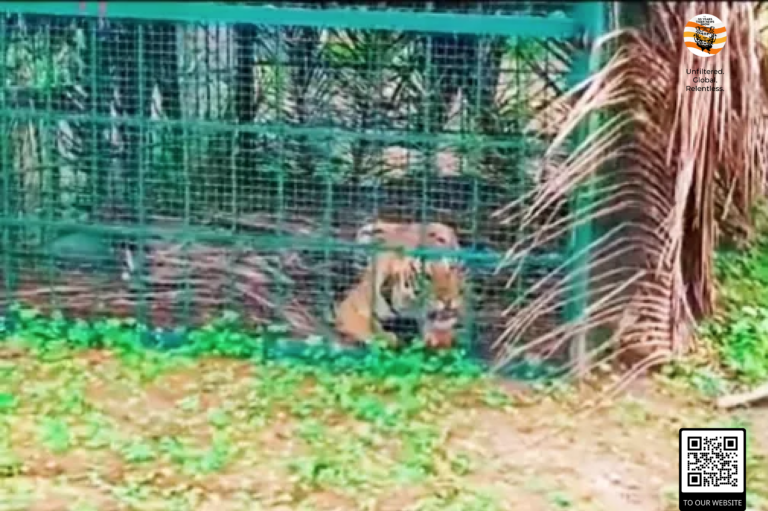
The Mihimukh range is now the focus of a formal investigation after the carcass of a sub-adult tiger was recovered inside Assam’s Kaziranga National Park and Tiger Reserve, as reported by Lokmat Times. Officials said the carcass was found on Saturday evening in the Kaziranga Range at Kohora during routine surveillance and monitoring by forest personnel. A committee constituted by KNPTR Director Sonali Ghosh carried out the post-mortem examination and disposal according to the National Tiger Conservation Authority’s Standard Operating Procedure. The cause of death could not be determined because of advanced decomposition.
The immediate facts are limited, and that matters. Mihimukh should not be turned into speculation before the official findings are complete. Decomposition can erase visible evidence, complicate veterinary interpretation and make it harder to distinguish natural causes, territorial conflict, disease, poisoning or other possibilities. A neutral reading of the case begins with what is known: a sub-adult tiger was found dead, procedures were followed, and the cause remains undetermined.
Earlier Tiger Deaths In Kaziranga
Next to this Mihimukh-carcass, Kaziranga has already recorded other tiger carcasses this year. Three were recovered in January and February from different parts of the reserve landscape. In those cases, preliminary findings pointed to infighting or possible natural causes. That context does not explain the latest death automatically, but it shows why careful records across cases are important. Tiger mortality needs documentation and evidence, especially when several carcasses are found within one reserve over a short period.
On February 7, officials recovered the carcass of a male tiger, estimated at around 12 to 13 years old, from the western side of the Mandir Baneshwar Anti-Poaching Camp area in the Burapahar Range at Ghorakati. Preliminary post-mortem findings suggested infighting. On January 18, the carcass of a tigress, estimated at around three to four years old, was recovered from the Kathpora area of the Bagori Western Range. Preliminary findings again suggested infighting.
Another Case In The Mortality Record
Another young male Royal Bengal tiger, aged around two to three years, was detected on January 14 at Thute Chapori in the Eastern Range at Gamiri under the Biswanath Wildlife Division. Preliminary veterinary examination indicated that death could have occurred due to natural causes or infighting. That pattern does not decide the latest case, and Mihimukh remains open until investigation establishes more than advanced decomposition allowed the post-mortem to show.
Kaziranga National Park and Tiger Reserve is India’s seventh UNESCO World Heritage Site and is known for the so-called Big Five. The latest figures cited by officials include 2,613 greater one-horned rhinoceroses from the 2022 census, 104 Bengal tigers in 2022, 1,228 Asian elephants in 2024, 2,565 wild water buffaloes in 2022 and 1,129 eastern swamp deer in 2022.
Mihimukh Needs Careful Records
The reserve extends across Golaghat, Nagaon, Sonitpur and Biswanath districts and includes three forest divisions: Eastern Assam Wildlife Division, Biswanath Wildlife Division and Nagaon Wildlife Division. In such a landscape, tiger deaths can have different explanations. Territorial pressure, age, injury, disease and natural competition all belong to the ecological reality of a functioning reserve. At the same time, every carcass must be treated seriously because each death removes an individual from a protected population. It is therefore both a specific investigation site and part of wider monitoring responsibility.
Mihimukh also sits inside a reserve of public importance. Kaziranga generated more than Rs 10.90 crore in revenue in 2024-25 and more than Rs 8.81 crore in 2023-24. Those figures underline public importance, but do not change the basic obligation: wildlife deaths must be examined carefully, transparently and without premature conclusions. Standardised post-mortem and disposal protocols help keep the record credible when evidence is already degraded.
For now, the Mihimukh-case should remain under investigation. The known facts point to recovery during routine monitoring, advanced decomposition and an inconclusive post-mortem. That is enough to justify attention, not certainty. In tiger conservation, accuracy matters because false conclusions help no one, least of all tigers. The death belongs in the broader record of tiger mortality, where every confirmed fact matters and every unknown should remain clearly marked until evidence closes the gap.
Source: Lokmat Times, India
Photo: Lokmat Times, India