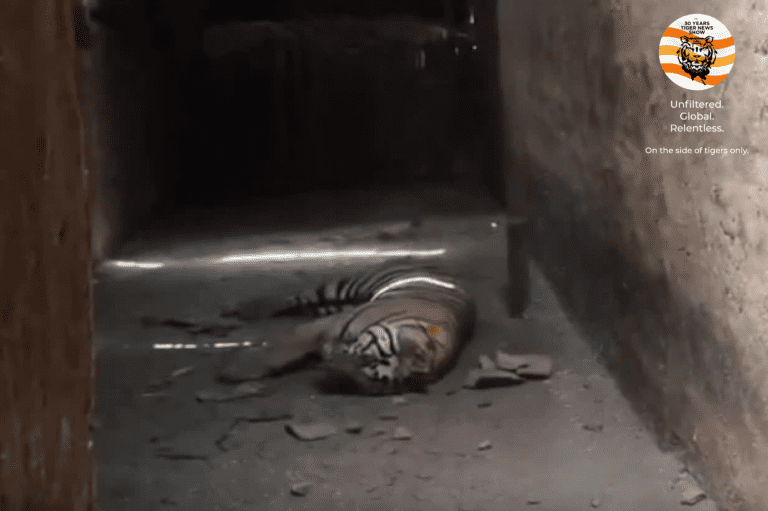
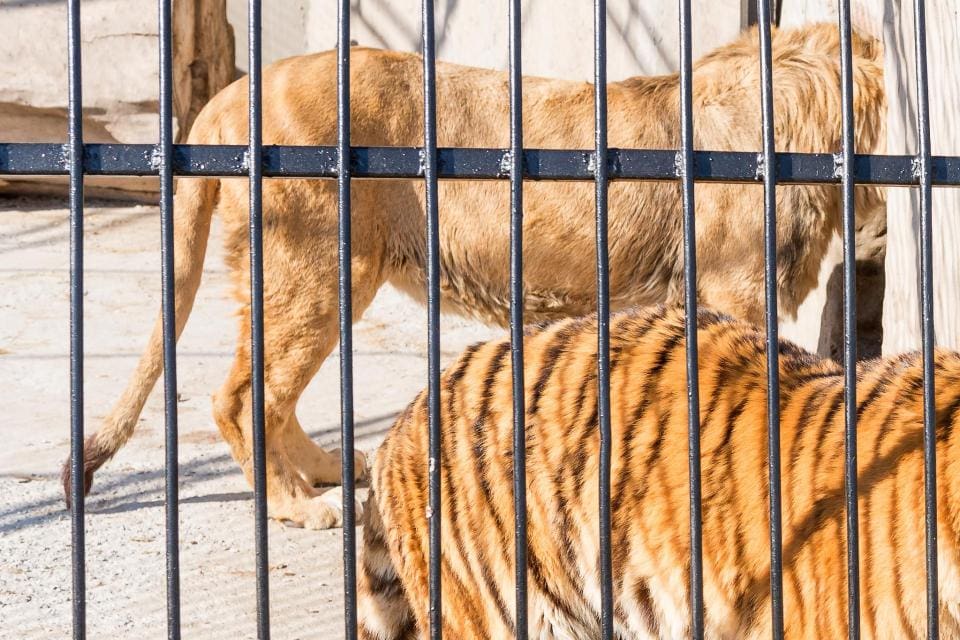
Joshua Grima is the latest example of why private tiger ownership is not eccentric, harmless, or misunderstood, as reported by Times of Malta. A Maltese court fined him €10,000 after he kept a tiger and two lions in a Marsascala field without proper registration, in a location that was neither approved for that use nor licensed as a zoo. Police found the animals in February 2023 after receiving information that dangerous animals were being kept there. The tiger later died before it could be registered. That should be the detail nobody skips.
The court heard that the enclosure met legal size requirements, and that the animals appeared to be in good health. But “legal size” is not the same as a life. Experts said the space barely met the minimum standard, meaning Joshua Grima was not safeguarding the tiger’s physical and mental well-being. A tiger reduced to a cage in a field is not being cared for. It is being held.
Joshua Grima And The Minimum Standard Lie
The minimum standard is often where captive tiger cruelty hides. It gives owners a defensive line: the cage was large enough, the animal was fed, the paperwork could have been fixed, the problem was technical. No. A tiger in a private field, behind an open-top enclosure, with no contingency plan, is not a technical issue. It is a public danger and an animal welfare failure.
Joshua Grima argued that he should benefit from a law allowing him to regularise his position. The court rejected that in relation to the tiger because the animal died before registration. That matters because private ownership always tries to survive through delay, paperwork, loopholes, and after-the-fact excuses. The tiger was alive when he had the responsibility. The tiger was dead before the legal position was cleaned up. That sequence says enough.
Private Ownership Creates Public Risk
The court noted that Joshua Grima placed the public at risk through illegal possession of the tiger in an enclosed space with an open top and no contingency plan. That is not responsible ownership. That is arrogance with claws nearby. Dangerous animals do not become manageable because someone wants them nearby or believes they can control the situation.
A €10,000 fine, payable over three years, is at least a legal consequence. But it should also expose how weak society still is around exotic animal possession. Anyone keeping a tiger illegally should face penalties strong enough to end the fantasy permanently. Fines should not feel like delayed administration. They should feel like a warning to every person who thinks owning a tiger proves power, sophistication, or love.
Tigers Are Not Registration Problems
The most obscene part of these cases is how quickly the tiger becomes a paperwork object. Registered or unregistered. Approved or not approved. Licensed or not licensed. Those details matter legally, but morally they are not enough. The deeper issue is that a tiger was kept in a cage in a field in Malta at all.
Joshua Grima did not own a difficult pet. He possessed an apex predator whose life had been reduced to human control. The court record says the tiger died before registration. It does not say the tiger ever had a wild future, a landscape, a territory, or anything close to the life a tiger should have. That is why private ownership must be treated as structural cruelty, not merely bad compliance.
The lesson of Joshua Grima is not that owners should register tigers faster. The lesson is that people should not own tigers. Real scrutiny of pets begins there: no cage, no field, no loophole, no private fantasy. A tiger is not property waiting for paperwork. It is a wild animal humans keep failing by pretending possession can ever become care.
Source: Times of Malta, Malta
Photo: Times of Malta, Malta