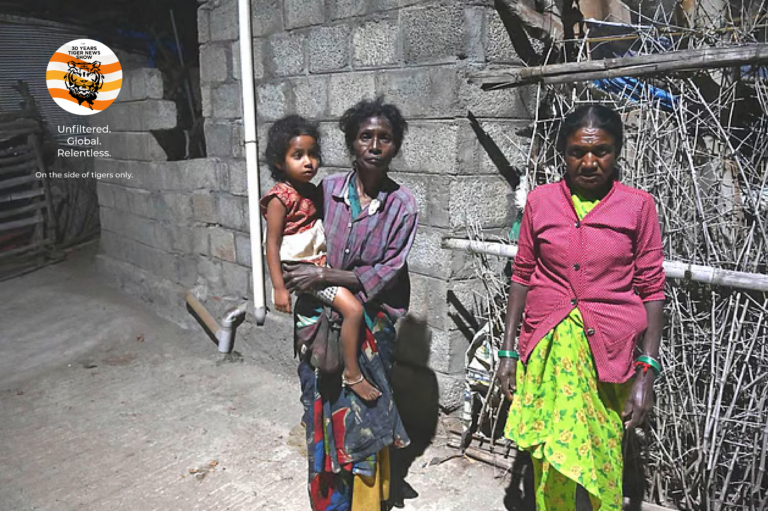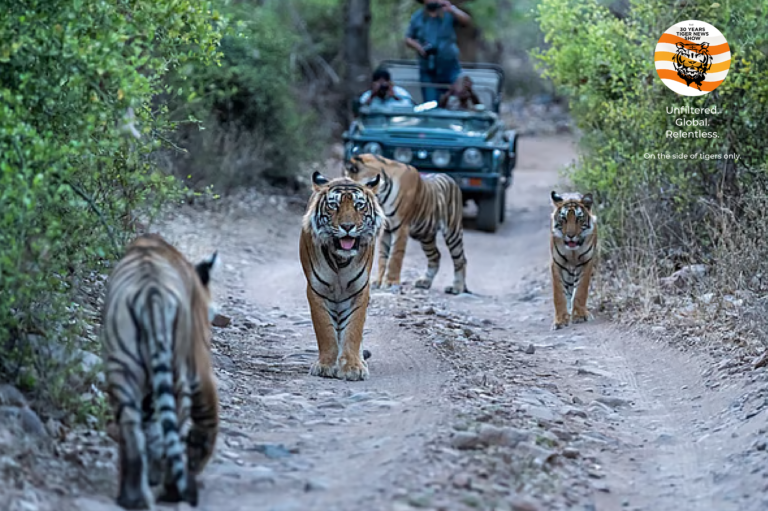
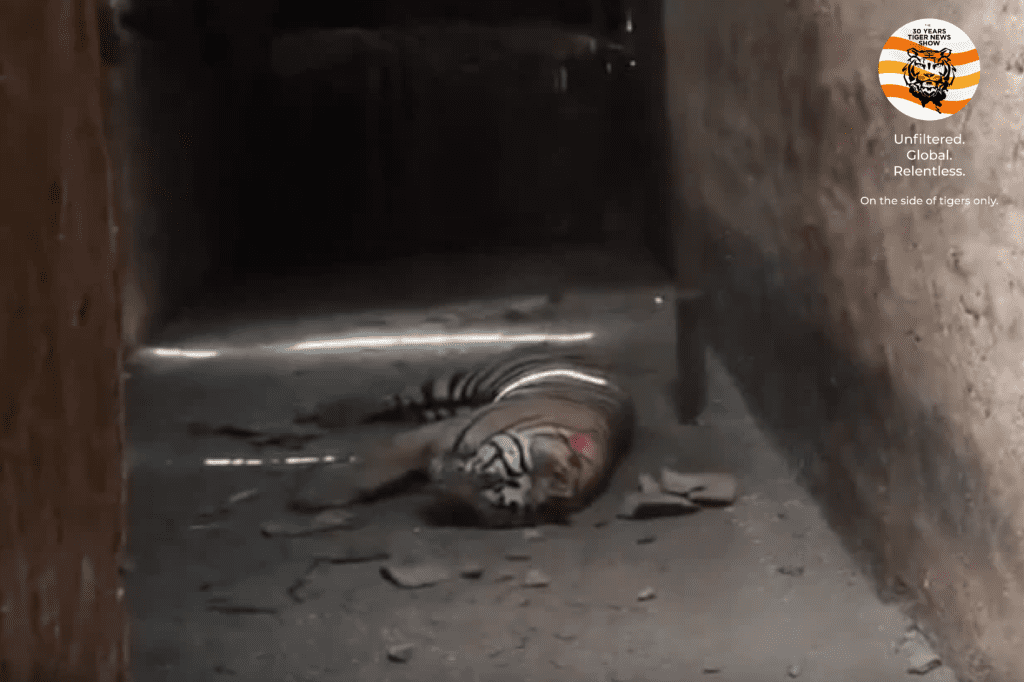
A second autopsy is now central to the Bandhavgarh tiger death, as reported by NDTV. A six-year-old tiger died in Kherwa Tola village near the Panpatha buffer zone after killing a 34-year-old woman and injuring at least three others. Officials said the tiger entered a house around 2.45am, attacked people in the courtyard, moved toward the forest, then returned nearly three hours later. By the time veterinarians reached the house, the tiger was reportedly lying motionless. A tranquilizer dart was fired from the roof to safely verify its condition, and the animal remained motionless afterward.
The question is not only how the tiger died for which the autopsy is needed. It is what humans did before.
Second Autopsy Cannot Be The Whole Investigation
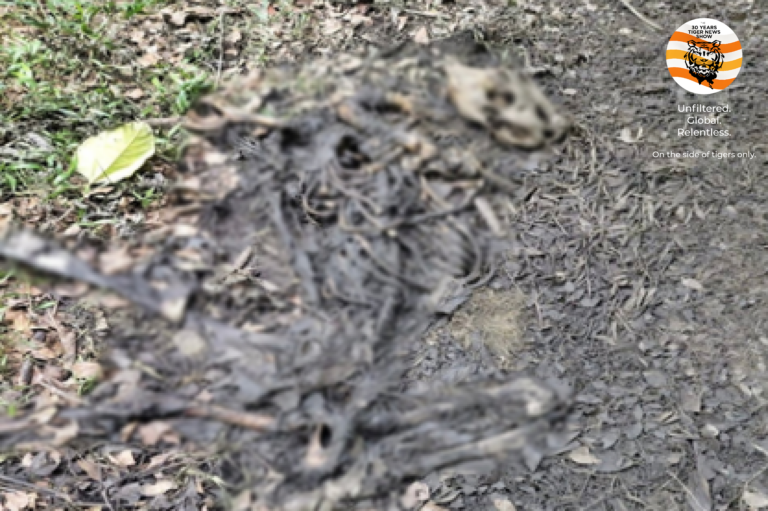
The carcass was taken to the School of Wildlife Forensics and Health in Jabalpur, where three veterinary doctors conducted a fresh examination in the presence of NTCA, Bandhavgarh and forensic officials. Samples from major organs were collected, and the process was photographed and videographed. That is necessary. But a dead tiger deserves more than a medical timeline that begins when officials arrive.
The article says the tiger returned to the same house. That behaviour cannot be brushed aside as just another violent detail. A second autopsy findings may reveal injury, stress, natural causes, conflict trauma or another factor. Good.
But why is there no equally serious public investigation into the human actions that led to the attack? What happened before the first mauling? Was the animal disturbed, cornered, harmed, provoked, trapped, attacked or blocked? Were people trying to drive it away? Were livestock, dogs, food waste or earlier human actions involved? These questions are not cruel. They are necessary, because tiger conflict is rarely born from one final moment. A medical report can examine tissue and organs, but it cannot examine human choices unless officials decide those choices matter.
Revenge Is Not Folklore To Dismiss
John Vaillant’s The Tiger made many readers understand a brutal truth from the Russian Far East: tigers can remember, target and return after human aggression. That does not prove revenge in Bandhavgarh. It does prove that officials should not treat tiger behaviour as mindless chaos when a tiger returns to a specific place after violence. Second autopsy work must therefore sit beside behavioural investigation, witness reconstruction and honest examination of human conduct.
This is not victim-blaming. A woman is dead, and that loss deserves respect. The injured deserve treatment. The mob violence afterward was indefensible: forest officers were assaulted, vehicles were smashed, and one female officer was allegedly held captive for hours. But grief cannot become permission to erase human responsibility. In tiger country, mistakes can be fatal. If people chased, cornered, attacked or mishandled a tiger before the death, that matters. If they did not, that should also be established clearly.
This second autopsy work should not become a shield against those harder questions.
Human Violence Keeps Escaping The Frame
The most predictable pattern in human-tiger conflict is that the tiger becomes the entire story. The tiger enters a village. The tiger kills. The tiger is darted. The tiger dies. Then officials debate dosage, stress and necropsy results. Meanwhile, the human side is treated mainly as suffering or anger, not as behaviour that may have shaped the event. That is intellectually lazy and dangerous.
For that missing half, officials need witness statements, timelines, video review, injury analysis and a willingness to ask uncomfortable questions. If human stupidity, aggression or illegal action pushed this tiger into a fatal sequence, the public deserves to know. The tiger was a protected animal, not a disposable suspect. The human death was tragic, but tragedy does not cancel evidence. Real human-tiger conflict policy must investigate both bodies and behaviour.
Bandhavgarh needs the second autopsy, but next to this second autopsy Bandhavgarh also needs the courage to examine human conduct before another tiger is written off as the problem.
Source: NDTV, India
Photo: NDTV, India