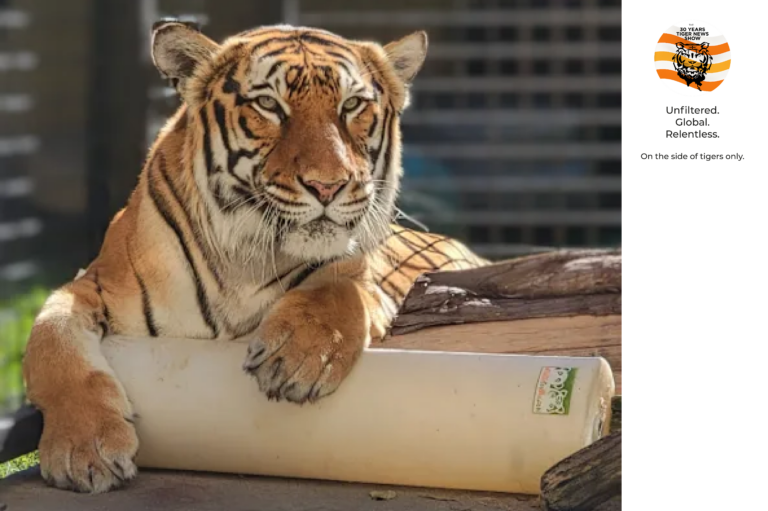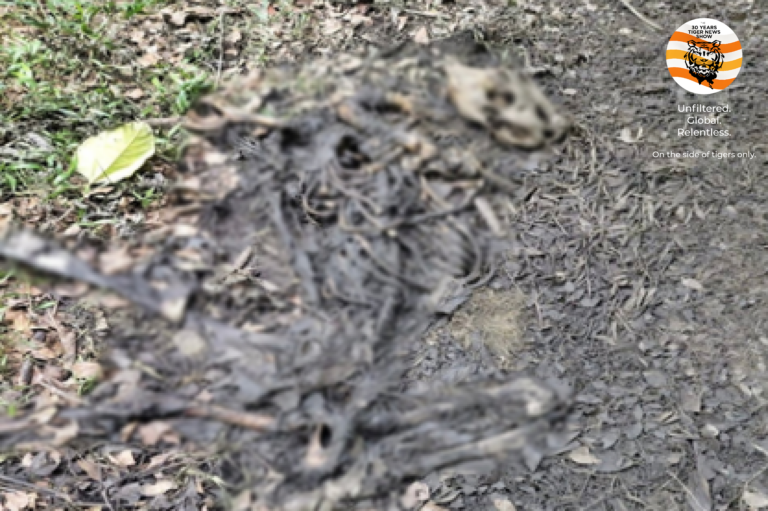
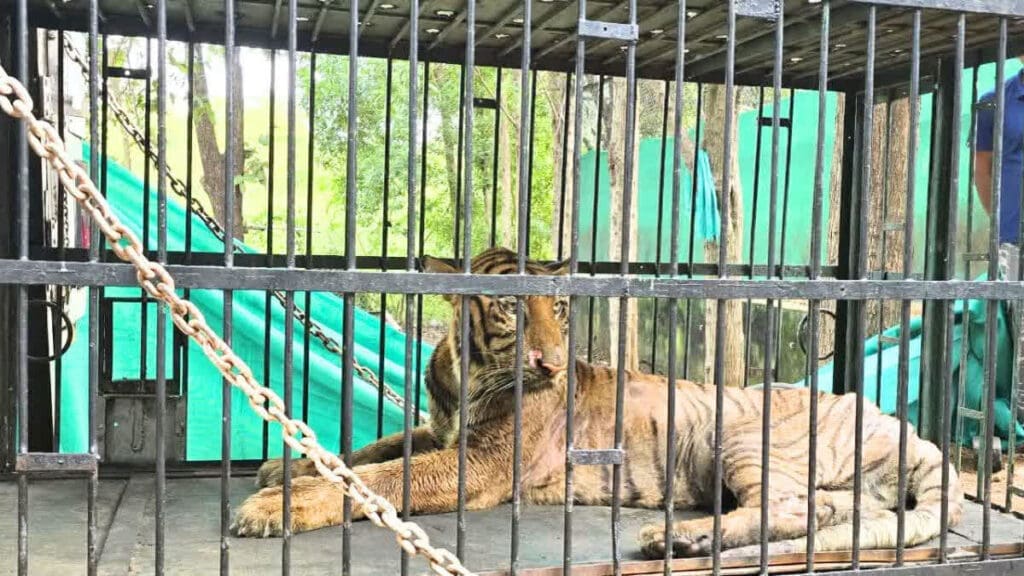
Tigress Bijli, once hailed as the pride of Raipur’s jungle safari and the “symbol of wildlife conservation” in Chhattisgarh, is dead. The only nine-year-old tiger died on Friday from chronic kidney disease after being transported over 1,000 kilometres from Raipur to the Vantara Wildlife Rescue Centre in Jamnagar, Gujarat — another example of how India’s zoo system confuses care with control.
Bijli
According to ETV Bharat, Bijli had been treated locally before her transfer. A special railway coach with air-cooling and a reinforced cage was arranged within 24 hours on the orders of Forest Minister Kedar Kashyap. The scene was treated like a state event — cameras, officials, and a grieving crowd waving goodbye. But there was nothing to celebrate in this spectacle.
The transfer was bureaucratic theatre masquerading as compassion. Instead of asking how a captive tigress developed renal failure in the first place, authorities staged her relocation as a victory of veterinary logistics. The result was predictable: another tiger dead from a system that calls itself humane while keeping wild animals in confinement for display and photo-ops.
The tragedy of captivity
Tigers like Bijli are never free. India’s zoo and safari circuits claim to “educate the public,” but in practice they perpetuate the same logic that drove wild tigers into cages: domination, control, and profit. Every death inside these facilities is reframed as a tragedy beyond human control — never as the structural neglect it truly is.
Chronic kidney disease in captive big cats is not rare; it is often linked to diet imbalance, stress, and lack of natural exercise. Forest departments call it “natural ageing,” but that excuse collapses when healthy adults die decades before their wild counterparts. The Bijli case is another warning that these spaces are unfit for genuine conservation.
A false narrative of “care”
The jungle safari where Bijli lived was built to promote eco-tourism under the banner of conservation. In reality, it commodified wildlife. Visitors paid to see caged tigers pacing behind barriers, while policymakers cited those crowds as evidence of “public engagement.” That same logic approved her removal to Gujarat — far from her familiar keepers and habitat, exposing her to further stress.
When the Principal Chief Conservator of Forests declared that Bijli’s “bravery and courage left a lasting mark,” he missed the point. Courage had nothing to do with her captivity. She was trapped, treated, transported, and died under the same system that exploited her image as a conservation mascot.
What real conservation looks like
True wildlife conservation does not involve moving sick tigers between facilities. It means protecting them in their natural habitats, strengthening patrols, cutting trafficking routes, and ending the economic model that turns sentient beings into assets. Sending a dying tigress on a cross-country train is not compassion — it is cruelty wrapped in protocol.
As our Zoos & Captivity cornerstone makes clear, captivity cannot substitute for wild protection. Every rupee spent on safari infrastructure or rail transport for show animals should instead fund field rangers and anti-poaching units.
The case of Bijli should force a reckoning inside India’s Forest Departments and their so-called rescue centres. These institutions must publish mortality data, improve veterinary standards, and phase out tourist safaris masquerading as conservation projects.
Beyond grief
Mourning Bijli means questioning why she was there in the first place. The real tribute to her memory would be a public commitment from Chhattisgarh to end wildlife captivity altogether and redirect resources to habitat protection. Otherwise, new tigers will follow her path: born for display, used for symbolism, and buried in bureaucratic sympathy.
Bijli’s story should not end with a condolence post. It should end with reform — because captivity is not conservation, and death in a cage is never a natural end for the tiger India claims to revere.
Source: ETV Bharat — India
Photo: ETV Bharat — India