
Reports of tiger roars near Ukay Perdana in Ampang sent Malaysia’s wildlife department into its usual posture: load shotguns, deploy patrols, prepare for capture. With roughly 125 Malayan tigers left, that reflex says more about institutional fear than fieldcraft. Every sighting becomes an “operation,” rarely an opportunity to teach coexistence or to show urban Malaysia what survival on the forest edge looks like.
Ampang
Residents at Sri Baiduri apartments told Free Malaysia Today they heard roars behind their building, prompting Perhilitan to send armed officers and police. Director-general Abdul Kadir Abu Hashim said teams “heard tiger roars twice” but found no tracks; cameras will be installed next. Meanwhile, residents were told to stay indoors and avoid the forest. The message is familiar: treat a roar as danger, not data.
This is what passes for tiger management in Malaysia—a city-edge patrol armed for confrontation. The Ampang episode again converts a teachable moment into an armed response. Instead of briefing residents on behaviour and safe conduct near green belts, Perhilitan opts for optics: men with guns, cordons, a tense nightly live shot.
Fear as a conservation strategy
Across Peninsular Malaysia, the pattern repeats. Tigers are framed as trespassers rather than survivors of disappearing habitat. From Gua Musang to Gerik, armed “rescues” remove animals that have wandered into terrain they once ruled. The Ampang case is simply the latest panic deployment. This mindset—where a tiger’s presence triggers emergency protocol instead of empathy and planning—keeps coexistence permanently out of reach.
Real conservation begins with habitat security, calm communication, and community tools that lower risk. Perhilitan’s first instinct, however, remains the rifle. That culture of containment, not collaboration, has helped push Malaysia’s wild tiger count down to an oft-quoted ~125—figures the state rarely publishes with methodology. The system seems more comfortable counting patrols than cats.
What the Ampang tiger would represent
If a tiger truly moved along the forest fringe near Kuala Lumpur, it would be a scientific event, not a public threat. It would mean fragments of forest still connect to the Titiwangsa spine—proof of ecological resilience in Ampang despite concrete and traffic. Yet official messaging frames it as danger; the gun replaces the camera, fear replaces curiosity.
Perhilitan reported “no tracks found,” then announced cameras would be installed. The order matters: weapons first, evidence later. It mirrors a hierarchy built on reaction, not prevention. For a national symbol, it’s a humiliating routine.
Learning from true coexistence
Where agencies have modernised, fringe encounters are handled with protocols that reduce panic: dusk-to-dawn alerts, livestock insurance, forest-edge signage, school briefings, WhatsApp/SMS hotlines, and trained community scouts. India’s better programmes apply this playbook; villagers get guidance before a cage arrives. Malaysia, by contrast, deploys Ampang-style shock teams. Until doctrine changes, coexistence will stay theoretical.
As our Human–Tiger Conflict cornerstone shows, coexistence starts when departments stop treating tigers as police cases. The Ampang response shows how decades of comfort with captivity hardened into habit. If every echo in the trees cues an armed grid search, the lesson the public learns is fear.
A tiger’s right to space
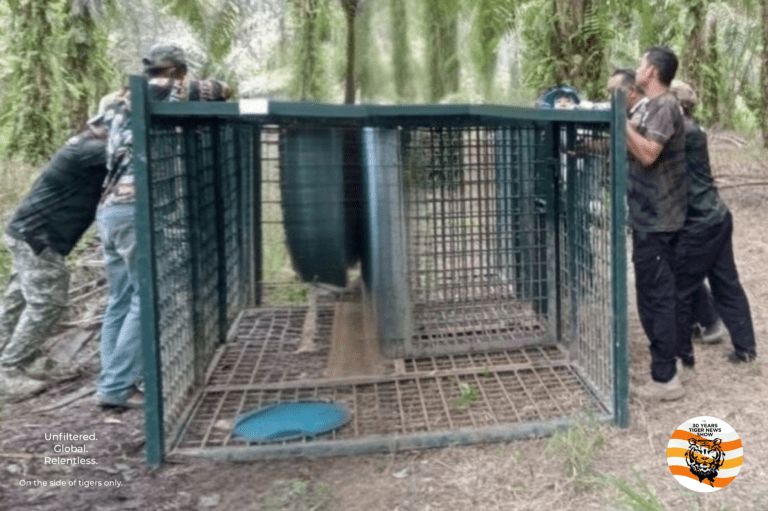
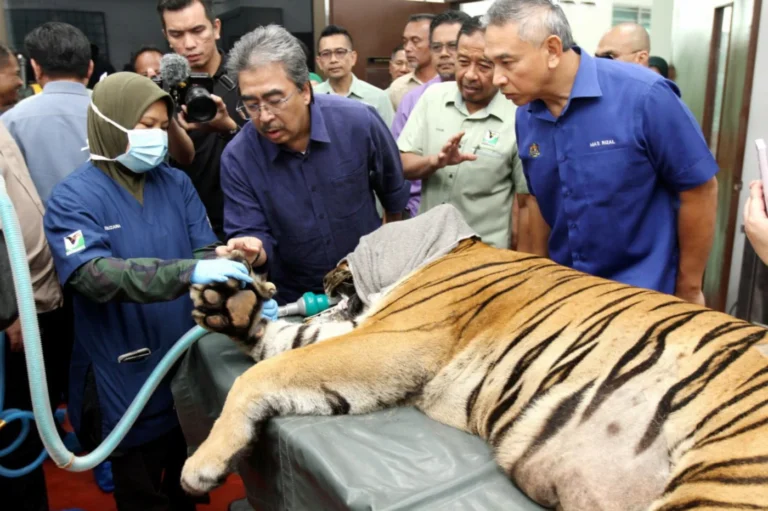
Every “probe” tends to end the same way: tranquilisation, transport, confinement. Tigers are sedated into safety because human systems refuse to adapt. If Perhilitan wants credibility, it should publish relocation outcomes, open its conflict-response SOPs for public review, and place a moratorium on removals where no verified threat exists. In Ampang, that means cameras and communication first, not shotguns and showmanship.
Malaysia can do this differently. The steps are mundane and measurable: map and signpost forest-edge paths; run quarterly school and resident briefings; fund rapid-response educators instead of defaulting to armed patrols; issue real-time alerts when cats are detected; and back it with fast compensation for verified losses. In Ampang, that would look like Perhilitan guiding residents through practical do’s and don’ts, setting monitoring traps immediately, and explaining next steps before rumours spread.
A roar near the capital should be a moment for humility and learning. If the Ampang tiger exists, it deserves a forest, not a cage. And Malaysia deserves a wildlife department confident enough to meet a wild cat with evidence, education, and empathy—before it reaches for the gun.
Source: Free Malaysia Today — Malaysia
Photo: Free Malaysia Today — Malaysia