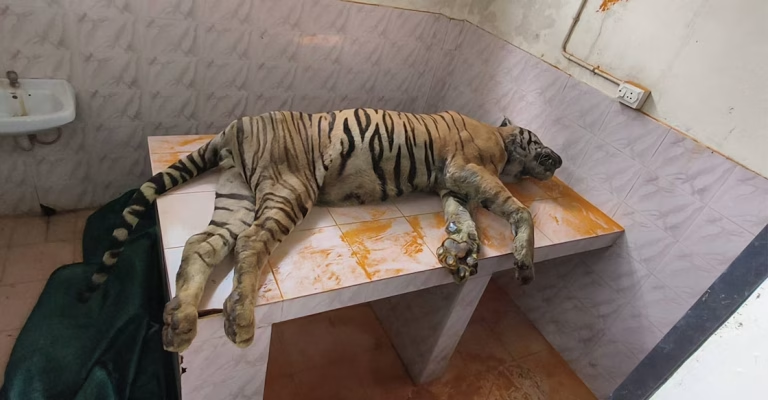
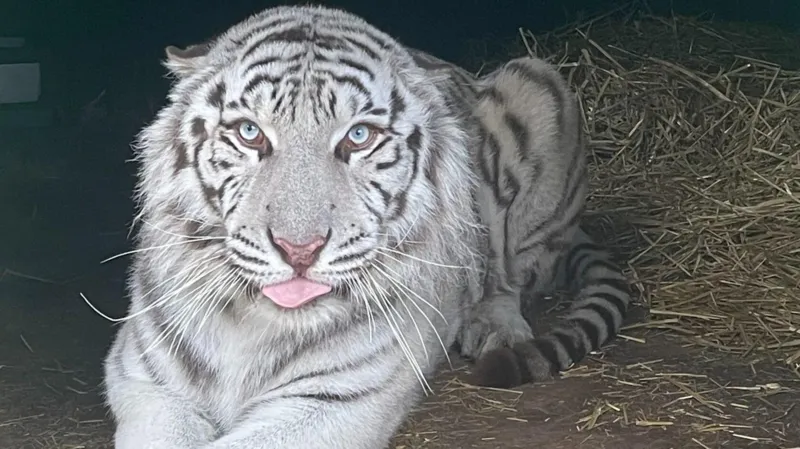
The media calls it “war trauma.” But for Aleks, the white tiger found in Ukraine and soon bound for the UK’s Lincolnshire Wildlife Park, the real trauma began long before the bombs. Born into captivity, displayed for spectacle, and now rebranded as a “rescue,” Aleks is another victim of a global zoo economy that turns animal suffering into a headline and calls it compassion.
Trauma
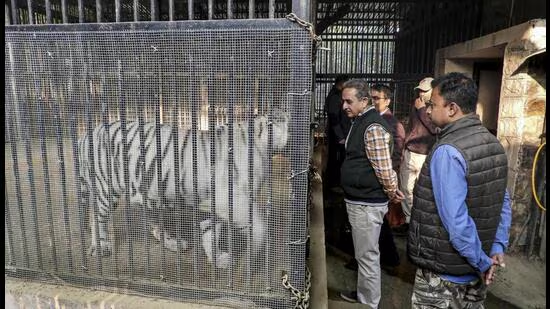
According to BBC News, Aleks was found abandoned last year in the Kharkiv region and taken to an animal shelter near Kyiv. After surviving shelling and starvation, he is now waiting for one final veterinary check before being moved across Europe. His new home, a purpose-built enclosure at Lincolnshire Wildlife Park, is being promoted as his “fresh start.”
Yet nothing about this is freedom. Aleks will be driven thousands of kilometres, through borders and paperwork, only to end up in another cage — a larger, prettier one perhaps, but still a cage. The park’s £ 100,000 fundraising campaign for his new “habitat” is a familiar PR ritual: emotional rescue stories masking the systemic failure to question captivity itself.
The cycle of captivity
The narrative of animal rescue from conflict zones tugs at global sympathy, but few ask the obvious: why was Aleks, a white tiger bred purely for appearance, in Ukraine in the first place? White tigers are not a separate subspecies — they are the product of inbreeding, bred for rarity that brings profit to private collectors and zoos alike. The trauma that BBC reports as war-related began in his DNA, in breeding programs that swap genetics for novelty.
Now, Aleks’s transfer to Lincolnshire Wildlife Park is framed as salvation. The park’s CEO admits the tiger “will come massively traumatised,” citing the noise of bombs and the loss of other animals to shell shock. But what of the trauma of pacing endlessly on concrete? Of being stared at, fed on schedule, deprived of purpose or privacy?
This is zoochosis — the psychological disorder of captivity. It manifests as repetitive pacing, self-harm, or obsessive grooming, symptoms mistaken for “quirks” by visitors and often ignored by staff. War did not cause Aleks’s trauma; captivity did. The bombs only added another layer to an already broken existence.
Compassion or continuity?
Lincolnshire Wildlife Park markets itself as a rescue centre. But its logic mirrors the very system it claims to oppose: take an animal bred for confinement, keep it confined elsewhere, and sell the story as redemption. The park proudly installed a new gate this week, completing most of Aleks’s £100,000 enclosure. Yet no enclosure, no matter how polished, restores a tiger’s lost autonomy.
The rescue narrative also deflects attention from the zoo industry’s complicity. How many Alekses are still being bred in roadside attractions, safari parks, and private menageries across Eastern Europe and Asia? How many will die unrescued, their trauma unmarketed because they lacked a war to make their suffering newsworthy?
Real rescue means release
True rescue is not relocation — it’s reform. It means dismantling the trade that breeds, sells, and displays tigers for entertainment. It means ending the “photo safari” mindset and redirecting money into wild rehabilitation and anti-poaching programs. Aleks’s life story should be a case study in what happens when profit drives compassion — not another press release for a zoo expansion.
The media obsession with individual “survivor” tigers also erases the broader picture: the industrial pipeline of captivity that produces them. As long as the public applauds each rehoming as a victory, the system survives.
Aleks’s trauma cannot be cured by a new gate, a pool, or a play frame. What he needs — and what no zoo can give — is the right to live unseen, unhandled, and unbranded. Until that truth replaces the fairy tale of rescue, the white tiger’s story will remain a cycle of trauma dressed as salvation.
Source: BBC — UK
Photo: BBC — UK