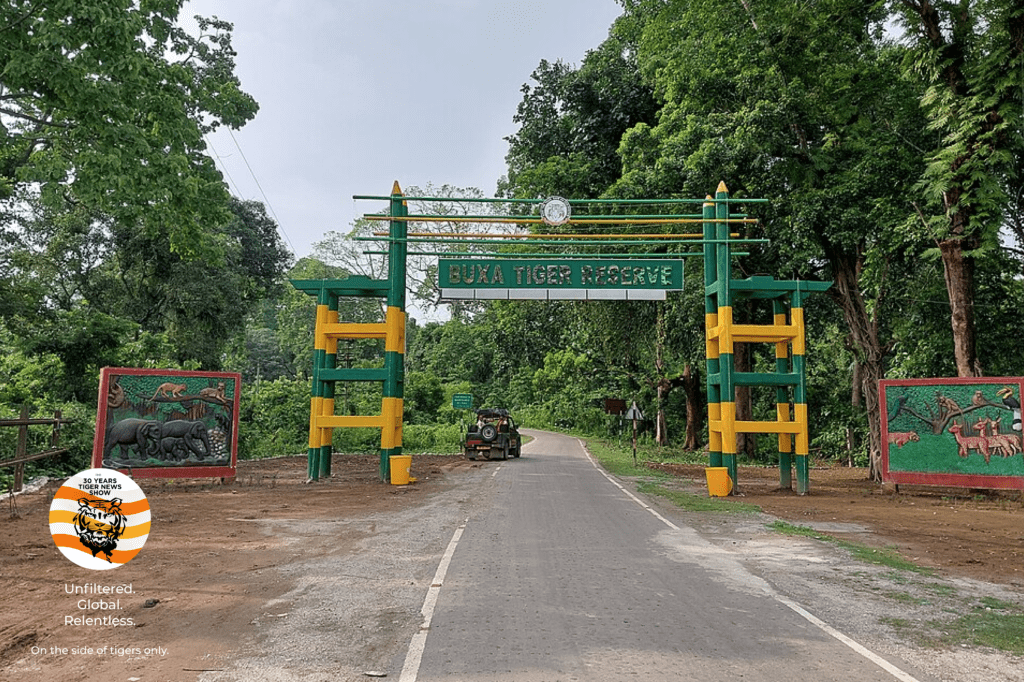
Buxa may finally move from tiger absence toward tiger return, as reported by Millennium Post. Union Environment and Forest Minister Bhupender Yadav has announced a central plan to reintroduce Royal Bengal Tigers into the reserve, nearly 40 years after the landscape lost a stable resident population. The plan will involve direct discussions with the West Bengal government and follow National Tiger Conservation Authority guidelines. For once, this is the kind of tiger news that deserves cautious hope. Not applause yet. Hope. Because bringing tigers back is not a slogan. It is a test of whether governments can repair what politics, delay and habitat pressure allowed to fade.
Buxa was declared virtually tigerless in the national tiger census surveys of 2010, 2014 and 2018. A camera trap recorded a tiger in the reserve on December 11, 2021, the first such image in nearly four decades. More sightings followed in 2022 and 2023, but officials treated those animals as transient individuals likely moving from Bhutan or Assam. That distinction matters. A passing tiger is not a restored population. A resident population needs prey, space, security, low disturbance and long-term political discipline.
Buxa Needs Foundations Before Tigers
Officials expect preparations to be completed by September 15, during the annual forest closure from June 15 to September 15. That period may be used to speed up rehabilitation of villages located inside the reserve. Two villages have already been relocated, with others expected to shift in phases to create a larger human-free core habitat. This is difficult work and must be done with dignity, fair compensation and real consent. Conservation cannot be built by mistreating people.
Buxa also needs stronger prey density. Officials are planning to introduce more spotted deer, while sources suggest three or six tigers may eventually arrive, possibly in a ratio of two females to one male. Potential source reserves include Manas, Kaziranga and Valmiki. Those details are encouraging because they show planning beyond symbolic release. Tigers cannot be dropped into an empty forest and expected to become a success story. The forest has to be ready first.
Political Delay Cannot Return
Wildlife expert Joydeep Kundu said the move should have happened long ago and blamed political unwillingness in the previous state government for years of delay, while thanking the present state and central governments for taking the initiative. That statement deserves attention because tiger recovery often fails before fieldwork begins. It fails when governments hesitate, compete, postpone or use wildlife as a political trophy.
If Buxa succeeds, it will not be because one minister announced a plan. It will be because the state and Centre keep working after the headline fades. Reintroduction needs monitoring, anti-poaching vigilance, prey recovery, corridor protection, community confidence and scientific honesty. Failed releases usually begin with premature pride. Successful ones begin with patience. The best sign here is not the proposed tiger number. It is whether officials prove the habitat can hold them.
A Positive Story Still Needs Discipline
West Bengal already has more than 100 tigers in the Sundarbans, but Buxa is a different landscape with a different history. Its revival would reconnect hope across northern Bengal and the transboundary forests linked to Bhutan and Assam. A stable tiger population there would mean more than a census gain. It would suggest that a damaged reserve can still recover when political will, ecological repair and field preparation finally align.
This is good news, but it must stay humble. Tigers should not be used as decorative proof of government success before the forest has done the work. Every relocated village, every restored prey base, every patrol route and every camera trap will matter more than speeches. Real conservation practices are measured by survival after release, not ceremony before it. Buxa has waited decades for this chance. If India gets it right, the return of tigers will not be a miracle. It will be proof that a lost landscape can be made worthy again.
Source: Millennium Post, India
Photo: Wikipedia.org