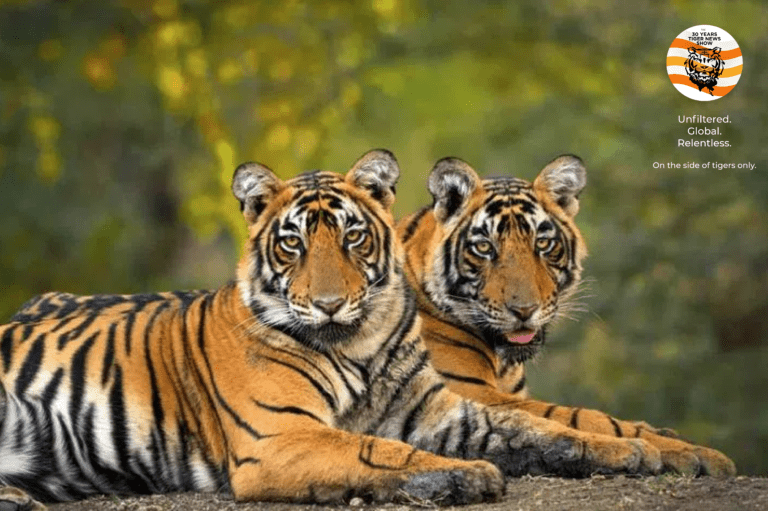
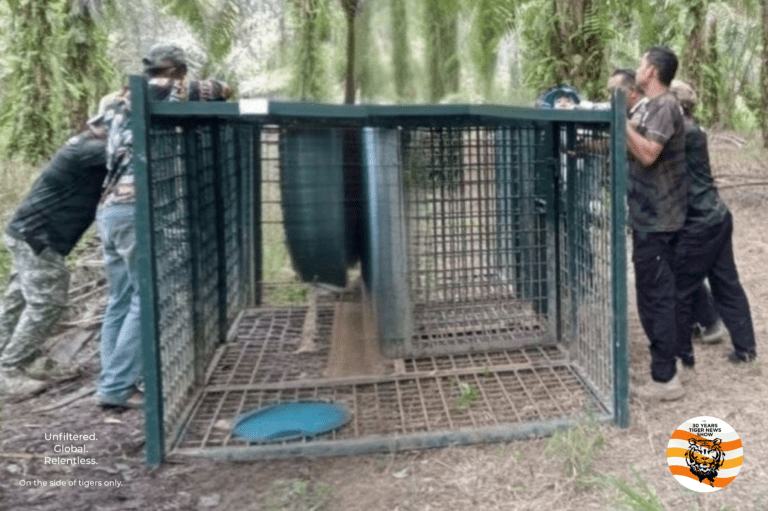
Authorities in Malaysia are once again preparing to respond with force instead of understanding after a tiger allegedly killed cows near Chemor, Perak, as reported by Free Malaysia Today. Two cows were found dead, five are missing, and immediately Perhilitan and the police issued warnings to residents. Yet the real emergency is not livestock loss. It is the critically endangered Malayan tiger, a population now believed to be closer to 125 individuals than the official estimate of 150. When a nation with three-quarters of a million cattle reacts by targeting one of its last wild tigers, the failure is not ecological; it is moral.
A Country Overflowing With Cows But Starving Its Tigers Of Space
In Bukit Bangkong, near Chemor, a resident discovered two cows with bite marks and others missing. Instead of treating the incident as natural predation in a landscape that humans have overrun, the response followed an all-too-familiar pattern: camera traps, patrols, warnings, and unspoken pressure to capture or remove the tiger. Malaysia has 750,000 cows. Malaysia has around 125 Malayan tigers. Yet the system behaves as if cows are irreplaceable and tigers expendable.
The tiger killed the Chemor livestock because livestock were placed inside tiger habitat without protection. This is not conflict. This is predictable consequence. Livestock allowed to roam freely on the edges of forested areas convert tiger territories into open buffets, and then the tigers are vilified for following their evolutionary instincts. Chemor Authorities claim they prioritise safety, but their actions prioritise cattle. Safety is invoked only when a tiger appears; the daily encroachment by humans and livestock is never framed as dangerous.
Perhilitan urged Chemor farmers to install lights or bonfires and even suggested playing Quranic recitations to deter the tiger. None of these measures address the root issue: cattle should not be grazing inside tiger landscapes unprotected. Instead of building corridors, enforcing buffer zones, and securing pens, authorities respond by shifting responsibility to the tiger who has already lost most of its forest.
When A Critically Endangered Tiger Is Treated As A Criminal
Malaysia’s Malayan tiger is on the edge of extinction. Scientists fear the population has already dipped below 125. Every individual matters. Yet each time livestock is killed, the country reacts as though tigers are invaders rather than the original inhabitants of these forests. The Chemor police chief urged residents to avoid forested areas. Authorities urge vigilance. The message is consistent: humans belong everywhere; the tiger belongs nowhere.
This mindset guarantees the tiger’s decline. A species cannot survive when every sign of its presence triggers a human crisis. Malayan tigers have already lost more than 90 percent of their historic range to plantations, logging, roads, and settlements. Now they are punished for trying to survive in the scraps that remain. Cattle are allowed into tiger habitat; tigers are not allowed into their own.
The disappearance of five cows will mobilise resources, political attention, and public alarm. The disappearance of the Malayan tiger from entire regions barely triggers a press release.
Malaysia Cannot Claim To Protect Tigers While Destroying Their Options
Perhilitan and Chemor police are “on alert,” not because a tiger is in danger, but because a tiger exists. This is the heart of the problem. Livestock deaths should be addressed with compensation schemes, secure pens, rotating grazing, and government responsibility. No tiger should ever be removed for killing cows. If Malaysia continues treating cattle as a protected class and tigers as liabilities, extinction is inevitable.
The behaviour displayed in Chemor is not conflict management. It is surrendering yet another tiger in advance. Authorities must recognise that the survival of this species depends entirely on changing human behaviour, reducing livestock intrusion, and reinforcing respect for tiger landscapes. This requires planning, investment, and honest acknowledgment of past failures. It requires a cultural shift away from responding to tiger sightings as emergencies and toward understanding them as necessary signs of ecological health.
These events echo a larger truth about how human communities manage their presence in shared landscapes, a theme explored in discussions of coexistence within the wider framework of conflict. Malaysia cannot save the Malayan tiger while treating each hungry individual as a threat. The tiger is not the problem.
The problem is a nation that chooses cows over its own symbol of wilderness.
Source: Free Malaysia Today, Malaysia