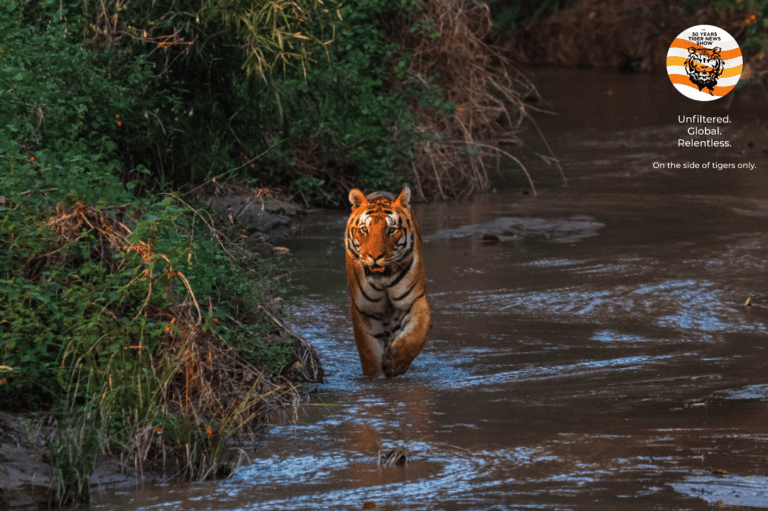
Breeding population failure in Kawal Tiger Reserve exposes the gap between a reserve label and real tiger recovery. Telangana’s Kawal has enough prey to support more than 35 tigers, yet it has no resident breeding tigers, as reported by Telangana Today. The Oryx study on prey density and carrying capacity shows that food is not the missing element. Female dispersal, safe corridors, and conflict prevention are. A forest may be legally protected, but tigers cannot raise cubs inside paperwork. They need routes that remain open, villages not abandoned to conflict, and governments willing to repair damage built around Kawal habitat.
Breeding population Depends On Female Dispersal
Kawal was declared a tiger reserve in 2012, but the study says it still lacks resident breeding tigers. During the past decade, 15 tigers moved into the reserve from a nearby source population in Maharashtra. Only two were females. That imbalance makes natural recovery highly unlikely without intervention, because passing males do not create a stable future. The researchers are not describing a prey shortage. They are describing a landscape where tigers can appear, but cannot settle safely enough for cubs to anchor the next generation.
The study was led by Imran Siddiqui of the Centre for Wildlife Studies, Bangalore, and Hyderabad Tiger Conservation Society, with Nilanjan Basu, Dr Kathan Bandyopadhyay, Dr John L Koprowski, and Dr Venkatesh Angandhula. Breeding population recovery needs more than animals wandering in. It needs female movement protected from start to finish.
Prey Capacity Is Not Enough
The central fact is powerful: Kawal’s core area could support more than 35 tigers. That should give Telangana a conservation opportunity. It exposes administrative failure. If a reserve can feed tigers but cannot hold them, then management, connectivity, and conflict systems are falling short. Prey is the foundation, not the whole building.
The barriers are specific. Fragmented landscapes, highways, railway networks, open-cast mines, and dense human settlements restrict movement between Kawal and neighbouring source populations such as Tadoba-Andhari Tiger Reserve. Preliminary monitoring from 2019 to 2025 suggests tigers are moving towards Kawal through multiple corridors, but infrastructure and conflict repeatedly hinder dispersal. Breeding population recovery cannot be left to chance while paths into habitat are cut, squeezed, and treated as negotiable.
Corridors Must Work In Real Life
Imran Siddiqui said corridors, particularly through Kagaznagar Forest Division, need wildlife overpasses or underpasses to facilitate tiger movement. This is survival infrastructure. A corridor that looks useful on a map but fails at a road, railway, mine, or settlement is not a corridor for a tiger. It is a broken promise.
Governments and agencies often speak as if fragmentation is unfortunate, but fragmentation is produced by decisions. Roads are approved. Mines are permitted. Settlements expand. Wildlife passages are delayed or underbuilt. Then tigers are blamed for failing to recover in landscapes humans have made hostile. Kawal shows why Breeding population success depends on treating connectivity as a requirement before damage becomes permanent.
Conflict Prevention Must Come First
The researchers recommend assisted dispersal, especially of females, together with stronger corridor management, community engagement, and human-wildlife conflict mitigation. These measures cannot be separated. Moving females into a risky landscape without trust and protection would transfer the problem. Asking communities to accept tiger recovery while leaving them exposed to loss would be equally irresponsible.
Human loss and livelihood damage deserve seriousness without turning tigers into villains. Conflict prevention means practical safeguards, quick response, fair compensation, and planning that reduces fear before crisis begins. It also means roads, mines, railways, district officials, and political leaders must share responsibility with forest departments. Breeding population recovery will be decided by the whole landscape, not by one reserve office.
Kawal Needs Conservation Practices That Work
Kawal can still become tiger habitat. The study gives Telangana evidence and a warning: capacity alone will not restore tigers. Female dispersal must be supported, Kagaznagar corridors must function, wildlife crossings must be built where infrastructure blocks movement, and communities treated as partners.
These are basic conservation practices, not optional polish. A reserve able to support more than 35 tigers should not remain without breeding population prospects because human systems refuse to make movement safe. Tigers have already shown the route back. Responsibility now belongs to the people blocking it.
Source: Telangana Today, India
Photo: Telangana Today, India