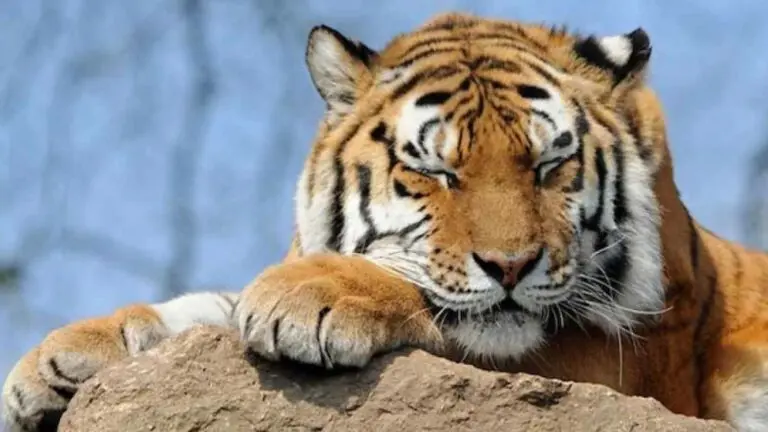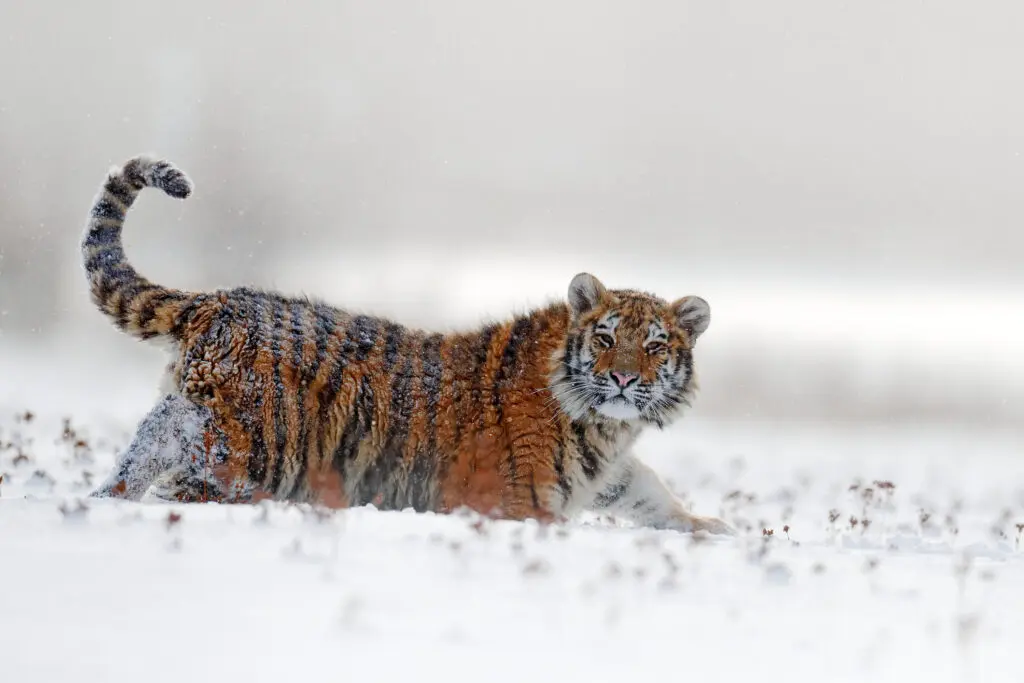
The Amur tiger remains one of the world’s most powerful predators, yet major publications still label it the Siberian tiger, reinforcing an outdated narrative that obscures the species’ true geography and urgent conservation needs, as i.e. reported by One Earth. The name persists in headlines and documentaries, even though the Amur tiger no longer occupies the Siberian territory that once defined its range. Today, its survival centres on the forests of the Russian Far East and northeast China.
Accurate naming matters because conservation depends on truth, not nostalgia.
A Species Defined By The Amur, Not By Siberia
The modern Amur tiger inhabits rugged valleys, Korean pine forests and snow-covered slopes near the Sikhote-Alin mountains. These landscapes, while cold and remote, differ significantly from the boundless image of Siberia that dominates public imagination. When media cling to the term Siberian tiger, they anchor the species to vast empty expanses it no longer occupies. That distortion weakens understanding of where real pressures occur.
The Amur tiger once roamed across northeast China and the Korean Peninsula before habitat loss, poaching and conflict carved its range into fragments. Occasional dispersers still move near the border with North Korea, but the core population remains tightly bound to a limited portion of Russia’s Far East. Using the old name makes the species sound more geographically secure than it is, masking how small and fragile the remaining territory has become.
Biology And Behaviour Shaped By The Amur Landscape
The Amur tiger’s thick winter coat, pale colouring and formidable size evolved in harsh environments where prey is scattered and winters are long. These traits are often used to romanticise the Siberian label, yet the adaptations emerged across mixed boreal forests, not a mythical wilderness stretching across half a continent. The species hunts deer, boar and even bears when necessary, shaping predator dynamics that influence everything from prey behaviour to forest regeneration.
This predator’s influence on its ecosystem depends on intact corridors, reliable prey and forests free from intensive logging. But when media simplify the species into a Siberian stereotype, the public loses sight of the ecological relationships that sustain it. The Amur tiger’s world is not a vacant expanse; it is a pressured mosaic repeatedly reshaped by human decisions.
The Danger Of Keeping A Name That No Longer Fits
Names are not harmless. When a species is mislabeled, perception drifts away from reality. Calling the animal the Siberian tiger implies abundance, space and isolation, as though threats have not already compressed its habitat into narrow bands along the Amur River. The truth is more urgent. Genetic diversity remains dangerously low, a lingering legacy of past population crashes. Poaching continues to threaten both tigers and their prey. Development corridors, mining interests and logging concessions splinter the forests that connect subpopulations.
When global audiences believe the tiger still roams across Siberia, they underestimate how little habitat remains. Misnaming becomes miseducation, and miseducation delays the political will required to act. Conservation messaging must reflect the present, not an image inherited from the 20th century.
A Future That Depends On Accuracy And Honesty
Despite the threats, the Amur tiger has shown remarkable resilience. From a few hundred individuals in the 1990s, the population has rebounded to roughly 750, including about 200 cubs. Cross-border cooperation between Russia and China, anti-poaching patrols and habitat protection have enabled this slow recovery. But no recovery is permanent unless language aligns with reality. The world must understand where the Amur tiger actually lives, how strained its ecosystems are and what risks climate instability now poses.
The story of this subspecies should not remain trapped in the shadow of its former name. The Amur tiger deserves recognition rooted in geography, ecology and truth. Media must stop repeating a label that hides the consequences of habitat loss and misleads audiences about the species’ shrinking world. Accurate naming helps the public grasp why conservation matters and where intervention is needed.
This clarity mirrors concerns in conservation about how public perception influences action, a reminder that responsible communication plays a vital role in guiding effective practices. For the Amur tiger to endure, truth must replace nostalgia, and language must reflect the world the species occupies today.
Source: One Earth, USA.
Photo: One Earth, USA. Photo credits: Ondrej Prosicky, Dreamstime.