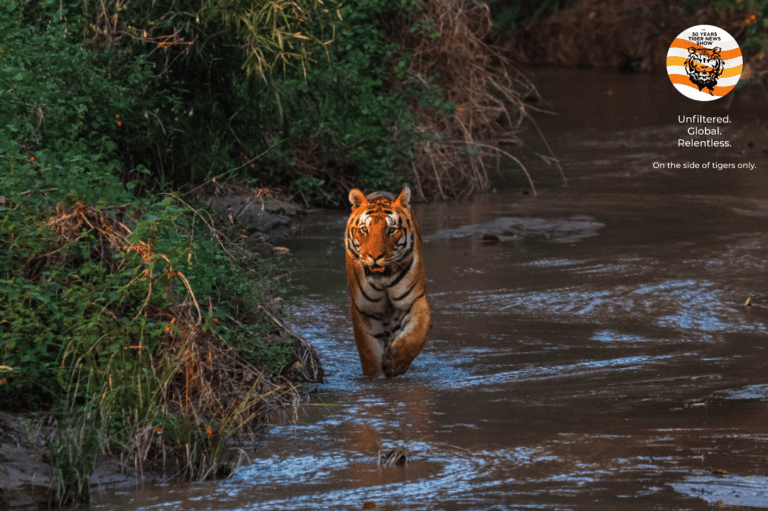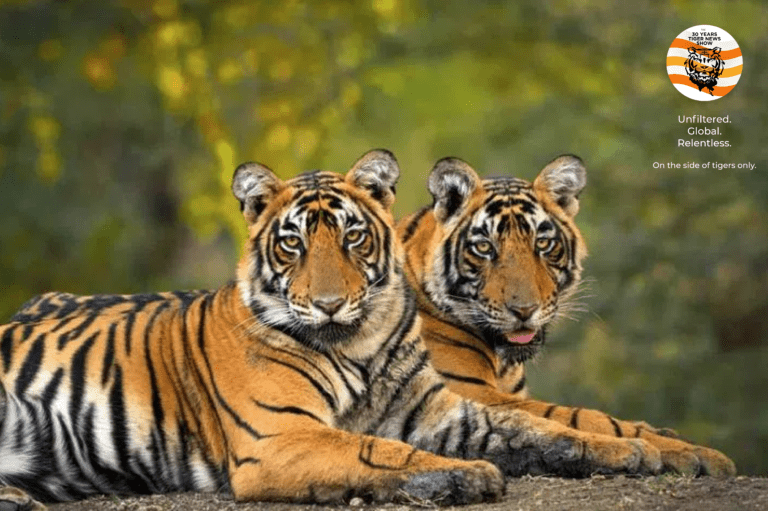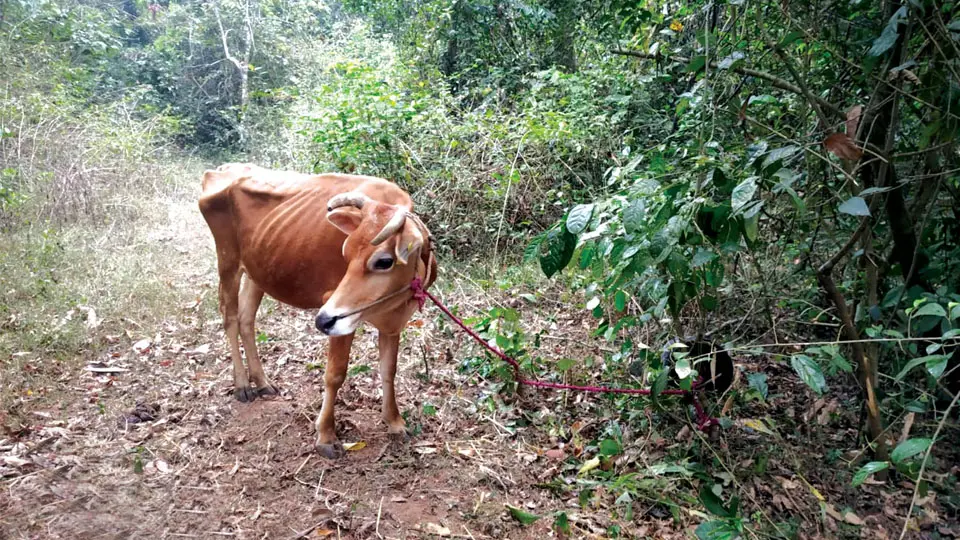
The death of a single cow in Kodagu has once again triggered a flurry of headlines, reflecting a long-standing pattern in which media portray tigers as villains rather than endangered animals responding to shrinking habitat and prey. This framing has resurfaced after a tiger killed a cow in Badaga Banangala, as reported by Times of India. Another cow was injured nearby, and forest staff launched an operation to find the animal. These reports follow a familiar script: a tiger acts naturally, a cow dies, and the national narrative shifts toward fear rather than understanding.
When Fear Sets The Agenda Instead Of Ecology
Forest teams from Thithimathi and Ponnampet inspected both sites and assured residents that efforts were underway to locate the tiger. But such efforts seldom interrogate the wider truth: tigers kill livestock because they have been cornered by relentless human expansion, habitat cuts, and weakened prey populations. Villagers bear real losses, yet the framing of every cow death as a crisis obscures the structural failures that brought Karnataka to this point.
In India, daily road accidents kill hundreds of people, yet headlines rarely demand that cars be captured, restrained or removed to distant sanctuaries. A cow, however, becomes breaking news when a tiger kills it, reinforcing a damaging perception that tigers are dangerous trespassers in a human-dominated world. This perception persists because the media retell the same story without acknowledging that tigers need intact landscapes, not rescue operations designed to appease public anger.
A Crisis Manufactured By Narrative, Not Nature
When a cow is killed, immediate demands often escalate toward tracking, capturing or relocating the tiger involved. These actions create the illusion of control, but they do not address the deeper erosion of habitat edges or the encroachment around Kodagu that forces tigers into increasingly narrow spaces. Tigers do not lose their fear of humans by choice; they lose their options. Livestock, left to graze at forest margins without safeguards, becomes the inevitable outcome of this tightening trap.
The emphasis on each cow death distorts public perception, as though tiger behaviour were abnormal rather than a predictable response to systemic failures. India’s media, especially national outlets, amplify this distortion by highlighting rare livestock incidents while ignoring everyday losses caused by roads, development pressures, and governance gaps. The imbalance shapes opinion, and policy often follows perception rather than evidence.
The Cost Of Turning Tigers Into Headlines
Each incident involving a cow redirects the conversation away from coexistence and toward reactive responses. Field staff scramble to reassure communities, while policymakers treat tiger presence itself as a problem instead of recognising it as evidence of an ecosystem that still holds life. Reserves like Nagarahole and Bandipur, connected to Kodagu’s forest belts, have suffered repeated fragmentation over the years. As corridors shrink, every tiger must navigate a landscape where human boundaries harden faster than ecological needs.
This cycle teaches the public that tigers are threats requiring daily management rather than endangered species hanging on at the margins of a rapidly developing country. When the media echo this message, they weaken public support for the long-term solutions tigers depend on, including protected corridors, reliable compensation structures, and community partnerships. Very little is gained when the focus stays fixed on the fate of a single cow rather than the future of an entire landscape.
A Story That Deserves Better Than Sensationalism
India cannot afford to keep telling the same story every time a cow is killed. The problem is not the tiger; it is the human system that leaves both wildlife and communities unsupported. A more responsible narrative would acknowledge villagers’ economic losses while also recognising that tigers survive only where landscapes remain connected, prey remains available, and conflict prevention receives sustained investment.
Tiger perception in India has long been shaped by dramatic headlines rather than ecological understanding. Until media shift their focus from isolated livestock incidents to the real pressures shaping tiger behaviour, public opinion will continue to be driven by fear rather than truth. Addressing this imbalance requires the same patience and dedication that underpin meaningful conservation efforts, including approaches grounded in evidence and long-term landscape security explored in discussions of tiger marketing myth. If India embraces such understanding, fewer tigers will be punished for acting like tigers, and fewer cows will become symbols in a narrative that needs to evolve.
Source: Times of India, India
Photo: Star of Mysore, India