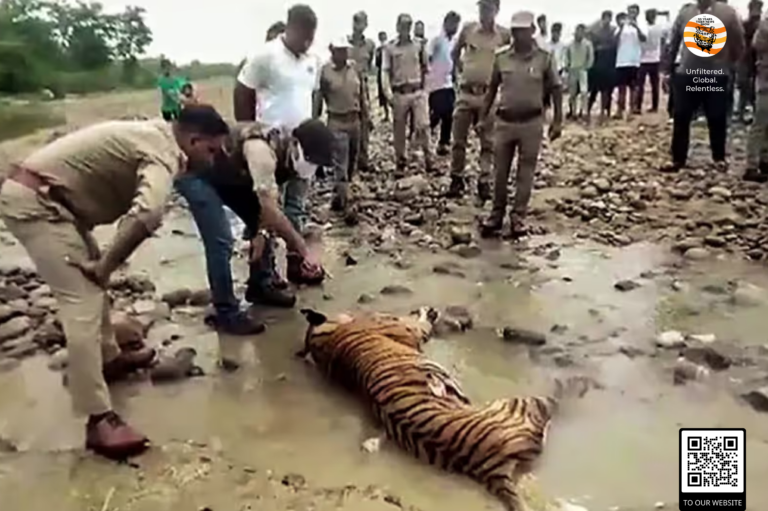
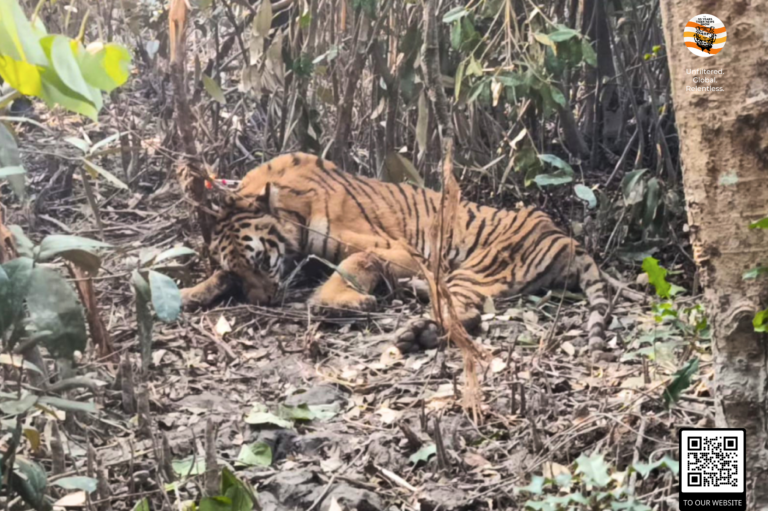
Amanganj has become the latest name added to India’s growing list of unexplained tiger deaths after a recently rescued two-year-old tiger was found dead in the buffer zone of Panna Tiger Reserve, as reported by The Hitavada. Officials stated that no immediate signs of foul play were observed and that the carcass was found intact. But that explanation feels increasingly inadequate when Madhya Pradesh has already recorded 28 tiger deaths since January 7 this year. At some point, repeated mystery stops sounding accidental and starts demanding harder questions.
Amanganj Tiger Was Already Under Monitoring
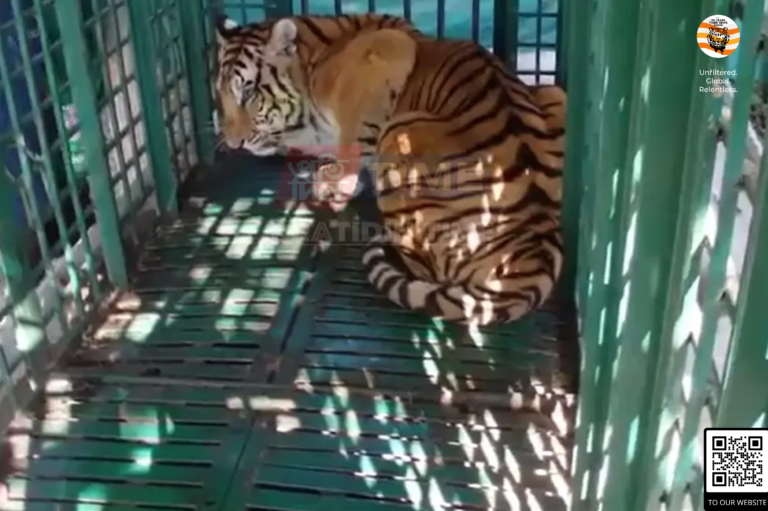
Amanganj was not an unknown tiger disappearing silently inside a remote forest corridor. This tiger had already been rescued earlier from Tara village and fitted with a radio collar for continuous monitoring. That detail matters because it means forest authorities were actively tracking the animal’s movement and condition before its death.
According to Panna Tiger Reserve Field Director Brijesh Shrivastava, the carcass was discovered in the Amanganj buffer area and appeared intact. Veterinarians later conducted a post-mortem examination while preserving viscera samples to determine the cause of death. Standard NTCA cremation procedures followed soon afterward.
The official response sounds procedural and orderly, but the deeper concern remains unresolved. What exactly caused a monitored young tiger to die only months after rescue? Until forensic findings are released transparently, the public is being asked to accept uncertainty once again while another tiger disappears from the landscape.
Amanganj Reflects A Larger Pattern
Amanganj is not an isolated case. Madhya Pradesh continues reporting one tiger death after another while explanations often remain incomplete, delayed, or quietly buried beneath administrative language. The state remains celebrated internationally as one of India’s flagship tiger strongholds, yet the number of dead tigers this year already exposes how fragile that reputation can become.
The first tiger death of 2026 in Madhya Pradesh was recorded on January 7 inside Bandhavgarh Tiger Reserve. Since then, the numbers have steadily climbed. Some deaths involve territorial conflict or natural causes, but others remain surrounded by uncertainty. That uncertainty matters because wildlife crime, poisoning, electrocution, snaring, and retaliatory killings are frequently disguised or discovered too late for proper evidence collection.
When authorities quickly state that no foul play is immediately visible, skepticism becomes reasonable. Wildlife crime rarely announces itself clearly. Evidence can disappear fast, especially in buffer zones where human pressure, illegal activity, and habitat fragmentation overlap constantly.
Amanganj Death Demands Transparency
Amanganj should now become a test of transparency rather than another file quietly closed after laboratory procedures finish. If the tiger carried a functioning radio collar, authorities should release movement data, health observations, and a credible timeline leading up to the death. Without public accountability, confidence in tiger protection systems continues eroding.
The broader danger is institutional normalization. Once repeated unexplained deaths become routine, they stop generating urgency. That is precisely when conservation systems begin weakening internally. Tigers cannot survive long-term if unexplained mortality becomes politically easier to manage than uncomfortable investigation results.
India’s tiger conservation model depends heavily on public trust, scientific credibility, and the assumption that every tiger death is taken seriously. When the exact cause remains unknown too often, that trust starts deteriorating.
A Dead Tiger Is Never Just A Statistic
Amanganj is now another reminder that tiger conservation is not measured only by census celebrations or population headlines. It is measured by whether living tigers survive safely beyond official reports and tourism campaigns. Every dead tiger represents a rupture somewhere inside the system — ecological, political, forensic, or institutional.
The young tiger rescued from Tara village survived one crisis only to die under monitored conditions months later. That contradiction deserves scrutiny, not comforting assumptions. Forest departments cannot expect the public to celebrate rising tiger numbers while accepting unresolved deaths as normal background noise.
The growing crisis surrounding tiger deaths requires more than procedural statements and cremation protocols. It requires relentless investigation, transparent forensic reporting, and the willingness to confront uncomfortable truths before more tigers disappear into unexplained silence.
Source: The Hitavada, India
Photo: The Hitavada, India