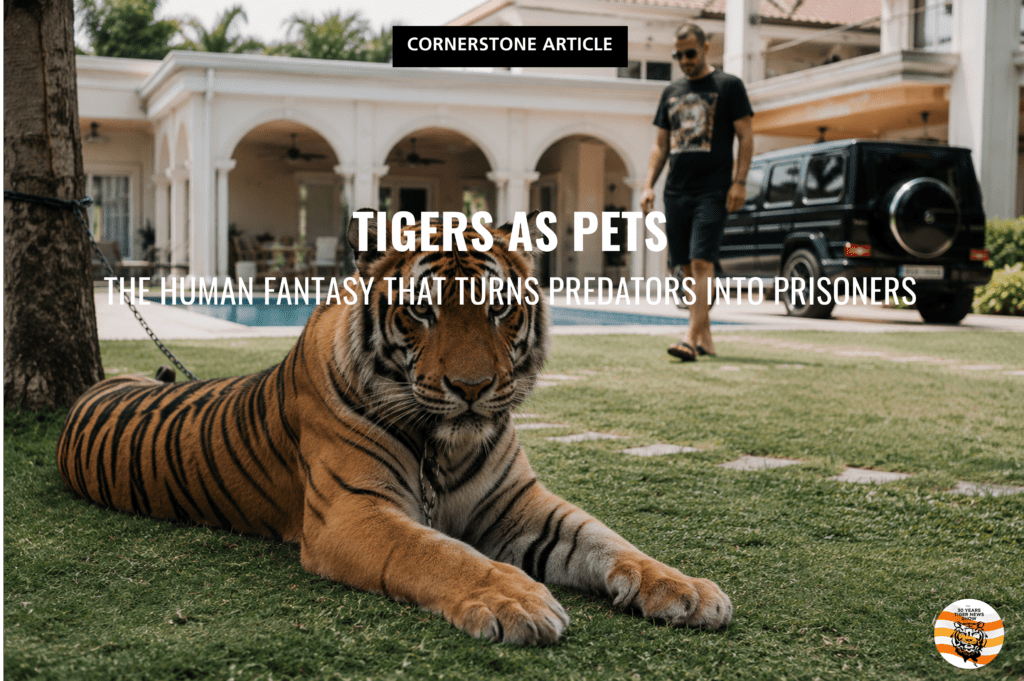
Pets are domestic companions; tigers are not. A tiger in a villa, backyard, basement cage, roadside attraction, influencer video, private compound or criminal menagerie is not a companion with stripes. It is an apex predator forced into a human fantasy of ownership. The owner gets status, danger, intimacy, money, content or power. The tiger gets confinement, dependency, stress, trade risk and a life reduced to human appetite.
The lie regarding pets begins with language. Owners call them family. Breeders call cubs tame. Exhibitors call encounters education. Visitors call photos harmless. Influencers call the bond special. Some facilities call captivity conservation. But language cannot domesticate a tiger. It cannot turn a territorial predator into a household animal, and it cannot turn possession into care. The tiger remains what it is: a wild species shaped for landscapes, not living rooms. Calling them pets only helps the human side of the story.
That is why the question regarding tigers as pets should not be whether one person can keep a tiger safely for a while. The question is why any society allows private possession of an animal whose proper life is beyond ownership.
The Word Pets Hides The Violence
The word pets makes the problem sound softer than it is. It suggests affection, feeding, naming, training and familiarity. It hides the fence, the locked gate, the paperwork, the sedatives, the emergency risk, the breeding chain and the fact that the tiger cannot leave. A dog can be a pet because dogs are domesticated animals shaped across thousands of years for life beside humans. A tiger is not.
Hand-raising changes behavior, not biology. A cub can accept a bottle, follow a handler, sit on a couch and tolerate touch. None of that makes the adult animal domesticated. It only means humans interfered early enough to blur the tiger’s fear of them. That can make the animal more dangerous, not less, because it removes distance without removing strength, instinct or predatory capability. The pets label turns that risk into sentiment.
The owner often confuses access with trust, which is why pets framing is so dangerous. The tiger may know the feeding routine. It may recognize a voice. It may accept a familiar human. Then one day a smell, sound, movement, illness, heat cycle, fear response or hunger cue shifts the situation. When a tiger reacts like a tiger, humans call it a tragedy. The original tragedy was ownership.
Cubs Make Pets Look Harmless
The cub is where many people first accept the fantasy. Tiger cubs are small enough to hold, pretty enough to photograph and young enough to make captivity look gentle. A cub in human arms does not yet show the adult weight, strength and territorial force that will arrive. The image disarms the viewer. It is supposed to.
Cub petting is not harmless. It requires a supply of cubs. A supply of cubs requires breeding. Breeding creates surplus animals once they become too large, too expensive or too dangerous for close contact. The business model depends on the animal being valuable for a short window and inconvenient for decades afterward. The public sees a moment. The tiger lives with the consequence. That is how pets culture recruits sympathy before the bill arrives.
This is why laws against direct public contact matter. In the United States, the Big Cat Public Safety Act, signed in 2022, restricted private possession of covered big cats and prohibited public contact with cubs and adults. It was a response to a system that had allowed roadside facilities, exhibitors and private owners to profit from dangerous access for far too long.
The moral lesson is simple. If a business needs baby tigers to keep visitors paying, the business is not protecting tigers. It is consuming childhood and selling the first chapter of a life sentence.
Status Is The Real Product
No one needs a tiger at home. The reason private tigers exist is not need. It is status. The animal is used to project power, wealth, danger, masculinity, exclusivity, rebellion or access. The private owner wants an animal that makes the owner look larger. Pets become the polite word for trophies that still breathe.
This is why tigers appear as pets beside luxury cars, pools, villas, weapons, guards and social media accounts. The tiger becomes living proof that ordinary limits do not apply. It says: I can own what others fear. I can touch what others only see from a distance. I can bend nature around my ego.
That is not affection. It is domination with better lighting. The tragedy is that the tiger’s own power is used against it. Its beauty, strength and rarity become reasons for confinement. The more impressive the animal is, the more humans want to possess it. The animal’s greatness becomes its prison sentence. Calling such animals pets only disguises the transaction.
Real respect moves in the opposite direction. It does not ask how close we can get. It asks what distance the animal needs in order to remain itself. Pet tiger culture destroys that distance and then pretends the destruction is love.
Social Media Turns Pets Into Content
Social media has made the pets-fantasy faster, cheaper and more contagious. A tiger on a leash, pets in luxury feeds, a cub in a living room, a handler kissing a tiger’s face, a predator beside a celebrity or a rich owner feeding meat in a compound can reach millions before anyone asks where the animal came from.
These images are not neutral. They teach people how to desire. They normalize wild animals as accessories. They turn domination into intimacy. They make possession look glamorous. They create an audience for content that should not exist. Pets become clickable proof that the owner has access to something forbidden.
The problem is not only that someone may imitate it. The problem is that the public imagination changes. A tiger becomes touchable. Then ownable. Then rentable. Then profitable. The wild animal is moved from forest to feed, from ecosystem to entertainment. Once that shift happens, conservation loses something important: the sense that a tiger’s proper life is outside human control.
The internet also rewards escalation. One exotic animal becomes boring; the next must be rarer, closer, younger, more dangerous or more dramatic. The tiger becomes a prop in a market where attention demands constant novelty. That market has no ethics unless law forces them onto it.
Safety Claims Collapse First
Private owners love to say they understand their animals. They know the tiger, they say. The tiger trusts them. The bond is different. Outsiders do not understand. This is the language of people confusing routine with control. Pets language makes that confusion sound tender.
A tiger does not need hatred to kill. It needs mass, speed, muscle, teeth, claws and a moment. A playful swat can injure. A defensive turn can kill. A startled animal can attack. A hungry animal can react. A mature predator can test boundaries in ways no household can safely absorb.
When incidents happen, pets language collapses and the animal pays. Authorities shoot the tiger. The owner surrenders it. A sanctuary inherits it. The cage becomes smaller. The headline calls the tiger dangerous as if the animal designed the situation. But the tiger never agreed to be a pet. Humans built the risk, then blamed the animal for being what it always was.
This is where pet tiger culture becomes morally inverted. The human makes the original mistake. The tiger carries the consequence.
Captive Breeding Does Not Make Pets Conservation
The pet industry often borrows conservation language because it sounds respectable. Breeders claim captive pets protect the species. Facilities claim breeding preserves genes. Owners claim their tiger raises awareness. These claims need pressure, not politeness.
A captive tiger born for private ownership does not restore habitat. It does not protect prey. It does not stop snares. It does not rebuild corridors. It does not reduce conflict for villagers near wild tiger landscapes. It does not dismantle trafficking networks. It adds another tiger to a human-controlled system.
There may be serious, tightly managed conservation breeding programmes with scientific purpose, transparent records and strict non-commercial oversight. Pet tiger culture is not that. Private breeding is usually about access, cub supply, display, trade, ego or profit. It creates animals with no wild future, then calls their existence a contribution.
Holding tigers as pets is not conservation. It is dependency manufacturing. Wild tiger recovery happens in forests, grasslands, wetlands and corridors. It happens through enforcement, habitat protection, prey recovery, local planning and political courage. A tiger born behind private fencing in a country where it will never be released is not saving wild tigers. It is proof that humans can reproduce captivity.
The Dead Tiger Also Has A Market
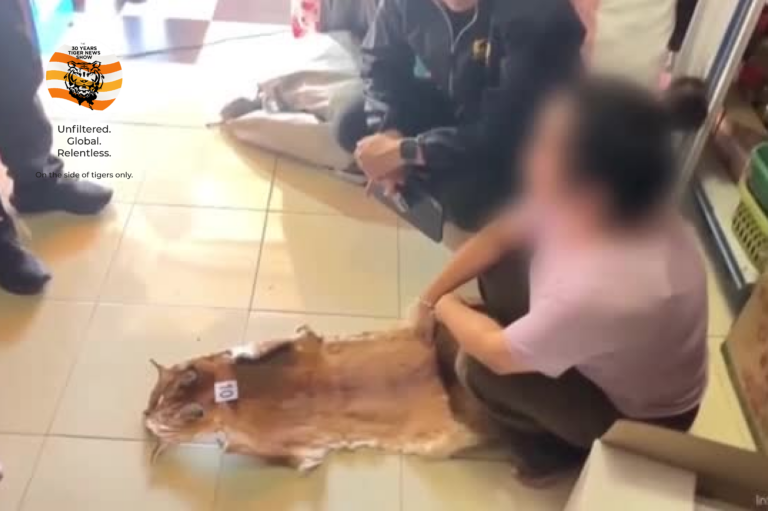
The danger does not end when the tiger dies. Skins, bones, teeth, claws, skulls, taxidermy, meat and other body parts can enter illegal or grey markets. Any tiger kept as pets and poorly recorded, poorly inspected or loosely regulated becomes a trafficking risk. Pets can become parts when paperwork fails and money appears.
Recent TRAFFIC findings reported internationally show the scale of the problem: authorities seized an average of nine tigers a month between 2020 and mid-2025, and whole animals, alive or dead, increasingly appeared in seizure data. The pattern has been linked partly to captive breeding, exotic pet demand, taxidermy and traditional medicine markets.
This is the bridge private owners prefer not to discuss. A living tiger has value. A dead tiger has value. A missing tiger can be explained away if enforcement is weak. A tiger born outside strict systems can become paper, inventory, body parts or silence.
The owner may say companion. The market hears commodity. The law must be written for the market, not for the owner’s sentimental version of events.
Mexico Shows The Criminal Status Symbol
Mexico shows one of the darkest versions of the fantasy: predators as cartel status symbols. Drug traffickers and criminal networks have kept private menageries with tigers, lions, jaguars and other exotic animals, not because they respect wildlife, but because ownership projects wealth, danger and control. Pets become part of the theatre of organized power.
This is where pet tiger culture drops its soft mask completely. The animal is not even pretending to be family. It is part of a display of intimidation and excess. A tiger in a cartel compound is a message: power has no boundary. It can own weapons, people, land, routes and even predators.
When criminal ownership collapses, animals are left in the wreckage. In Sinaloa, cartel violence forced exotic animals, including tigers, jaguars, lions, monkeys and elephants, to be moved from a sanctuary that had housed former cartel animals and other rescued wildlife. The animals were not symbols anymore. They were casualties of human violence, supply disruption and fear.
Mexico also appears in global seizure discussions as a non-range country with significant tiger-related activity. That should make people uncomfortable. Tigers do not belong in Mexican cartel collections any more than they belong in private villas or influencer houses. The setting changes; the logic stays the same. The animal is used to decorate power.
Drug Money Uses Wildlife As Theatre
Mexico is not the only place where criminal wealth and exotic wildlife collide. Wherever illegal money wants to look untouchable, wild animals can become decoration. Big cats appear in private compounds, hidden estates, trafficking investigations and displays of wealth because they broadcast the same message as gold weapons, armored vehicles or guarded mansions: I can possess what ordinary people cannot.
This is not affection. It is theatre for criminals. Pets language becomes absurd in that context, because the tiger is not being kept as a companion. It is being used as intimidation, entertainment and proof of excess. The animal’s suffering is almost invisible beside the spectacle of power.
Drug-related ownership also creates practical danger. Criminal networks can hide animals, move them, abandon them, starve them or use them as cover for other illegal activity. Veterinarians, rescuers and authorities may face threats when trying to intervene. Sanctuaries can become overwhelmed by animals seized from people who never should have had them.
The tiger is trapped twice: first by the owner, then by the violence around the owner. That is why wildlife crime cannot be separated from organized crime when predators are used as status objects. Tigers become hostages to ego, money and impunity.
South Africa Shows The Industrial Version
South Africa is not a tiger range country, yet it has become a major warning in the captive tiger debate. Investigations and campaign reports have identified numerous facilities that have kept tigers, raising concerns about breeding, trade and the movement of body parts toward markets in Asia. Pets, farms and commercial breeding sit closer together than owners admit.
This matters because it shows how captivity can become industrial when regulation is weak or fragmented. Tigers kept as pets outside their natural range may fall into legal categories not built around tiger conservation. They can be described as exotic animals, captive stock, display animals, breeding animals or private assets. The label changes according to convenience. The animal remains trapped inside a commercial system.
South Africa also shows why the line between pets, breeding, farming and trafficking is not clean. A privately held tiger can become breeding stock. Breeding stock can produce surplus. Surplus can become trade. Trade can create body-part risk. The system is not a series of isolated mistakes. It is a chain.
Any country allowing private tiger ownership should study that chain carefully. Once tigers become assets, markets begin looking for ways to use every part of them.
Pakistan, The Gulf And Private Power
Across parts of South Asia and the Gulf, big cats have appeared in private compounds, luxury settings and social media videos tied to wealth, influence or political status. Pakistan has seen repeated public controversy around privately kept lions, tigers and other big cats, often linked to powerful or wealthy individuals. Gulf-state imagery has long shown big cats beside luxury lifestyles, treating danger as decoration.
These examples matter because enforcement often weakens around power. When the owner is rich, connected or famous, the animal becomes harder to protect. The pets may have bigger cages, better food and cleaner compounds, but the ethical failure remains. A luxury prison is still a prison. Pets in palaces are still captives.
Private power also distorts public reaction. People may admire the owner, fear the owner or treat the animal as part of an elite aesthetic. The tiger becomes aspirational instead of exploited. That is exactly why the law must be impersonal. Nobody’s wealth should buy the right to own a tiger.
If anything, wealthy owners deserve less sympathy. They have every resource to support real conservation and choose possession instead.
Tiger King Was Spectacle, Not The Whole Problem
The Tiger King era exposed private big cat culture to a global audience, but spectacle can mislead. Many viewers remembered the pets spectacle and human drama: feuds, costumes, insults, crime, ego and roadside weirdness. The tigers became background scenery inside human chaos.
That was part of the problem. The animals were already background in the industry itself. They existed to support stories humans told about themselves. The show made those stories louder, but it did not invent them. It revealed a culture where breeding, display, rescue language, celebrity and private ownership could sit dangerously close together.
The lesson should not be that one or two owners were uniquely bizarre. The lesson should be that the model itself is rotten. Better manners do not fix it. Cleaner branding does not fix it. A more polished facility does not fix it. The problem is not only the loudest owner with the worst reputation. The problem is the belief that tigers can be privately possessed at all.
A society should not need entertainment to discover that pets language can hide cages full of big cats.
The Sanctuary Word Must Be Protected
True sanctuaries are necessary because humans have already created so many captive tigers with nowhere else to go. A confiscated tiger, surrendered tiger or rescued tiger often cannot return to the wild. It may be habituated to humans, poorly bred, physically damaged, declawed, malnourished, diseased or psychologically compromised. It needs lifetime care.
But sanctuary language is often abused. A real sanctuary does not breed tigers or create pets. It does not sell cub handling. It does not trade animals for profit. It does not use rescue as a brand while creating more animals. It accepts captivity as a tragic necessity for individuals already harmed by humans, including animals once mislabeled as pets.
That distinction must be defended fiercely. Facilities that breed while calling themselves rescue operations are not solving the problem. They are extending it. Facilities that use animals for visitor access while claiming education are still centering human desire. Facilities that present captivity as beautiful make the public forget why the animal is there.
A good sanctuary should make people angry that it is needed, not comfortable that captivity exists.
Online Trade Turns Desire Into Logistics
The digital world has made exotic wildlife easier to advertise, desire and move. Sellers can use coded language, private groups, direct messages, temporary posts, encrypted channels and image-based marketing. Buyers can find networks that once required personal contacts. A tiger cub, big cat skin, tooth, claw or taxidermy item can begin as a post and become a transaction.
This matters because pet culture and trafficking culture now feed each other through visibility. Someone sees a big cat online, follows similar accounts, wants access, asks questions, finds sellers, learns the vocabulary and enters a market. The same attention economy that makes tigers seem glamorous also helps wildlife crime find buyers. Pets are not only kept offline; they are imagined, marketed and arranged online.
Enforcement is increasingly forced to monitor online spaces because the market has moved there. That should shame governments and platforms. Tigers should not need algorithmic detection to protect them from human vanity, but that is where the world has arrived.
The internet did not create the desire to own predators. It removed friction. It made the fantasy searchable.
The Welfare Argument Is Not Enough
Owners often defend captivity by pointing to welfare. The tiger is fed. The enclosure is clean. The vet visits. The animal has shade, water, toys, platforms, a pool, meat and a name. Some of those things matter. None of them answer the main question.
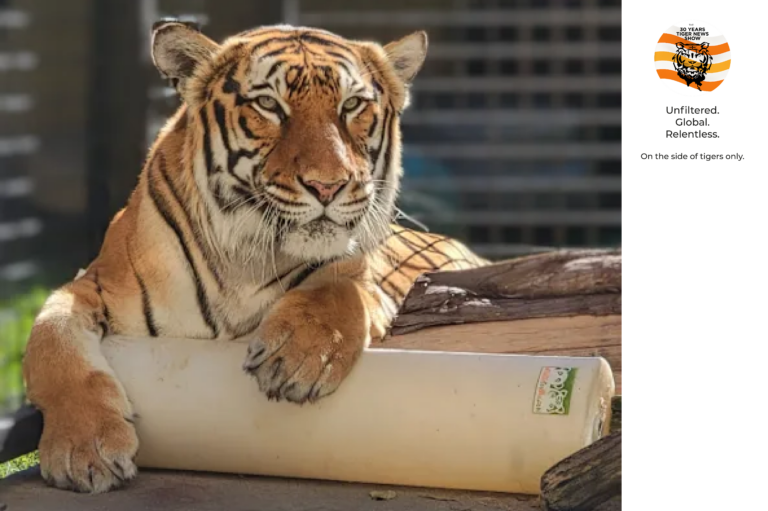
Welfare is the minimum response to a situation that should not exist. A better cage is not freedom. A full stomach is not territory. A pool is not a river system. A toy is not prey. A human bond is not ecological belonging. A tiger’s needs are not limited to survival under management. Pets are managed; tigers should not be reduced to managed possessions.
The welfare argument becomes especially cynical when used by people who created the captivity. It is like stealing a life and then asking for praise because the prison has clean floors.
For already captive tigers, welfare improvements are necessary. For future tigers, prevention is better. Do not breed them into cages. Do not buy them. Do not touch cubs. Do not normalize private possession. Do not create more animals whose best possible outcome is a decent enclosure.
White Tigers And The Freak Market
The private big cat world also overlaps with the market for novelty animals: white tigers, golden tabby tigers, ligers, tigons and other animals bred because humans find them unusual. These animals are often marketed through rarity, but rarity in captivity is not conservation value.
White tigers are not a separate endangered subspecies needing display for survival. They are usually produced through captive breeding choices around a recessive trait, and careless breeding can carry welfare problems. Hybrids such as ligers and tigons have no wild conservation role. They exist because humans wanted spectacle. Pets culture easily slides into freak culture when novelty sells.
The freak market shows the ownership mentality clearly. It is not enough to possess a tiger. The animal must be stranger, larger, paler, rarer or more visually profitable. Captivity edits the tiger for human taste.
That is not rescue. It is design.
Every novelty tiger tells the same story: when humans treat predators as products, even the animal’s body becomes a marketing surface.
Public Education Should Not Require Possession
Exhibitors often argue that seeing tigers up close teaches people to care. The claim is weak because it confuses access with understanding. Seeing a tiger in a cage may create emotion, but it also teaches a dangerous lesson: that tigers are available for human viewing, handling or control. Pets become an educational prop, which is exactly the wrong lesson.
Real education should explain habitat loss, prey decline, poaching, trafficking, conflict, forest governance, corridors and the politics of protection. It should teach people why tigers need distance, not why humans deserve access. It should direct attention toward wild landscapes, not captive bodies.
The education excuse also insults the public. It assumes people cannot care about an animal unless the animal is confined for them. That is the old zoo argument, and it fails. People can learn through film, field science, camera-trap footage, community conservation stories, responsible reporting and serious education that does not require turning the tiger into an exhibit.
If the lesson depends on captivity, the lesson is already compromised.
Rescue Cannot Become The Business Model
Every rescued tiger creates relief, but it also exposes failure. The animal should never have needed rescue in the first place. Confiscated pet tigers are often too habituated, damaged or unprepared for release. Sanctuaries then inherit the cost of private vanity: decades of meat, medicine, staff, land, fencing, insurance and care.
This rescue pipeline is morally exhausting. Owners create the problem. Authorities intervene late. Sanctuaries carry the burden. Donors pay. The tiger remains captive. Everyone calls the outcome better, because it is better than the previous cage, but better does not mean good.
A serious society does not keep producing animals for rescue and then praise itself for rescue capacity. It closes the source. That means banning private ownership, banning cub contact, ending commercial breeding, auditing existing facilities and making illegal possession too costly to risk.
Rescue is mercy after harm. Policy should prevent the harm.
What Law Must Do About Pets
Law, like the Big Cat Safety Act in the USA, should treat private tiger ownership as a public safety issue, a conservation issue and a wildlife crime risk. The starting point must be prohibition. No private person should own a tiger. No facility should breed tigers for public contact, status display, exotic pet demand or commercial novelty. No direct contact should be allowed. No private transfers should disappear into vague paperwork.
Existing captive tigers need strict records. Each animal should be individually identified, inspected and tracked from birth to death. Transfers should be public to regulators. Deaths should require documentation. Body disposal should be monitored. Breeding should require serious justification and should be denied when it serves display or surplus production.
Penalties must be strong enough to matter. Rich owners should not be able to treat fines as decoration. Facilities that hide animals, falsify records, breed illegally or trade body parts should lose animals, licenses and money. Criminal networks should be investigated as networks, not as colorful exotic pet communities.
The standard is simple: the tiger’s life must not be subordinate to private desire.
What The Public Must Stop Rewarding
The public is not innocent if it keeps rewarding the fantasy. Do not pay for cub photos. Do not follow pet tiger accounts as entertainment. Do not share videos that make captivity look cute. Do not visit facilities that allow direct contact. Do not excuse private owners because the enclosure looks expensive. Do not accept the word rescue without asking whether the facility breeds or sells access.
Attention is money, as our cornerstone on perception already showed us. Even outrage can advertise the animal if it spreads the image without context. The better response is refusal. No ticket. No share. No selfie. No admiration. No “beautiful bond” comments under a video of domination.
Children should be taught that loving tigers does not mean touching them. Adults need the same lesson, because many still confuse access with care.
A tiger does not need to be close to matter. It needs humans to stop making closeness the price of attention.
Pets Are The Wrong Future For Tigers
Pets are what humans call animals they have made part of human domestic life. Tigers should never be part of that category. They are not companions, trophies, family members, content props, investment animals, cartel decorations, luxury accessories or private conservation projects. They are wild predators whose survival depends on humans accepting limits.
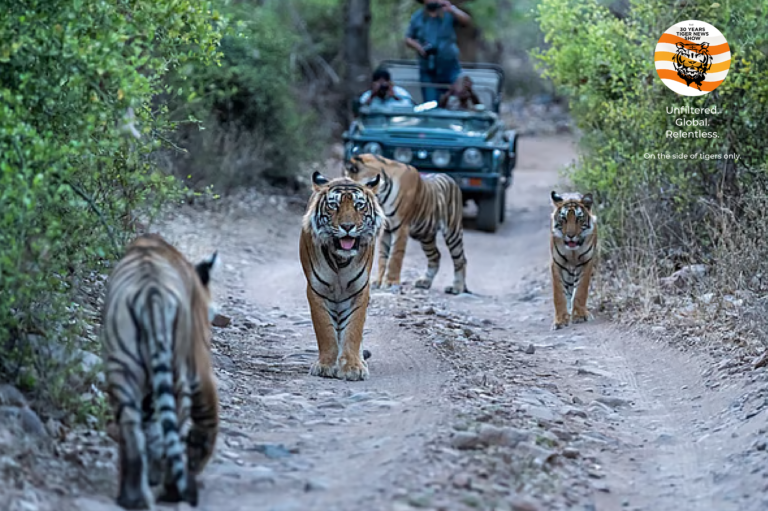
The future for tigers is not in villas, basements, backyards, compounds, roadside cages, influencer feeds, cartel collections, hotel attractions, private zoos or breeding sheds. It is in forests, grasslands, wetlands, corridors and protected ecosystems where humans do not get to be the center of the story.
The most important sentence is also the simplest: the tiger is not yours. Not because you bought it. Not because you raised it. Not because it was born in captivity. Not because it licked your hand as a cub. Not because you built a fence. Not because you call it family.
Pet tiger culture is human greed disguised as affection. It turns awe into ownership, danger into entertainment, breeding into branding and a living predator into a trophy that breathes. Any society that still allows tigers as pets has not understood tigers at all. It has only understood possession, and possession is exactly what tigers need to survive without.
Source: 30 Years Tiger News Show
Photo: 30 Years Tiger News Show