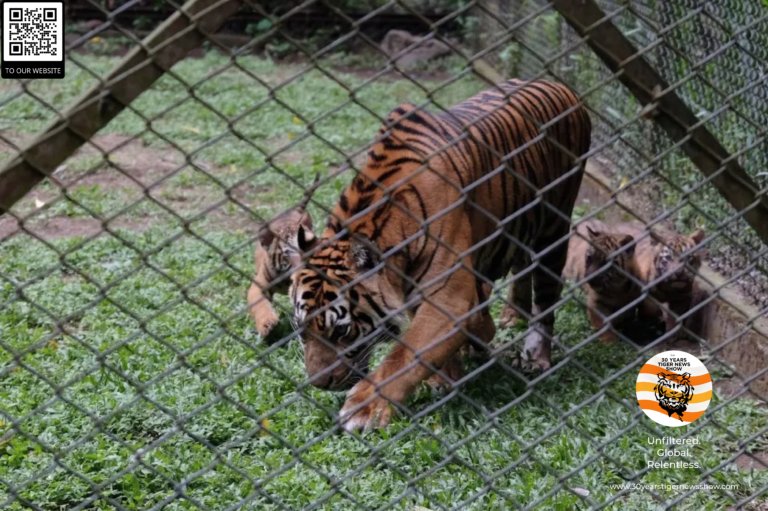
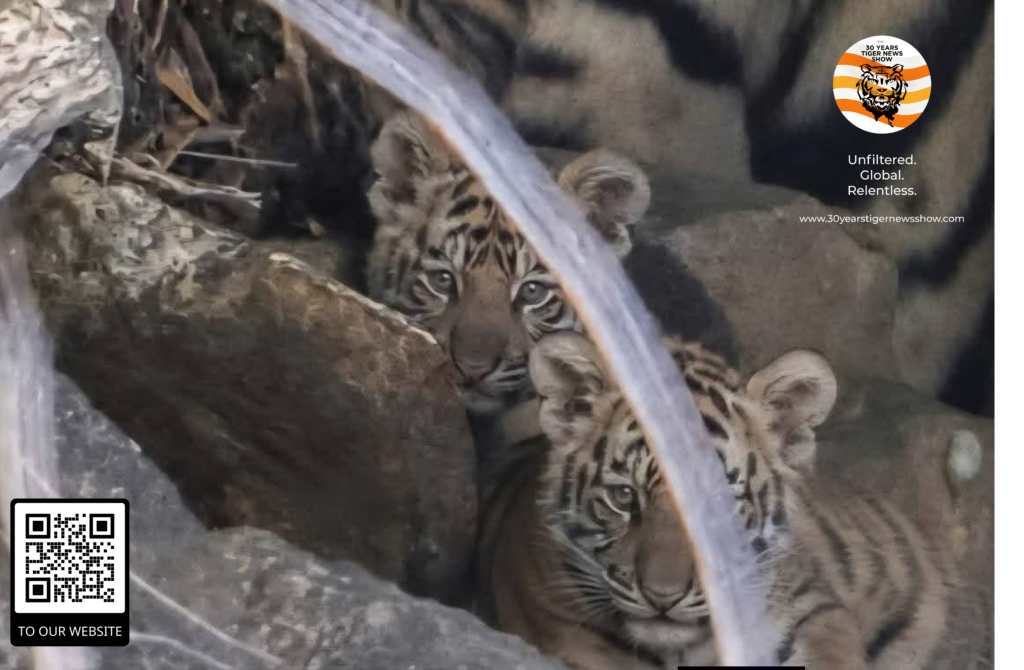
Riddhi, daughter of the legendary Arrowhead, has been seen with cubs in Ranthambore Tiger Reserve’s Nal Ghati area of Zone 2, a beautiful sight after the birth of her last litter in 2024 and a careful sign of strength in one of India’s most watched tiger landscapes, as reported by Times of India. Forest officials said the reserve’s tiger population has now reached 77 after the sighting of tigress RBT-124. The forest department has officially confirmed one cub, while field staff and tourists reported seeing two or more during a morning safari. Officials have not ruled out that possibility, and monitoring continues.
A Careful Count Around Riddhi
That caution matters, because tiger births should never be turned into inflated celebration before monitoring confirms what the forest actually holds. Ranthambore’s First DFO Manas Singh said forest teams are continuously monitoring the tigress and her cub to ensure safety and protection. This is exactly where conservation must remain disciplined: not loud, not careless, not built for tourist excitement, but focused on whether cubs survive long enough to become independent tigers. The sighting also places the young mother within a remarkable family line reaching back through Arrowhead, T-84, Krishna, T-19, and Machli, T-16, one of Ranthambore’s most celebrated tigresses.
Riddhi has still built her own place in the reserve. Born in late 2018, she established dominance over the lake territories of Zones 3 and 4 and now occupies the Padam Lake, Rajbagh and Malik Talab landscape. The latest sighting marks her third recorded litter. Her first litter did not survive, while she later successfully raised three cubs, a record that forest officials say has made her one of Ranthambore’s most productive breeding tigresses. Lineage creates public memory, but the forest does not survive on famous names alone. It survives when living mothers like Riddhi are given the space to keep their cubs alive.
Ranthambore’s Breeding Line Continues
That history gives Riddhi and this new litter emotional weight without removing the hard truth. Cubs at two to three months old remain vulnerable. A forest staff member said the cubs appeared healthy and that their movements are being closely monitored by the department. Beautiful moments like this are real, especially after the birth of her last litter in 2024, but survival depends on territory, prey, protection, corridors and restraint from every human system pressing against tiger land. A reserve can celebrate only if it also does the less glamorous work: guarding routes, managing pressure and refusing to let attention become disturbance.
More Cubs, More Responsibility
Riddhi being seen with cubs raises Ranthambore’s current tiger count to 77, including 23 tigresses, 25 tigers and 29 cubs. Those numbers are encouraging, but they also sharpen responsibility. A crowded reserve can become a proud headline and a future pressure point at the same time. Young tigers need space when they disperse. Mothers need secure zones. Forest teams need resources that match the population they are asked to protect. This is where governments and departments are judged beyond announcements. A rising tiger count is not a trophy for humans; it is a demand for better habitat management and stronger anti-poaching systems.
For Riddhi, careful tourism control and connected landscapes beyond famous zones are part of that duty. Ranthambore cannot be treated as a stage where tigers perform for cameras while planning waits behind press statements. The development is rightly being seen as a positive sign for tiger conservation in Ranthambore. But the word positive must stay honest. It means one confirmed cub, possible additional cubs, active monitoring and a tigress with a proven breeding record. It does not mean the work is done. It does not mean every cub will survive. It does not mean overcrowding, dispersal risk or human pressure can be ignored.
Conservation Must Protect The Cubs
For Riddhi, this moment is personal and ecological at once: a mother moving through Nal Ghati with new life, and a reserve showing what protection can make possible when tigresses are allowed to live, breed and hold territory. The right response is gratitude, not triumphalism. Conservation succeeds only when good news is followed by patient work, and conservation practices must now protect these cubs beyond the first beautiful sighting. Ranthambore has been given hope, and hope has to be guarded.
Source: Times of India, India