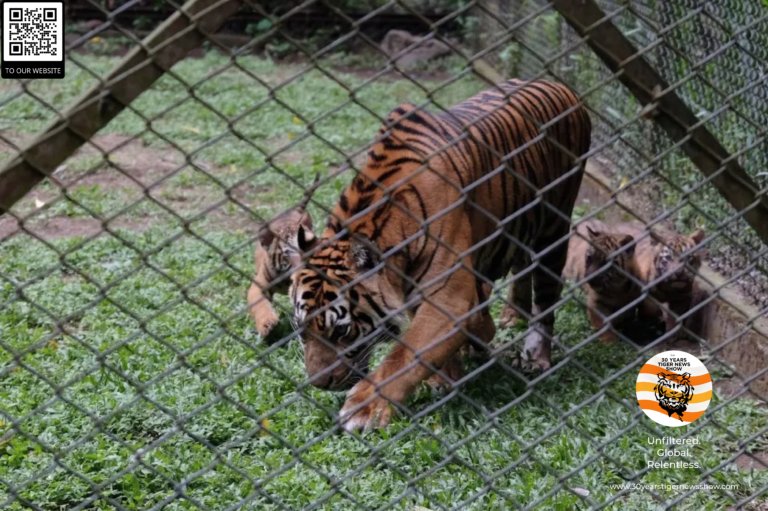

Baby boom is the right phrase for Similipal Tiger Reserve after officials reported 16 tiger cubs born within a year, as reported by Odisha TV. The reserve in Odisha’s Mayurbhanj district has received a major conservation boost, with camera traps also capturing a rare frame of melanistic tigress T-20 moving through the forest with her three cubs. Officials described the sighting as a significant milestone and an indication of a healthy breeding population. For a landscape once marked by concern over poaching and declining wildlife numbers, this is news to welcome with gratitude, not arrogance.
Baby Boom Shows Habitat Is Working
The images of T-20 and her cubs matter because they show more than a striking melanistic family. Forest officials said the cubs appear healthy, strong and well adapted to their surroundings. They are believed to be between 11 and 12 months old, an age when tiger cubs begin learning critical skills that will decide whether they survive independently.
Officials said T-20 appeared to be guiding her cubs through the dense forest while teaching survival behaviour, including tracking prey and hunting techniques. Baby boom stories can sound simple from a distance, but every living cub represents months of risk, maternal effort and field protection. In the wild, young tigers must survive territorial pressure, prey challenges, disease, disturbance and the constant threat of human greed.
T-20 Gives Similipal A Rare Frame
Regional Chief Conservator of Forests Prakash Chand Gogineni said camera traps often capture tiger images, but getting T-20 and all three cubs in one frame was unusual because such families usually move slightly apart. He said that within Similipal this year, including Zeenat’s cubs, officials had seen the birth of about 16 cubs.
That number is powerful, but it should be read carefully. Baby boom does not mean the work is finished. Cub births are the beginning of responsibility, not the end. Survival into adulthood is the harder measure. Conservation success should be judged by whether these cubs can grow, disperse, establish territories and strengthen the reserve’s tiger population without being lost to conflict, poaching or habitat pressure.
Zeenat Adds To The Hope
The update follows another strong moment for Similipal: tigress Zeenat, translocated from Maharashtra, gave birth to four cubs estimated at around three weeks old. Her arrival was part of a wider effort to strengthen genetic diversity in the reserve, where a notable number of tigers display pseudo-melanism. That condition has been linked to concerns about inbreeding, making every successful breeding event part of a larger conservation picture.
Baby boom headlines can be joyful, and this one should be. But the joy is strongest when it remains humble. Similipal’s progress has not appeared from nowhere. Officials attributed the success to sustained conservation efforts, habitat protection, anti-poaching measures and the dedication of frontline forest staff. Those are not decorative words. They are the daily work that allows wild mothers to raise cubs.
Protection Must Follow Celebration
Similipal is gradually reclaiming its reputation as one of India’s most important tiger habitats. The presence of a healthy melanistic tigress with three cubs, alongside Zeenat’s new litter, suggests conditions are currently supporting breeding. That is exactly what tiger reserves are meant to do: give tigers enough safety, prey, cover and space to continue their own lives without constant human interference.
The next test is discipline. Baby boom attention can create pressure if curiosity becomes disturbance. These cubs need quiet forests, strong anti-poaching vigilance, careful monitoring and no spectacle. A camera-trap image should remain evidence, not an invitation. The reserve’s unique melanistic tigers deserve protection without being turned into a visual commodity.
This is where conservation practice proves itself. Not through slogans, not through celebration alone, but through cubs surviving because habitat, enforcement and field staff hold the line. Similipal has given tiger conservation a beautiful moment. Now it must guard that moment until the cubs become part of the forest’s future.
Source: Odisha TV, India
Photo: Odisha TV, India