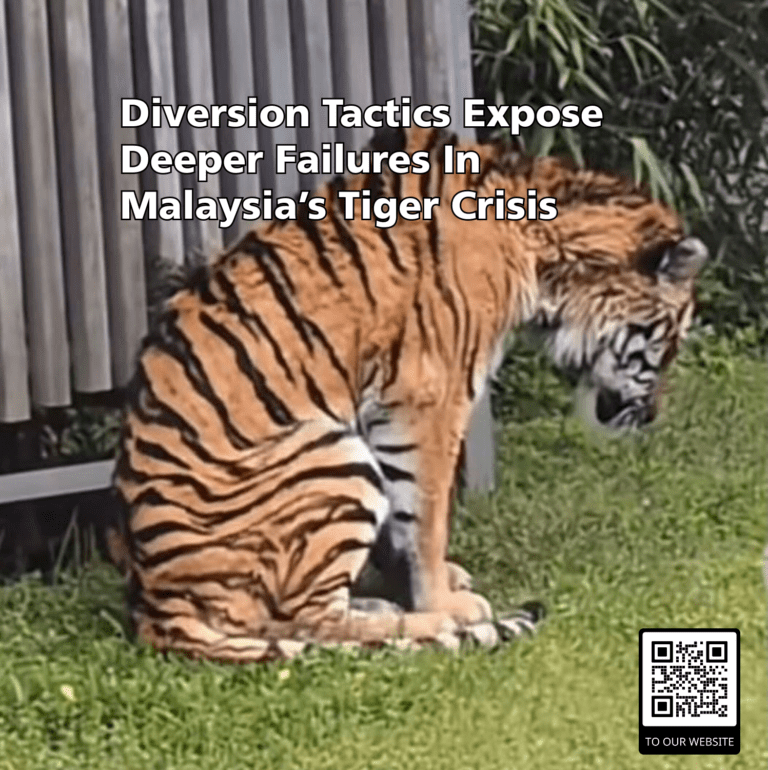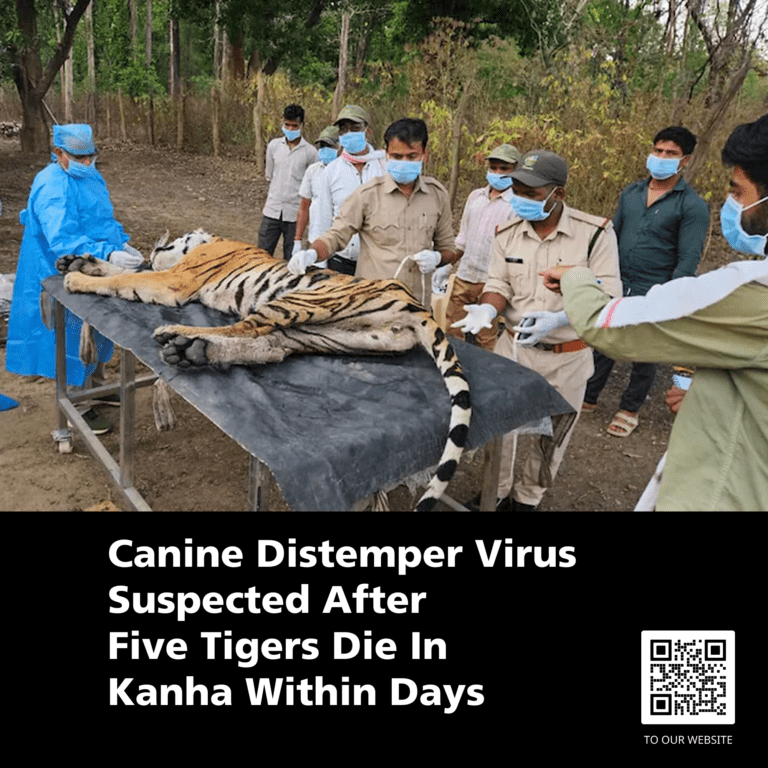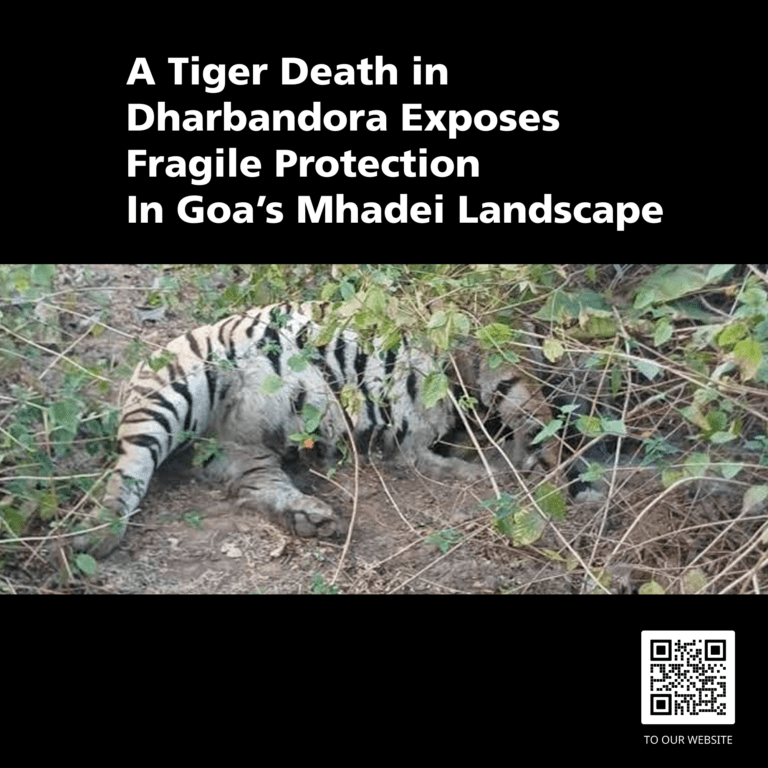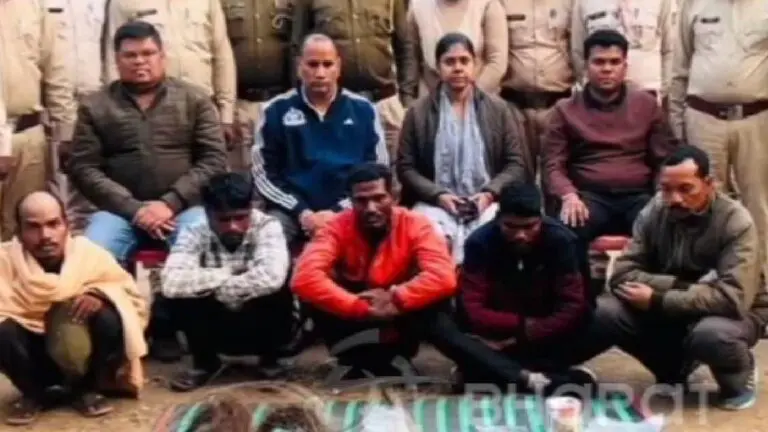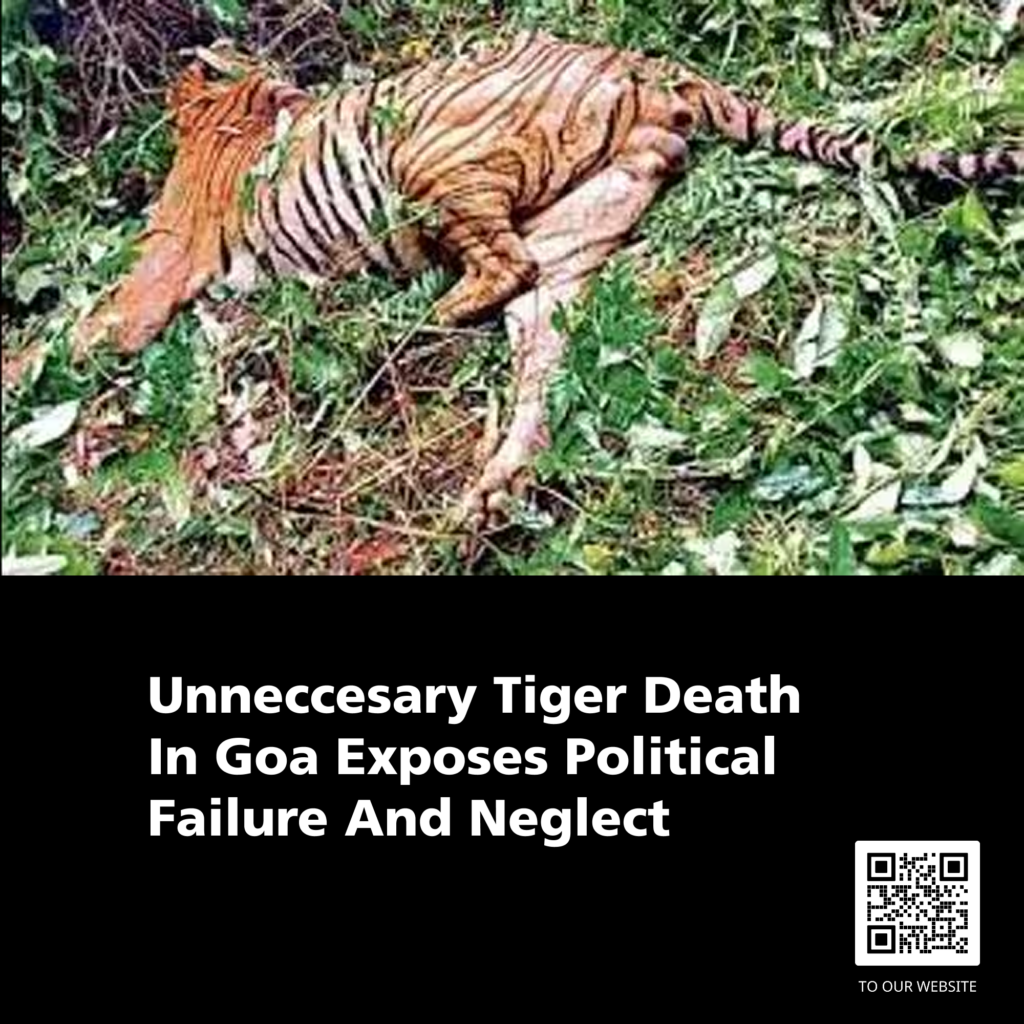
An unneccesary tiger death has struck Goa, as reported by the Hindustan Times. This comes not as an isolated tragedy but as a predictable outcome of prolonged inaction and political stubbornness.
An adult tiger was found in Dharbandora with its teeth and nails removed, the body already decomposing, pointing toward poaching networks exploiting weak protection. The official cause is pending, but the pattern is unmistakable. Goa has been warned repeatedly that its forests are vulnerable to exactly this kind of exploitation. Those warnings were not acted upon with urgency or intent. On the contrary, there is one political figure that is always opposing tiger conservation, even if the Indian court urges him.
A Landscape Left Exposed By Design
This unneccesary tiger death was clearly anticipated by the Indian tiger authority (NTCA), which warned that without declaring a tiger reserve, Goa would become a death trap for dispersing tigers. The Western Ghats function as a connected landscape, allowing tigers to move between Karnataka, Maharashtra, and Goa. This movement is essential for genetic diversity and long-term survival.
Instead of strengthening that connectivity, fragmentation continues to intensify. Roads expand deeper into forest corridors. Railway lines cut through critical habitat. Plantations and industrial activities occupy forest edges. Each intervention reduces the available safe space for tigers. In fragmented landscapes, animals are pushed into smaller zones where detection becomes easier and escape becomes harder.
Vishwajit Rane And The Cost Of Resistance
Unneccesary tiger death in Goa cannot be separated from the political resistance led by Vishwajit Rane against declaring a tiger reserve. Despite recommendations from the NTCA and directives from the Bombay High Court, the state has continued to delay formal notification. Appeals and objections have taken precedence over implementation.
The justification often points to local populations living within proposed reserve areas, yet this ignores coexistence models that have been applied successfully elsewhere. Protection does not automatically mean displacement. It requires structured planning, community engagement, and enforcement. These elements remain underdeveloped.
By refusing to elevate protection status, the state maintains a fragmented system where monitoring is limited and enforcement gaps persist. These are precisely the conditions in which poaching networks operate effectively.
A Pattern Of Repeated And Preventable Loss
This unneccesary tiger death follows a documented pattern in Goa. In 2020, five tigers were poisoned. In 2009, another tiger was killed in a trap. Each incident exposed the same underlying issue: a critical habitat without sufficient protection. The proposed tiger reserve, covering roughly 750 square kilometers, was designed to address this exact vulnerability.
Instead, political resistance has prolonged inaction while development pressures continue to increase. The Western Ghats cannot sustain continuous fragmentation without consequence. Tigers dispersing through this region are being pushed into increasingly dangerous environments where survival depends on chance rather than protection.
A System That Continues To Produce The Same Outcome
Unneccesary tiger death is not the result of uncertainty. It is the result of decisions. The risks were documented, the solutions were identified, and the legal pathway was available. Yet implementation has been delayed at every stage. This creates a system where outcomes are predictable long before they occur.
The tiger found in Dharbandora did not die by chance. It died within a system that had every warning and still failed to respond. It died because people like Vishwajit Rane are being allowed to act like politicians.
It could have been prevented if the proper measures were taken. Vishwajit Rane’s continued resistance to declaring a tiger reserve keeps protections weak and enforcement fragmented. It is a decision to delay and obstruct. And decisions like this have consequences. Like another tiger death.
This one is on you personally Vishwajit Rane.
Source: Hindustan Times, India
Photo: Hindustan Times, India