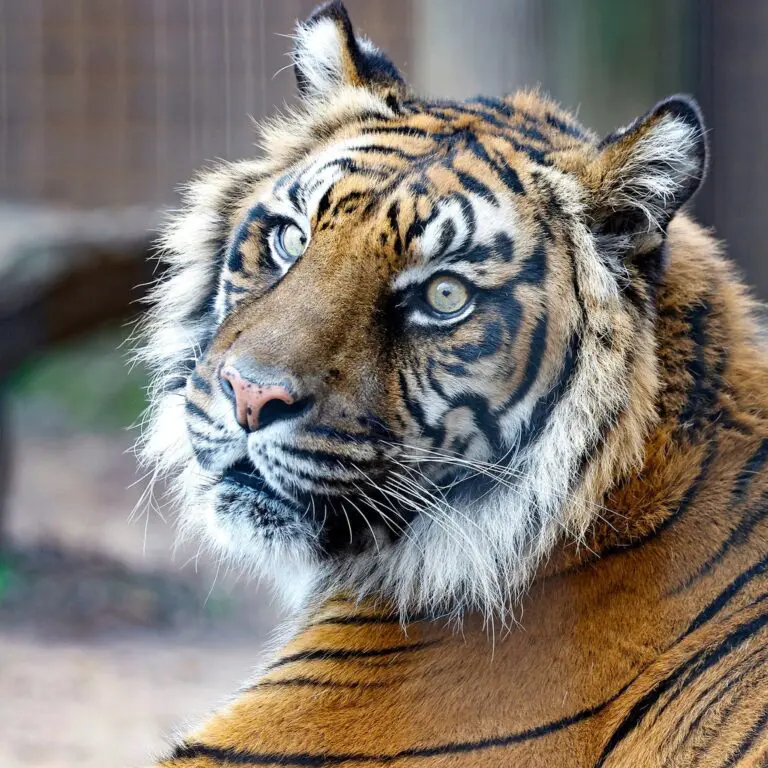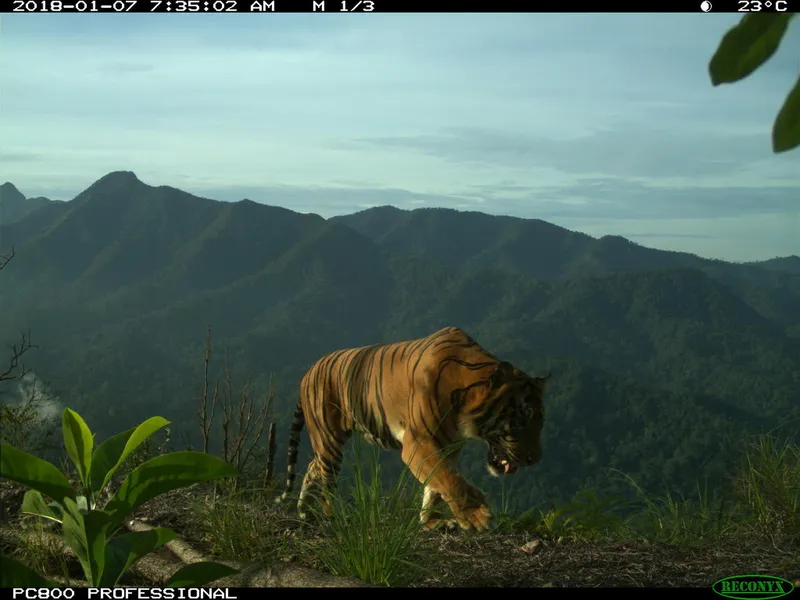
For decades, Indonesians have known their tigers by name—Sumatran, Javan, Balinese. Each carried a history carved into its island: forests, rivers, and stories told long before conservation became a brand. Now, with the World Wide Fund for Nature introducing the term Sunda tiger, those identities risk being folded into another global narrative—one polished for donors, detached from the soil.
The “Sunda tiger,” according to WWF’s own page, is a single subspecies meant to represent all tigers once found on the Sunda Islands—Sumatra, Java, and Bali. It sounds tidy. Scientific. Marketable. But language matters. Behind this linguistic merge hides an uncomfortable truth: the Javan and Bali tigers are extinct, and the Sumatran is barely holding on. By tying them together, WWF creates a convenient illusion of continuity—an unbroken line of survival where only fragments remain.
Sunda Tiger – a label born in meetings, not in forests
For locals in Java or Bali, “Sunda” is not a universal term. It has ethnic and historical weight, tied to West Java’s Sundanese people and precolonial kingdoms—not to the whole archipelago. To call a tiger from Bali or Java “Sunda” is like calling a Scottish wildcat “British lion.” It flattens cultural geography, turning ecological identity into continental shorthand. The choice feels less like biology and more like branding—what one insider might call “semantic conservation.”
WWF’s global strategy has often leaned on narrative unification. A single storyline is easier to fund than fragmented truths. The organization’s TX2 campaign—an effort to double wild tiger numbers by 2022—used one tiger image to represent 13 range countries, despite their wildly different realities. The Sunda tiger naming follows that logic: fewer categories, cleaner visuals, broader appeal. It’s conservation through simplification, but simplification can distort.
Sumatran conservationists have quietly voiced discomfort. Their tiger, Panthera tigris sumatrae, has lived in isolation long enough to develop genetic traits distinct from its extinct cousins. Its heavy black stripes, small size, and swamp adaptations make it a biological relic, not a stand-in for lost species. Yet in the global communication pipeline, “Sumatran” is becoming secondary—replaced by “Sunda,” a word that sounds international but belongs to no one.
Across Sumatra’s peat swamps and rainforests, deforestation still carves up habitat at an industrial pace. Palm oil plantations, illegal logging, and infrastructure projects split tiger corridors like fractured bones. Even Bukit Tigapuluh, a landscape WWF itself helps manage, faces steady encroachment. Rangers report snares near villages. Poachers still hunt for bones and skins. None of this is visible in the neat Sunda tiger banner; the branding hides the fragmentation.
Words that erase accountability
Branding isn’t neutral—it reallocates attention. When WWF tells the world that “Sunda tigers” inhabit Sumatra, the extinction of Java’s and Bali’s tigers sounds less final. The loss gets linguistically absorbed into an ongoing story. Donors hear survival; policymakers hear stability. It’s a linguistic sleight of hand that replaces mourning with management.
The deeper problem is ownership. Indonesia’s tiger conservation identity—hard-won through decades of local work—gets recast as a chapter in WWF’s global narrative. Villagers, park rangers, and small NGOs in Riau or Aceh aren’t working to save “Sunda” tigers; they’re fighting for the last Sumatran ones. By reframing the species, WWF implicitly claims conceptual jurisdiction over its legacy. The story stops being Indonesia’s and becomes the organization’s.
This mirrors a wider trend we’ve explored in media and tigers: global NGOs shape not just conservation priorities but public perception itself. Through language, imagery, and campaign timing, they define what counts as progress. Local nuance disappears into digestible symbols. A tiger caught on a camera trap becomes proof of a continent’s “hope” rather than a nation’s last stand.
From Sumatran pride to global property
The “Sunda tiger” rhetoric also blurs responsibility. If one label covers all, who answers for failure? When Malaysia loses its Malayan tiger, it’s Malaysia’s shame. When Java’s tiger vanished, it was Indonesia’s wound. But if all are “Sunda,” blame becomes collective—and therefore, no one’s. It’s a diffusion of guilt wrapped in the language of unity.
Cultural memory pays the price. Bali’s tiger—worshiped, feared, and woven into local art—has been gone since the 1940s. Its extinction was a tragedy specific to an island where colonial hunters once posed with bodies for postcards. To resurface that memory under the “Sunda” label feels almost colonial again: outsiders assigning names, outsiders deciding what history means. Even the term “Sunda” itself was popularized through Dutch colonial mapping, not indigenous taxonomy. WWF’s use of it revives that legacy under a banner of modern conservation.
Sumatrans who still live beside the remaining tigers understand the stakes differently. Their forests are fragmented by roads, their rivers poisoned by mining. To them, a tiger is not an abstraction but a neighbor—sometimes a threat, often a totem. Calling it “Sunda” strips away the intimacy of place. A name that once bound humans and tigers through shared landscape becomes a donor-friendly slogan on a brochure.
The soft colonialism of naming
The colonial undertone of “Sunda” goes beyond semantics. It’s the old logic of central authority defining local identity for external audiences. Like natural history museums that once renamed species after European explorers, the NGO world now renames for accessibility. Simpler terms travel faster through press releases, fundraising decks, and translation pipelines. But simplicity isn’t harmless. When global institutions rename, they reframe reality—and people follow that frame.
In Indonesia, where conservation already struggles against political inertia and industrial greed, perception is power. Language drives budgets, international partnerships, and media coverage. Once “Sunda tiger” gains traction, it risks replacing “Sumatran tiger” in newsrooms, government reports, and even local curricula. The island that still holds the species could lose its linguistic claim to it. That’s not conservation; it’s narrative colonization.
WWF’s defenders might argue the name reflects scientific consensus. Geneticists sometimes group the Sumatran, Javan, and Bali tigers as a single Panthera tigris sondaica lineage. But science isn’t static—it’s interpretive. Conservation naming isn’t only about DNA; it’s about communication. What message does “Sunda tiger” send? That extinction is reversible? That islands share one destiny? Or that branding unity outweighs honesty about loss?
Fieldwork vs. framing
To be fair, WWF-Indonesia’s field teams remain among the most dedicated on the ground. They train rangers, run camera traps, and manage the Thirty Hills forest corridor with partners. These people work under threat and often against bureaucratic resistance. Their achievements deserve credit. But they’re not the ones inventing “Sunda.” The term emerges from communication desks continents away, from strategists fluent in slogans and donor psychology, not in Bahasa Indonesia or local myth.
This disconnect shows how global conservation can drift from the reality it claims to defend. The forest still burns; poachers still move freely; plantation roads still cut through tiger ranges. Yet press releases speak of “heartlands,” “landscape connectivity,” and “shared survival.” It’s professional optimism—a language that sounds like progress while forests shrink in real time.
The peril of perception management
WWF’s linguistic approach might succeed with international audiences, but it fails the people closest to the struggle. When donors hear “Sunda tiger,” they imagine a thriving continuum. When Sumatrans hear it, they hear their tiger disappearing into someone else’s story. Words create distance—and distance dulls urgency.
If conservation is about coexistence, language must coexist too. It should reflect not only ecosystems but the societies that live within them. Every time a campaign rewrites identity, it rewrites accountability.
Indonesia’s government now faces a choice: accept the Sunda tiger framing and fade into a collective narrative, or reclaim its own. Keep calling it Harimau Sumatera. Keep teaching children that it is theirs—not a continental abstraction, not a colonial echo.
Because if the Sumatran tiger vanishes under the name “Sunda,” the world will lose more than a species. It will lose the truth of how extinction happens—not in a single act, but in a thousand small erasures of meaning.
Source: WWF International
Photo: Ministry of Environment and Forestry / WWF-Indonesia