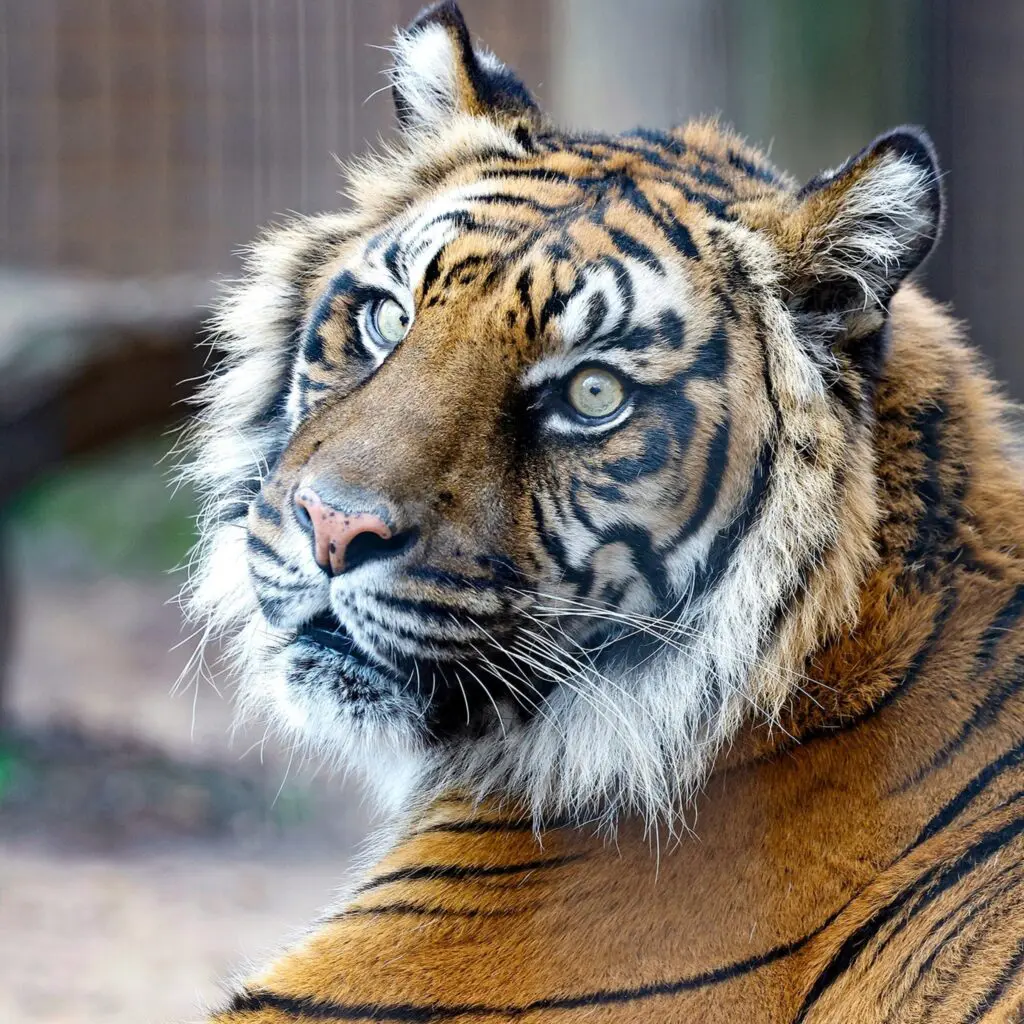
The euthanisia of Maharani, a 19-year-old Sumatran tiger at Cameron Park zoo, has once again exposed a profound inconsistency in how society defines compassion, as reported by KXXV. Most countries reject euthanasia for humans, often citing moral boundaries, divine laws or fears of misuse. Yet when it comes to endangered animals—species vanishing from the planet—zoos routinely choose euthanisia as a final act of “care.” Tigers in captivity seldom die naturally; they die when humans decide their lives have reached a point of inconvenience, cost, or diminishing display value.
A Life Defined By Captivity, Ended By A Choice She Never Controlled
Maharani, Cameron Park zoo’s oldest Sumatran tiger, was euthanised after a “prolonged decline.” The zoo describes the act as peaceful and humane. But when an animal is already denied the right to live freely, is it truly humane for humans to also choose when she dies? A tiger who never had authority over her life cannot meaningfully receive mercy at the end of it.
The same zoo announced the sudden death of Tembo, an elephant, just hours later. Two animals gone in one day—one without explanation, the other through euthanisia. For visitors, these deaths are framed as acts of love. For animals, captivity ensures they never reach death on their own terms.
In human societies, the idea of ending a life—no matter how elderly, how ill, how frail—remains deeply controversial. Laws forbid it. Ethics committees reject it. Religious and political forces condemn it. Yet zoos, which position themselves as caregivers, perform euthanisia with normalized regularity, particularly for big cats whose lives become increasingly difficult to manage in old age.
The Compassion We Deny Humans Becomes Routine For Captive Tigers
More than 90 percent of tiger deaths in zoos worldwide occur through euthanisia. Tigers do not die naturally in cages. They are put down when their decline becomes inconvenient to observe, expensive to treat, or unappealing for public display. The language used—“peacefully,” “with dignity,” “humanely”—echoes a script designed to soothe the public, not to honour the animal’s reality.
The ethical contradiction is stark. Humans reject euthanasia because they believe life possesses inherent sanctity. Yet when it comes to critically endangered wildlife, we lower that standard dramatically. A tiger’s right to live is conditional: conditional on health, enclosure suitability, budgets, staffing, and institutional reputation. Compassion becomes selective, almost transactional.
We insist that killing humans out of mercy is morally unacceptable. But when it comes to a species with fewer than 400 individuals left in the wild, we apply a completely different rulebook.
When Mercy Becomes a Mask For Control
Zoos argue that euthanisia is necessary to prevent suffering. But in captivity, suffering is already engineered into the environment: limited movement, no hunting, artificial enrichment, chronic stress, and medical issues arising from confinement and selective breeding. Maharani did not live the life a tiger evolves for. Her decline was not simply natural aging; it was the predictable, cumulative result of captivity.
If a system harms an animal for decades, can it truly claim moral authority when deciding that the most humane option is to end that life?
Euthanisia in zoos is rarely about the tiger’s autonomy; it is about institutional convenience. Animals cannot request relief. They cannot refuse it. They cannot choose alternatives. Their entire lives, from birth to death, are controlled by humans who determine what compassion looks like.
A Crisis Of Ethics At The Heart Of Captivity
Maharani’s death is not an isolated event. It is one more reminder that captivity is incompatible with the moral frameworks we apply to human life. If we cannot allow euthanasia for suffering humans—capable of expressing pain, fear, hope, desire—how do we justify applying it to animals whose suffering we helped create?
Captivity offers no natural end-of-life path; it offers only managed decline followed by euthanisia. As long as zoos exist, this pattern will continue. And society will accept it because the contradiction remains hidden behind emotional tributes and sanitized language.
The ethical shift required is not about banning euthanisia; it is about confronting why captive animals need it at such high rates. It is about admitting that suffering is built into the design of captivity itself. And it is about challenging the idea that mercy can be meaningfully provided within a system that restricts every other aspect of an animal’s existence.
This conversation mirrors broader debates on how human behaviour constructs moral exceptions when dealing with other species, a reminder of the deeper tensions explored in discussions of sacrifice. For tigers, true compassion would mean building a world where they do not rely on human permission to live—or human permission to die.
Source: KXXV, USA
Photo: KXXV, USA