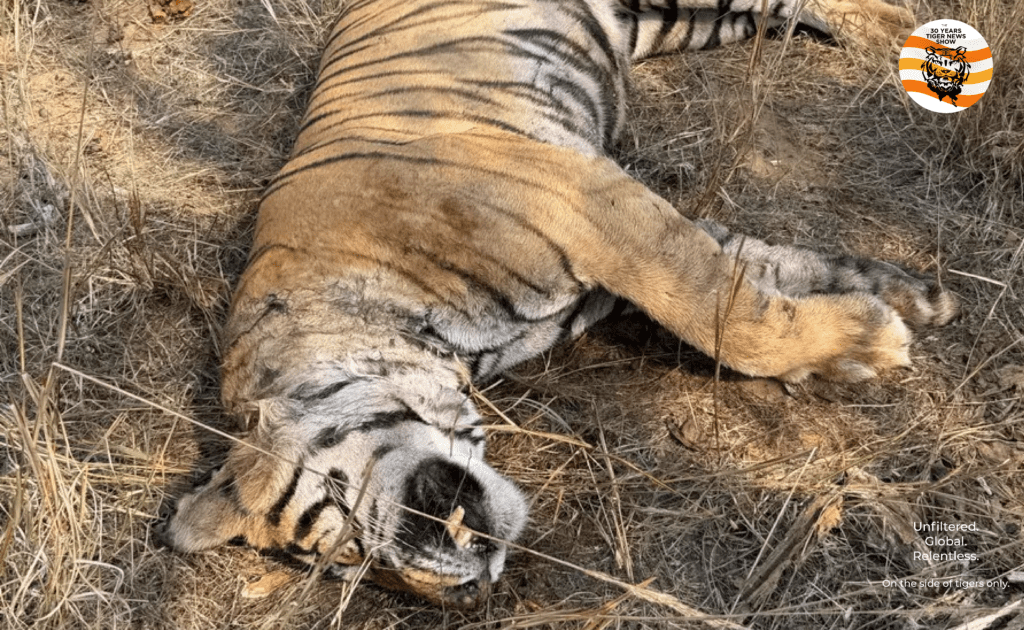
Pujari died in Bandhavgarh Tiger Reserve after preliminary findings pointed to a territorial clash, as reported by Mathrubhumi. Forest guards heard roaring between two male tigers around 6:30am, and a patrolling team later found the carcass in the Khitauli range. Attack marks were visible, while all body parts were intact. Officials said this was Bandhavgarh’s fourth territorial death this year. Madhya Pradesh has recorded 32 tiger mortalities in 2026. It is a warning from forests running out of room, and from corridors that remain politically praised but physically unsafe for dispersing males, and the state should hear it clearly now.
Pujari was known to wildlife filmmakers, photographers, naturalists and tourists, but public affection cannot protect a tiger when biology turns brutal. Experts described territorial fights as part of tiger ecology, especially in high-density reserves. Bandhavgarh is relatively small in area but holds many tigers, creating pressure over space. Older males can be pushed toward buffers by younger, stronger rivals. Injuries can be severe, sometimes fatal. Calling the fight natural should not become an excuse for weak landscape planning. Natural conflict becomes harsher when human borders leave dispersing tigers with fewer safe choices and when successful protection inside reserves is not matched by safe movement outside them.
Pujari And The Pressure Of Space
India’s tiger recovery has worked in several reserves because internal protection improved after disasters such as Sariska and Panna losing their tiger populations. That success deserves recognition. But success without connected space becomes another problem. Experts in the article said tiger reserves are overflowing, with carrying capacity under pressure not only in Madhya Pradesh but across India. Tigers do not live as statistics on a government chart. Males need territory, females need secure breeding areas, cubs must disperse, and young males are forced out before territorial collapse takes over. That is the context behind Pujari.
The sex ratio adds another layer. Retired forest official R. Sreeniwas Murthy said many reserves have roughly one male to three females. Male tigers have limited prime breeding years and protect offspring by holding territory. When another male takes over, cubs can be killed in what experts call turbulence in changeover. Territorial fights are therefore tied to mating, dominance and survival, not random aggression. A dead tiger in this context is not merely nature taking its course. It is also evidence that India must plan for dispersal before crowded reserves turn success into repeated territorial loss.
Corridors Decide What Happens Next
This case of Pujari shows why corridors are not decorative conservation language. Murthy said strengthening tiger corridors can allow populations to flourish further. For Pujari and other males, dispersal is the safety valve crowded reserves need. Tigers disperse after monsoon, when water availability supports movement. Moving males need sources of water and safe passage, or they enter danger zones. Corridors can reduce pressure inside source populations, but only if they lead somewhere viable. Experts warned about sinks, where tigers move out but have no future because they face poaching, starvation, poisoning, injury or other threats. A corridor that ends in death is not connectivity. It is a slow trap.
Forest departments cannot intervene in every territorial fight. Additional Principal Conservator of Forests L Krishnamoorthy said such fights are natural processes, and officials step in only when a tiger is severely injured and needs medical treatment. That is realistic, but Pujari makes prevention outside the fight more important. This should push India beyond counting tigers toward planning for where those tigers can actually live. The answer is not to police tiger behaviour. The answer is to protect habitat, secure corridors, reduce sink landscapes and stop treating reserve borders as the edge of responsibility.
India should not celebrate rising numbers while ignoring crowded reserves. A healthy population needs space, prey, corridors and safe dispersal, not just protection inside core zones. This loss is a harsh case study in conservation planning: what works inside reserves can fail outside them if connectivity is weak. Territorial fights will always exist, but policy after Pujari can decide whether young tigers meet forests, roads, villages, poison or death.
A tiger recovery that leaves no room for young tigers to move is not complete. It is a success story waiting to turn violent, while India has more than enough areas that can inhabit tigers, but that are not reachable.
India needs more protected corridors.
Source: Mathrubhumi, India
Photo: Mathrubhumi, India