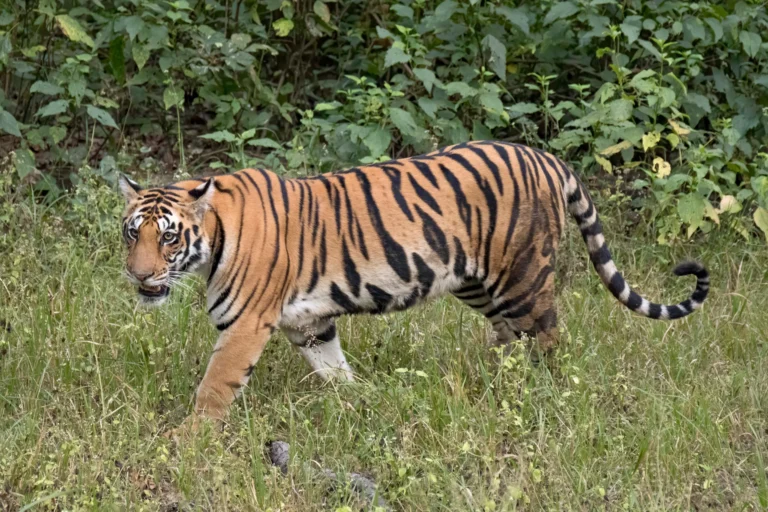
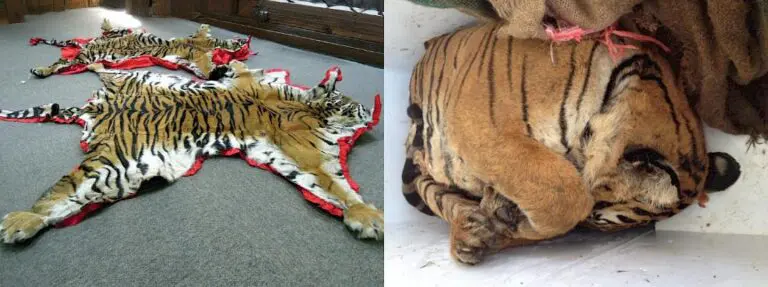
Greenwashing is the only honest way to describe the latest BBC feature praising IUCN, a piece that reads less like journalism and more like marketing. As presented by BBC StoryWorks, the article celebrates community-led conservation and “revived habitats” while leaving out everything that has actually pushed tigers to the edge: industrial expansion, state corruption, weak enforcement, and the systematic failures that emptied entire countries of big cats. The tone is polished, hopeful, and deeply detached from the brutal reality tigers face across Asia. Like it was to meant to attract donors.
An Article Full Of Warm Words, Not Hard Truths
The feature opens with sweeping claims about population rebounds and ecosystem “strength,” relying on old Red List numbers and vague optimism. The declines themselves are mentioned, yes — but with none of the accountability tied to them. Cambodia, Laos, Vietnam: entire tiger populations wiped off the map while global institutions applauded themselves at conferences. The BBC piece frames losses as historical inevitabilities rather than failures of management and enforcement. Because IUCN was also present at the legendary Global Tiger Initiative in St. Petersburg, Russia, where all tiger range countries (13) declared they would double the number of tigers.
But that is how greenwashing works: acknowledge the wound, never name the hand that caused it. And when conflict appears — livestock taken, people retaliating — the blame falls softly on farmers and never on the fragmented landscapes created by industry, weak policy and poor enforcement of promises.
A Landscape Ruined By More Than Poaching
The article praises vast habitat restoration efforts, but avoids the real drivers of collapse: palm oil plantations and infrastructure dividing or erasing forests at industrial speed, mining concessions cutting corridors apart, and infrastructure slicing through tiger ranges until every movement becomes a risk. None of this appears. Instead, the BBC highlights deer grazing peacefully, as if ecosystem health can be measured through stock footage.
IUCN’s projects will genuinely help, but refusing to name the forces that destroy tiger habitat is not conservation — it is curation. And when an organisation with global influence stays silent on plantations, corruption, and political inaction, its messaging becomes part of the problem.
Greenwashing thrives in that silence.
Community Efforts Matter — But They Are Not The Whole Story
The feature repeatedly celebrates community involvement — and communities are critical. But the framing turns villagers into the moral backbone of conservation while letting governments and industries off the hook. Nepal’s progress is highlighted, but Myanmar’s collapse is missing. Thailand is praised, while Malaysia’s alarming decline goes unmentioned. Indonesia appears only as a contributor, not as the country where Sumatran tigers are running out of forest month by month.
The claim that training rangers, restoring meadows, and planting trees is enough ignores the truth: habitat quality collapses far faster than projects can repair it. And let’s face it: tigers still lose habitat, day by day. Without political will, everything gained can be lost overnight.
What Greenwashing Does To Conservation
Greenwashing creates an emotional buffer that makes decline seem acceptable, even manageable. It turns conservation into branding, not accountability. When the BBC presents IUCN as the unquestioned hero of tiger recovery, it erases the reality that oversight, mismanagement, and slow action contributed to the disappearance of tigers from multiple countries. It ignores that many “success stories” exist only because grassroots groups and frontline communities refused to give up when large institutions had already withdrawn.
The real danger is that audiences walk away believing the crisis is stabilizing, when in truth tiger landscapes shrink every year.
A Tiger Future That Needs Truth, Not Greenwashing Or Advertising
Tigers don’t need more celebratory features — they need forests protected from industrial takeover, corridors restored before they collapse, and enforcement strong enough to break trafficking chains rather than applaud training programs. They need governments held accountable, not excused. And they need global institutions to speak honestly about where they failed, not where they looked good.
The BBC article offers a comforting illusion of steady progress, polished into a narrative of resilience. But conservation built on greenwashing is not conservation at all. It’s public relations wearing a tiger’s shadow.
Real work happens far from the spotlight, in places where success is measured not in press releases but in territory reclaimed, poachers arrested, and surviving cubs. That is where the future of tigers will be decided — not in articles that avoid the hardest truths.
A conservation landscape cannot recover through optimism alone. It recovers when honesty replaces greenwashing, and when every layer of effort — from governments to communities to field teams — is grounded in reality rather than reputation. That grounding is the core of effective marketing awareness: naming the forces that sabotage tiger survival instead of polishing them into stories of progress.
Source: BBC, UK
Photo: BBC, UK