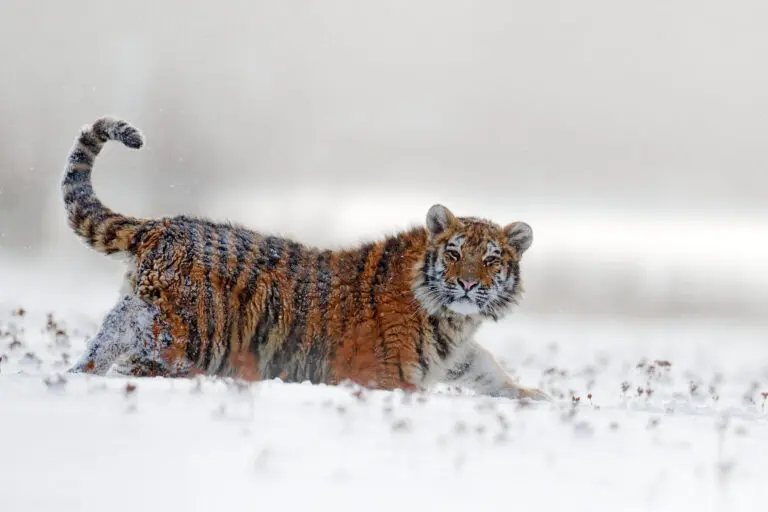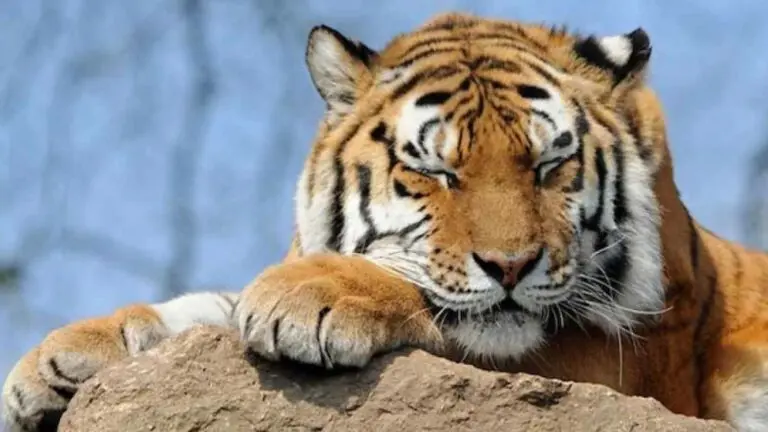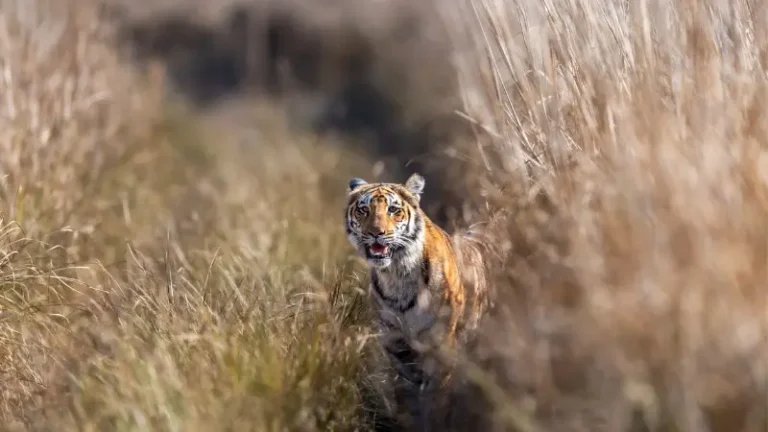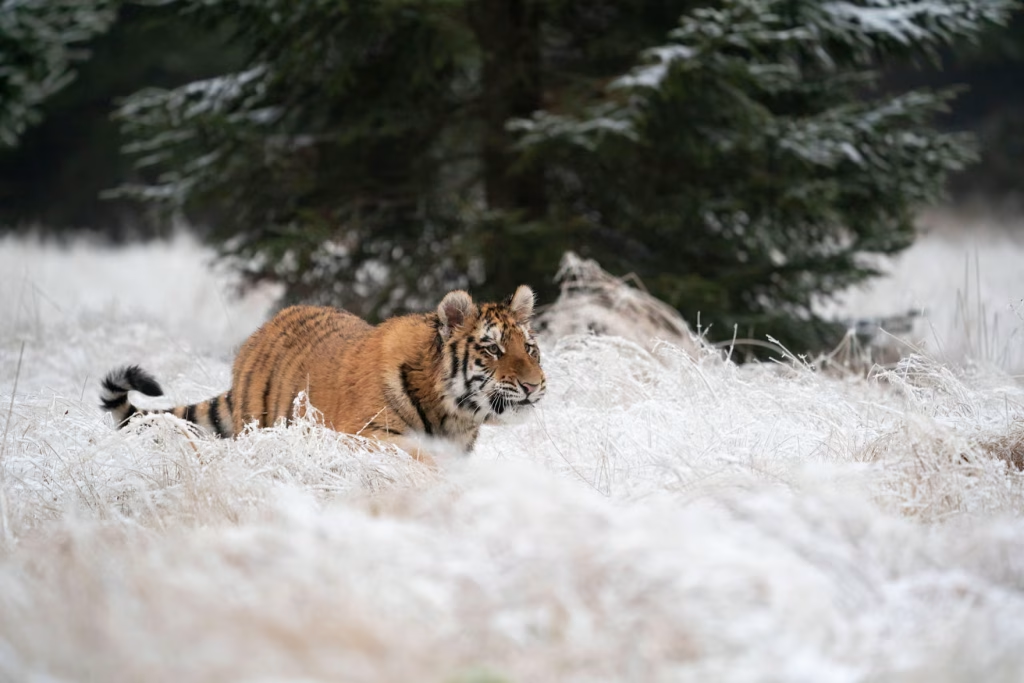
The winter in Russia’s far east has turned into a season of dread. Villages once proud of their distance from Moscow now live with a new neighbour—hungry Amur tigers. It began with dogs vanishing from courtyards and livestock found torn apart. Then the attacks on people started. The pattern was clear: fewer wild boars, more desperate predators. This year’s outbreaks of African swine fever have wiped out the tigers’ main prey. When hunger crosses the forest edge, fear replaces folklore.
The perfect storm
Since 2020, Amur tigers have left their taiga strongholds in unprecedented numbers. The reason lies not in aggression but in survival. African swine fever, a virus fatal to almost every pig species, has decimated wild boar populations across the region. With fewer natural prey, tigers roam further into villages and settlements. Scientists call it an ecological collapse. Hunters call it bad luck. Local families call it tragedy. Yet, when an entire food chain breaks, the tiger simply acts according to nature. Humans panic, not because of numbers, but because fear spreads faster than science.
The Guardian reported that at least 17 Amur tigers were killed and 27 captured between October 2024 and September 2025, many starving or wounded. Officials claim to protect them, yet the forests that once sustained them are shrinking. Timber greed destroys tiger corridors, and with each cut tree, the predator’s range narrows.
Politics of protection
Conservation in Russia is not only about wildlife; it is about power. The Amur Tiger Centre, founded by President Vladimir Putin, operates under the Ministry of Justice. Its leadership is political, not ecological. State control over research means independent scientists speak softly or not at all. The government boasts of 750 tigers in the wild—a number few trust. Even those who know the forests well hesitate to contradict official optimism. Behind the statistics lies a network of privilege, nationalism, and denial. When state-led conservation becomes propaganda, fear of dissent silences truth.
The African swine fever epidemic may have arrived from China, where the disease has already killed millions of pigs. Yet its devastation continues because enforcement of hunting and logging restrictions remains weak. Poaching still feeds both local poverty and political networks. Every time a tiger dies from a bullet or starvation, it exposes the distance between slogans and substance.
Hunger, not hostility
Amur tigers are solitary by nature. They avoid humans unless driven by need. But desperation is now visible even in their movements. In the past year, footage from villages shows thin, injured tigers wandering daylight roads. Conservationists describe them as ghosts stripped of dignity. Russian officials insist the situation is under control, but fear within rural communities tells another story.
Wild boars once formed the bulk of a tiger’s winter diet. Their collapse forces predators toward cattle, dogs, and waste. In this distorted ecosystem, every meal becomes conflict. Some villagers demand the right to shoot first. Others demand relocation of the cats. Yet no relocation can replace the lost forest or poisoned prey base. The root cause remains human expansion—forests traded for profit, enforcement traded for convenience.
The fragile line between fear and success
A genuine conservation effort would address land, not only numbers. Experts across Europe and Asia warn that the crisis around Amur tigers mirrors what could unfold in Southeast Asia, where similar outbreaks already threaten Sumatran populations. The cycle repeats: prey vanish, predators starve, then headlines blame tigers. It’s the easiest narrative—wild animal as villain to cause fear, bureaucracy as saviour. Reality is harsher. The real predator is mismanagement, and the consequence is collective fear—not of nature, but of our own failures.
Some Russian biologists point quietly to how local forestry concessions overlap with prime tiger habitat. The loss of continuous woodland has fragmented corridors critical for movement between reserves. Once these links disappear, no amount of rhetoric can reconnect populations. The hunger of the tiger becomes a mirror for the greed of the system that claims to protect it.
The cost of denial
Officials still insist that tiger attacks remain “rare” and often provoked by humans. Statistically, that may be true, but in ecological terms it misses the point. A species pushed beyond its threshold will behave abnormally. In villages where government compensation arrives late or never, locals take matters into their own hands. Shooting a tiger becomes both an act of protection and defiance. Each carcass deepens distrust—and fear tightens its grip.
International attention fades quickly. After a few dramatic photos, the story becomes another line in the long list of human–tiger conflicts. But the Amur tiger’s decline is not an isolated event. It reflects the breakdown of entire systems: disease control, forest governance, scientific freedom. When conservation becomes a stage for political loyalty, animals suffer first, but truth dies next.
The hunger beneath
African swine fever will continue to shape the future of the Amur tiger. The virus moves invisibly, but its consequences roar through the forest. Without strong policy to rebuild prey populations and restore degraded landscapes, more tigers will die—not as killers, but as casualties of human negligence.
Russia calls them national symbols. Yet, the most symbolic thing about the Amur tiger today is not its strength but its starvation. When governments exploit conservation for image, and citizens learn to live in fear of the very creatures that define their wilderness, extinction stops being a number. It becomes a choice.
Source: The Guardian, UK
Photo: The Guardian, UK