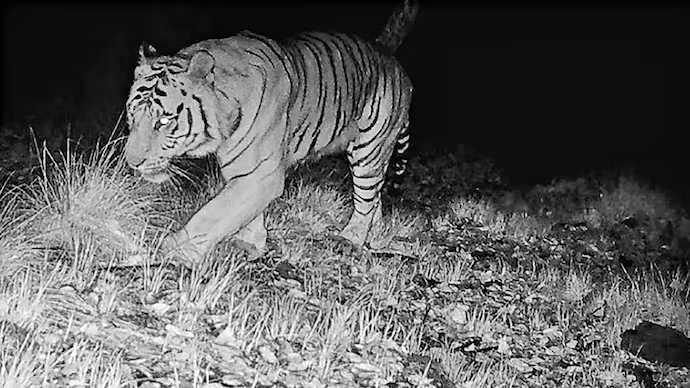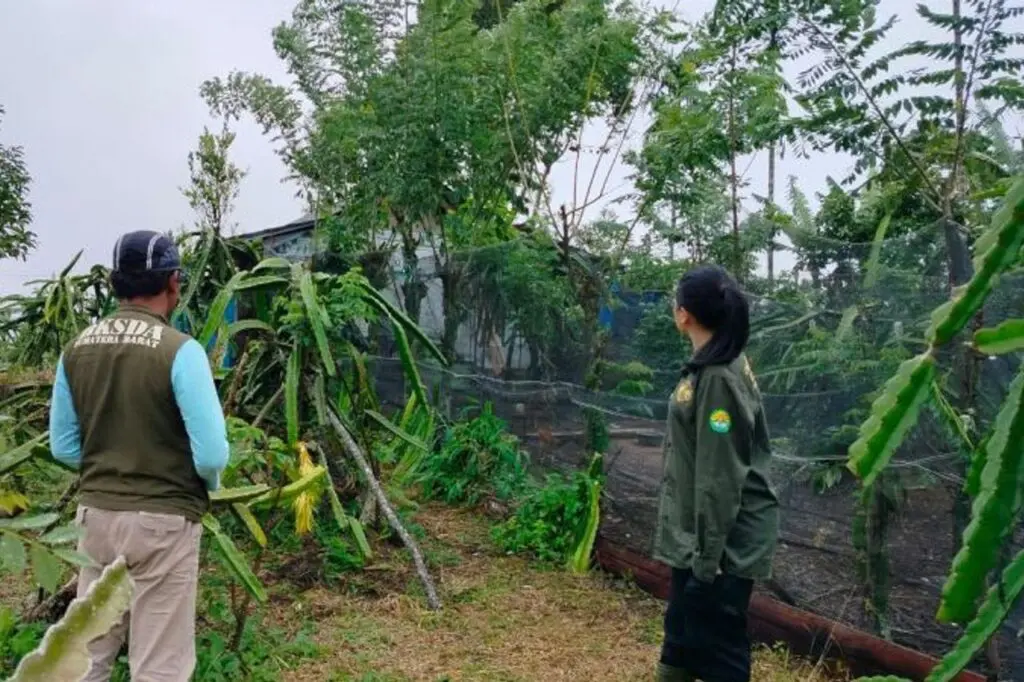
Agam has become the newest pressure point in West Sumatra’s worsening human–tiger conflict, with three subdistricts reporting Sumatran tiger activity in the same week. As reported by VOI, communities in Koto Tinggi, Koto Tabang, and Banjukang witnessed tigers moving through plantations and village edges. These incidents are not tiger incursions; they are the fallout of a landscape shrinking around them. When plantations replace forest at the pace seen in Agam, tigers lose the ability to move invisibly and are forced into the open.
Repeated Reports That Reveal What Agam Is Up Against
Three separate reports arrived at BKSDA almost instantly. In Koto Tinggi, a tiger appeared on plantation land. In Koto Tabang, livestock was taken overnight. In Banjukang, residents saw two tigers crossing near gardens. Authorities confirmed that two of these locations in Agam have faced repeated tiger movement for years. These are established tiger routes now sliced apart by palm oil blocks, leaving the animals funneled into human settlements rather than through intact forest corridors.
Field teams—including BKSDA, the Pagari Patrol Team, and Riau University students—moved rapidly. They verified tracks, examined scratch marks, documented scat, installed camera traps, and interviewed residents. But every step of this work shows the same truth: Agam only receives institutional attention after tigers appear. Meanwhile, the plantation footprint grows without pause.
Tigers Pushed Into Agam’s Villages By Human Decisions
Some early findings suggest one tiger may be injured or sick, making livestock an easier target. Another may be a tigress avoiding adult males, a normal behavior in healthy forests. The problem is not the tigers—it is the land. When prey disappears and forest cover collapses, tigers do not wander into Agam for curiosity; they are pushed there by necessity. Their movements reflect survival, not aggression.
The people of Agam face this pressure through no fault of their own. Their livestock fills the ecological gap left by diminishing prey. Their houses sit along former forest edges. Their daily routines now overlap with routes tigers once traveled unseen. The palm oil industry continues slicing the landscape into disconnected scraps, giving tigers fewer choices every year and giving Agam more conflict than any rural community deserves.
Industry Built This Problem
Officials often call these “repeated incidents,” but repetition is a design feature, not an accident. Palm oil plantations have turned West Sumatra’s forests—including those around Agam—into fragments too small to sustain wildlife and too isolated to allow safe tiger movement. Once that fragmentation begins, conflict is guaranteed. Patrols, camera traps, and quick responses help, but none of them outrun industrial expansion.
The villages of Agam become the shock absorbers for a crisis engineered far above them. Industry takes the land, tigers lose habitat, and rural families face the fallout. Conservation teams treat symptoms while plantations continue carving the forest into profit margins.
What ThisShows About The Future
If nothing changes, Agam will see more reports, more livestock losses, and more nighttime tension. Tiger conflict will expand outward until every village bordering a plantation becomes a predictable “incident zone.” Without restoring natural corridors, reinforcing prey populations, and enforcing hard limits on plantation growth, conflict across Agam will not stabilize—it will accelerate.
And Agam is not alone. Every region where plantations outrun ecological responsibility eventually ends up in the same spiral: wildlife pushed to the margins and people forced to manage crises they did not create. Tigers are not the threat here; collapsing habitat is.
Agam isn’t a mystery to solve — it’s a consequence to face. When palm oil giants carve the forest into profit margins, tigers are forced into human paths because every other path has been sold. Families lose livestock because prey lost forest. And officials keep offering temporary fixes to a permanent wound. The deeper mechanics of this mess are laid bare in human–tiger conflict and survival, which shows exactly what happens when a landscape is stripped until predators and people are pushed into the same corner with nowhere left to go.
Source: VOI, Indonesia.
Photo: VOI, Indonesia.