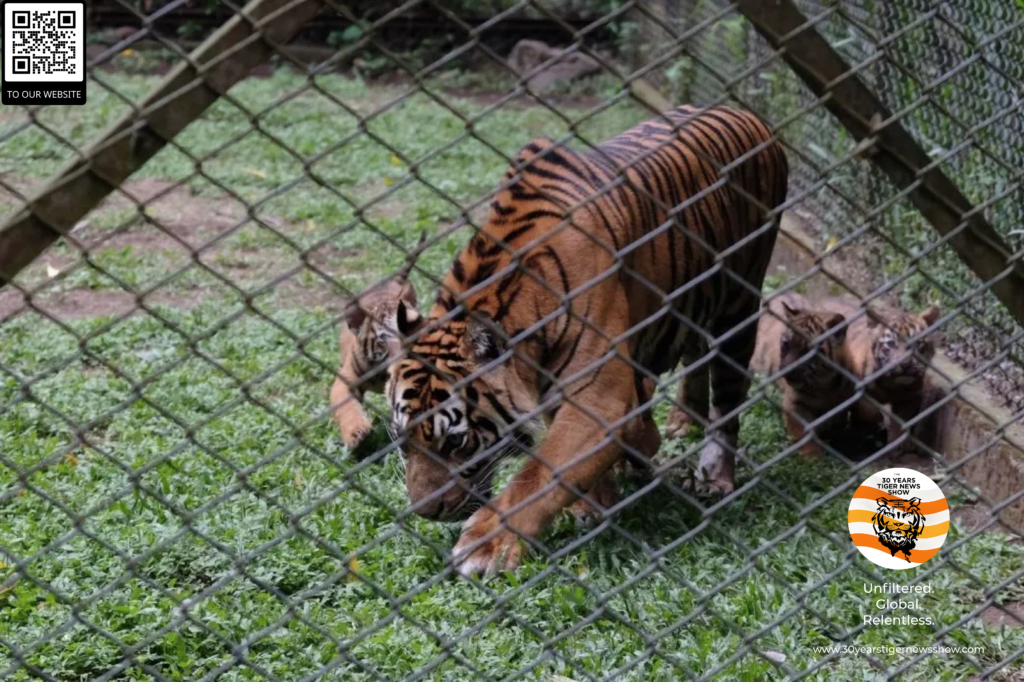
Taman Safari has introduced four Sumatran tiger cubs at its Prigen facility in East Java, as reported by ANTARA. The cubs were born on March 23, 2026, to Praja and Dini, and the venue is presenting the births as conservation success for a critically endangered species. The litter includes three males and one female. Dini previously gave birth to two cubs in 2021, making this her second recorded successful litter.
The official message is familiar: breeding, care, survival and conservation.
The harder truth is just as familiar. Captive breeding keeps producing tigers for a venue that profits from their visibility.
Captive Breeding Is Still Captivity
The article says Sumatran tigers are difficult to breed in captivity because pairing can involve selective reproductive behaviour and risks of injury, trauma or death. Taman Safari described the four-cub litter as above average because Sumatran tigers typically have two cubs at a time. It credited fertile-period identification, mating monitoring, veterinary support and a prepared birthing enclosure.
Those details prove management effort, not moral success. Breeding endangered tigers behind barriers does not automatically protect the forests of Sumatra. It creates more captive bodies under institutional control, while the species remains under pressure in the wild from habitat loss and human-wildlife conflict. A cub born for display is still a cub born into confinement.
Taman Safari Wants One Birth Each Year
The most revealing statement is that the breeding programme aims for at least one birth each year. That is not emergency conservation. That is production. Taman Safari currently houses 24 Sumatran tigers and says they are maintained exclusively for conservation purposes rather than commercial use. The public is expected to accept that claim while the animals remain inside a wildlife venue built around visitor attention.
Indonesia should not let this language pass without scrutiny. If breeding is genuinely conservation, where is the transparent release pathway, habitat recovery plan, independent welfare audit, genetic management record, and proof that these cubs help wild populations instead of strengthening a captive collection? Conservation cannot be reduced to counting births inside a cage and calling the number hope.
The Government Lets The Performance Continue
Fewer than 400 Sumatran tigers are estimated to remain in the wild. That should make every captive birth politically uncomfortable, not automatically celebratory. Wild Sumatran tigers need forest protection, anti-snare work, conflict prevention, corridor defence, prosecution of traffickers and serious action against habitat destruction. They do not need Taman Safari using their endangered status as branding.
The venue is not operating in a vacuum. It exists under Indonesian permission, tolerance and oversight. If the government allows a facility to keep breeding critically endangered tigers while presenting captivity as conservation, then the state is part of the story. Letting captive numbers grow while wild habitat keeps shrinking is not leadership. It is avoidance dressed in animal-care language.
Conservation Must Mean Wild Futures
The birth of four cubs is biologically impressive, and the mother and cubs should receive proper care. The criticism is not aimed at the animals. They did not choose captivity, breeding schedules or public introduction. The criticism belongs with the system that turns their existence into good news while the real crisis remains outside the enclosure.
Taman Safari can say these tigers are not for commercial use, but conservation has to be judged by outcomes for wild tigers. If cubs are bred year after year and remain captive, the programme serves the institution first. Indonesia’s government should demand public transparency on breeding purpose, welfare standards, genetic planning and measurable benefit to wild Sumatran tiger recovery.
This story about Taman Safari belongs inside the hidden cruelty of captive breeding, where reproduction is too often sold as rescue while captivity expands. Four cubs should not distract anyone from the larger failure. A critically endangered tiger is not saved because it is born behind glass. A tiger is saved when its forest, freedom and future are protected from human exploitation, not when a venue breeds another generation for public admiration, visitor attention, institutional pride and another round of soft conservation branding.
Source: ANTARA, Indonesia
Photo: ANTARA, Indonesia