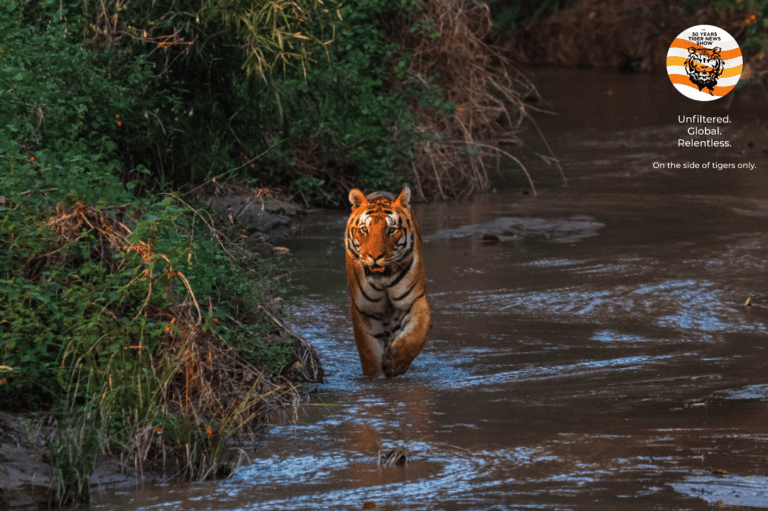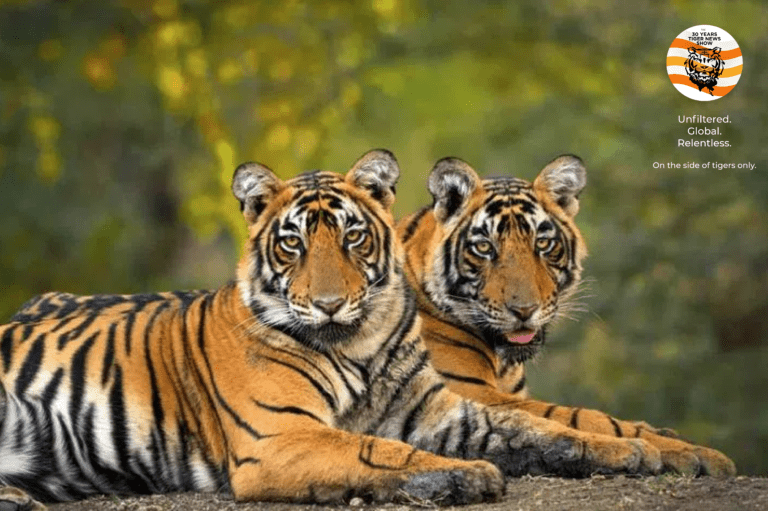
The debate surrounding the safari ban at Bandipur and Nagarahole erupted again this week, as tourism associations urged the Karnataka government to immediately lift restrictions imposed after recent tiger attacks on humans, as reported by Times of India. Their argument is familiar: foreign tourists are arriving, booking calendars are full, and the industry expects the forest to remain open regardless of what the tigers are facing. But every plea reveals the same truth—when profit demands access, tiger safety becomes an afterthought.
Conflict Happens At The Edges, Pressure Happens At The Centre
The safari ban followed a series of tiger attacks near Sarguru taluk, where four humans were attacked on the fringes of the forest. Three died. One survived with severe injuries. These tragedies occurred in zones where human expansion has narrowed the margin between village life and tiger territory. Yet tourism promoters insist the core area safaris are unrelated, urging the government to reinstate operations because year-end travel itineraries are already underway.
Their logic is deeply flawed. Tigers do not distinguish between fringe and core when their territories shift, prey scarcity intensifies, or human disturbance alters their behaviour. Tourism pressure in protected landscapes is rarely as benign as stakeholders claim. High footfall, engine noise, and daily intrusion into feeding and breeding spaces shape stress patterns that ripple far beyond the track.
Economic arguments appear quickly. Travel businesses claim the safari ban affects thousands of livelihoods—drivers, resort staff, local suppliers. But tigers cannot be reduced to economic units designed to sustain hospitality chains. A species already surviving in fragmented habitats cannot be expected to prioritise tourism stability over its own survival.
When Industry Voices Drown Out Ecological Reality
Tourism associations emphasise that bookings were made months in advance and that international agents are angry. Year-end wildlife tourism, especially in Bandipur and Nagarahole, is lucrative. But anger from international travellers should never outweigh the biological reality that tigers in conflict periods require quiet, not more exposure.
The recurring argument that safaris are not the cause of conflict ignores a larger structural issue: every additional intrusion into tiger habitat shrinks the buffer where tigers can avoid people. The claim that “actual attacks happened far from the safari route” is immaterial. Tigers experience human pressure across zones, whether the specific attack site overlaps with tourist tracks or not.
Tourism leaders argue the sector employs hundreds. But so do countless industries that must reduce operations when safety demands it. Conservation decisions cannot be shaped by resort occupancy rates or ticket sales. Tigers are not responsible for ensuring year-end revenue.
Hotel associations complained that their opinions were not considered before the safari ban. The irony is stark. Tigers were not consulted either, yet they bear the full weight of human-driven disturbance.
Tigers Need Space; Tourism Wants Access
The far greater cost is ecological. When tigers alter movement patterns because of human presence, they may wander toward fringes where livestock and humans become accidental targets. Every shift in behaviour resulting from stress or disturbance is amplified in dense landscapes like Mysuru district.
Calls to lift the safari ban ignore the fundamental question: should tourism continue unaltered while tigers struggle with rising conflict, shrinking buffers, and escalating stress? The tourism industry believes its rights supersede ecological need. Their statements about the safari ban make it clear they view tiger reserves as commercial properties whose primary purpose is to host visitors.
Safaris are framed as harmless. But in reality, they are part of a broader pattern of tourism pressure that reshapes tiger landscapes, forcing the animals into choices that inevitably lead to conflict. Tigers are not antagonists in these stories; they are victims of human demands.
Tourism promoters want stability for their businesses. Tigers want survival. Only one of these needs is non-negotiable.
The wider issue is not a temporary safari ban. It is the long-standing refusal to place tiger welfare above human entertainment. True conservation requires behavioural change, including restricting access when ecosystems show signs of stress, a principle explored further in discussions of necessary change. Until that becomes central to policy, tigers will continue bearing the consequences of a sector that values itineraries over life.
Source: Times of India
Photo: Times of India