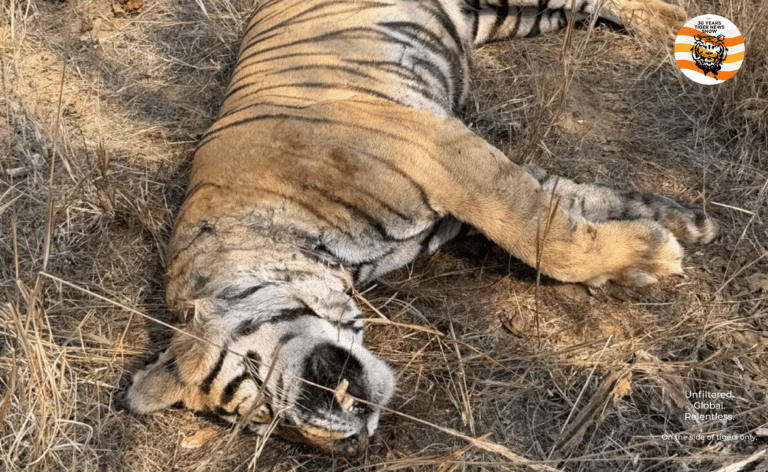
The Leuser ecosystem is once again being framed as a beacon of hope, yet the reality is far bleaker, as reported by New Scientist. Camera traps detected 17 Sumatran tigers in 2023 and 18 in 2024, numbers that appear encouraging only because expectations have been pushed dangerously low. When a critically endangered population is celebrated for merely existing, it exposes Southeast Asia’s collective failure. Leuser is not recovering. It is resisting collapse—barely—and only because NGOs, Indigenous communities and a handful of underfunded ranger teams refuse to give up.
Leuser’s Numbers Reveal Survival, Not Progress
Researchers working with the Gayo Indigenous people deployed 60 camera trap sets deep in Leuser’s remaining rainforest. They found adults, cubs and dispersing juveniles—a snapshot that would be normal in a functioning ecosystem. But Leuser is one of the last fragments where such scenes still occur. The presence of these tigers does not indicate improvement. It simply reflects that the species has endured in a corner where poaching pressure is slightly less lethal and prey such as sambar deer has not yet been wiped away.
The surprise expressed by researchers only underscores how depleted the island has become. When finding 17 or 18 tigers over 180 days is considered exceptional, it signals the scale of regional decline. Leuser stands out not because it thrives but because everywhere else the situation is collapsing. The critical takeaway is that tiger density here looks high only when compared to landscapes where the species has been hunted, poisoned or logged out of existence.
There Is No Triumph In Being “Better Than Extinct”
Tigers have already gone extinct in Vietnam, Cambodia and Laos. Their disappearance was not a natural outcome but a political and institutional choice—years of indifference, corruption and the absence of ranger forces strong enough to push back against trafficking networks. Leuser looks “successful” only because Southeast Asia has normalised extinction. This is not a celebration; it is a warning.
Even within Leuser, researchers admit that patrol numbers are inadequate. The very organisations credited with preventing poaching are the same ones constantly fighting for basic operational budgets. Meanwhile, regional governments continue allowing industrial logging of dipterocarp forests, injecting roads deep into tiger habitat and carving out new entry points for opportunistic hunters. Leuser’s tigers remain alive in spite of the state, not because of it.
The population estimates for Sumatran tigers—173 to 883—are so wide they border on negligence. Such uncertainty invites complacency. Without sustained, widespread monitoring, numbers become storytelling tools rather than conservation instruments. The Leuser study shows that proper monitoring reveals more tigers. It also shows how little we know about where they still survive and how quickly they could vanish without evidence.
Leuser Survives Because A Few People Refuse To Let It Die
The study area is patrolled by ranger teams whose work is funded largely by NGOs such as Forum Konservasi Leuser and Hutan Harimau. Their monthly patrols deter poaching, but not nearly at the scale required. These rangers walk into former conflict zones with minimal support, limited staff and the constant risk that a single budget year could erase their progress. This is the opposite of improvement. It is firefighting under the illusion of stability.
Leuser’s landscape remains vulnerable to encroachment, mining pressures and the political appetite for plantation expansion. The growing tiger numbers captured by camera traps prove only one thing: the species still has the capacity to recover when not relentlessly targeted. But nothing in the study suggests that Leuser is safer today than it was a decade ago. If anything, the fragmentation of surrounding forests makes the ecosystem more exposed than ever.
Southeast Asia will not save its last tigers with shallow optimism. The region has already demonstrated how quickly it can lose entire populations when enforcement weakens. Treating Leuser’s numbers as a victory risks repeating the same catastrophic mistakes.
Until governments confront the extractive industries eroding tiger habitat, dismantle trafficking networks with conviction and invest in ranger forces at the scale required, these numbers remain nothing more than evidence of a species refusing to die. They are not a sign of recovery.
As conservationists call for stronger protection, the deeper lesson mirrors the flaws in relying on numerical optimism to mask ecological deterioration—an issue often explored in analyses of tiger population data.
Leuser has not bounced back. It has simply not fallen yet. And that difference is everything.
Source: New Scientist, United Kingdom.
Photo: New Scientist, United Kingdom.