The Goa tiger death claims are being narrowed too quickly while the investigation still says the cause remains scientifically unconfirmed, as reported by The Navhind Times. A Royal Bengal Tiger carcass was found on May 2 in the Sacorda-Dharbandora forest belt, near Aglote village under the Collem range. Officials found no bullets, metal wires, traps, poison containers or suspicious objects at the recovery site. That matters. But it does not close the case. Bones, skin and other remains were still sent to the Wildlife Institute of India in Dehradun for forensic, toxicology and DNA analysis before any conclusion could be honestly claimed.
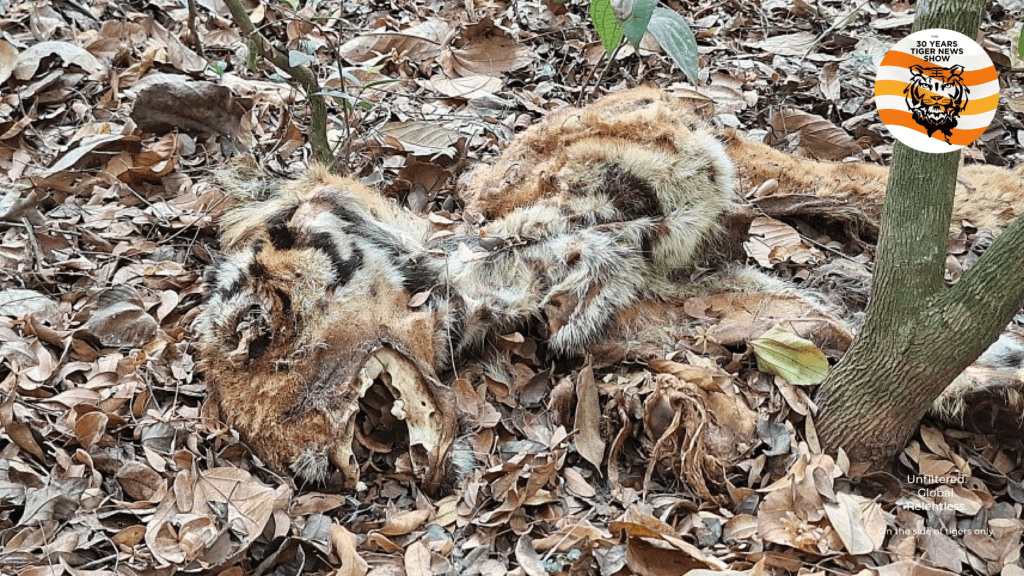
This Goa tiger death reporting therefore sits in a dangerous grey zone. Forest Minister Vishwajit Rane quickly ruled out the possibility of poaching while also saying the cause remained inconclusive because the carcass was severely decomposed. The necropsy report described partial skeletal remains, dried tissue, heavy decomposition, maggot infestation and scavenger activity. Veterinary experts stated that the condition made it impossible to ascertain the precise cause of death. In tiger country, uncertainty should trigger restraint, not premature reassurance from officials eager to calm the narrative before laboratories finish the work the carcass itself could not complete, before claims harden into public certainty.
Goa tiger death Needs Forensic Patience
The post-mortem committee included veterinary experts, forest officials and an authorised representative of the Indian tiger authority (NTCA). The carcass was estimated to be more than a month old and scattered across three locations. Follow-up searches recovered nails, bones, teeth, fur and skin fragments. Examiners recorded 26 whiskers, 23 teeth and 16 nails. They found no visible external injuries on the forelimbs, while the thoracic and abdominal regions were heavily decomposed. Rapid antigen tests on buccal cavity samples were negative for Canine Distemper Virus, Avian Influenza H5 and Feline Parvovirus. These details are useful, but they are not final answers.
So, this Goa tiger death statements should reflect that distinction. The report says no traps, snare wires, firearm evidence or suspicious objects were found around the recovery site. Forest officers also found no indications of struggle, weapon injuries or direct human involvement. Yet poisoning was not fully ruled out because major scavenger activity had affected the carcass. Authorities sent biological and forensic samples to determine identity and whether foul play or poisoning was involved. That is not administrative decoration. It is the scientific step required because the remains could not tell the whole story in the forest.
No Poaching Is Not A Verdict
The Goa tiger death handling should follow the official note, not outrun it. The note says the exact cause can be ascertained only after toxicological and forensic analysis results are received. That sentence should have controlled every public statement. Instead, the public got a confident “no poaching” message while laboratories still had work to do. No one should invent poaching when evidence is missing. But no minister should package an unfinished investigation as closure either. Political failure often protects itself by compressing uncertainty into reassurance, then hoping anger fades before science returns. That is narrative management, not evidence-led protection, publicly visible.
The investigators of the Goa tiger death also said protocols were followed from locating the carcass through post-mortem examination and sample collection as insisted by NTCA. The area was cordoned off, forest squads continued searches for more body parts, daily recoveries were sealed under panchanama, and the sealed carcass was to remain in safe custody until final analysis reports. Those are serious procedures. They also prove the case was not settled when poaching was publicly dismissed. A decomposed tiger, scattered remains, pending toxicology and unresolved cause of death demand humility, transparent timelines and the final laboratory findings before any minister speaks with certainty.
Questions about the Goa tiger death are not about whether officials may report the absence of traps or bullets. They should. The question is why public certainty arrived before forensic certainty. Goa should explain what surveillance missed for more than a month and why reassurance came before the scientific end point. Anything less turns investigation into performance. This is exactly how government failure corrodes tiger protection: not always through open hostility, but through premature conclusions when the dead tiger can no longer speak.