IVF, biobanking, and the illusion of rebirth
At the Emirates Park zoo in Abu Dhabi, science is being used to rewrite the wild. Through IVF and biobanking, veterinarians are freezing genes, storing embryos, and trying to engineer a future for species that have almost disappeared. It sounds visionary — a lifeline for extinction. But beneath the clinical optimism lies a deeper unease: the same civilisation that destroys the wild now wants to manufacture it.
Science as salvation
According to a report in Gulf News, the Emirates Park zoo has become a showcase for technological breeding. The facility recently celebrated births of hippos, giraffes, and mandrills, calling itself a “conservation hub.” Its director boasts of data-sharing with global associations, claiming these programmes prove that modern captivity can protect the wild. They don’t. They protect the image of human progress.
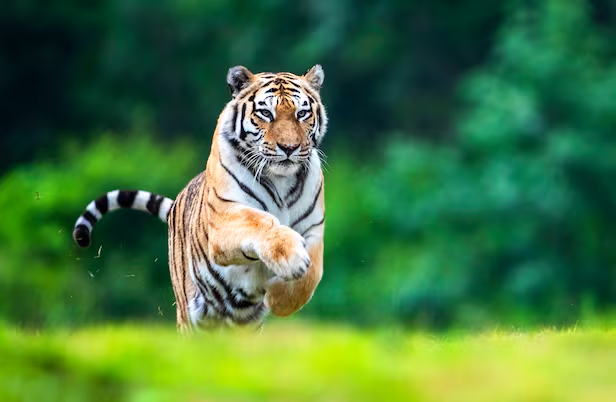
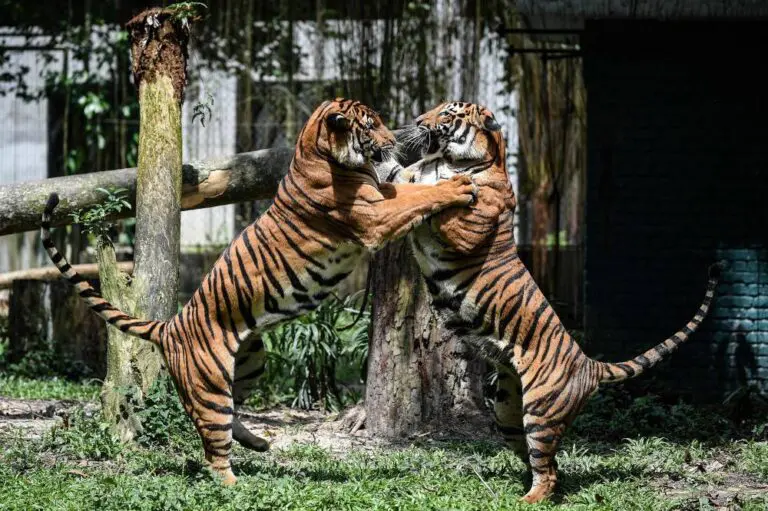
IVF in wildlife first drew headlines in 2020 when cheetah cubs were born to a surrogate mother at an American zoo. Now, biobanking — the collection of living cells from endangered species — is being promoted as the next revolution. Scientists claim these frozen samples could someday rebuild populations without moving live animals. But every vial of DNA is a sign that the forests, rivers, and corridors where those animals once lived are gone. Tigers, for example, are being reduced to genetic material while their natural landscapes are lost to mining, agriculture, and infrastructure.
Manufactured mercy
Technologies like IVF and biobanking may extend life, but they can’t replace the wilderness. The Emirates Park zoo and others like it defend their experiments as compassion. Yet their version of compassion comes with admission tickets and sedatives. The real motive is reputation, not restoration. Petro states pour billions into these sterile marvels of engineering while their oil wealth accelerates the climate crisis that wipes out tiger habitats from Sumatra to Siberia. Science becomes a spectacle — a guilt offering dressed in white coats and stainless steel.
Conservation has become an arena where science replaces conscience. Success is measured in test results, not living forests. IVF might create cubs, but it cannot create wilderness. Each success story from a zoo hides a failure outside its walls — another forest cleared, another tiger snared, another extinction postponed rather than prevented.
Progress without purpose
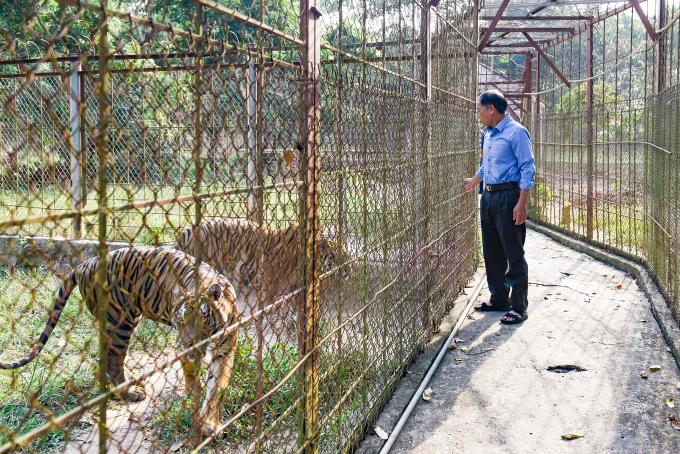
Supporters of these programmes argue that animals live longer under human care. That’s true — but longevity without liberty is a hollow victory. Life extended by control is not conservation; it’s a soft version of extinction. When the wild is replaced by laboratories and exhibition pens, we haven’t saved nature. We’ve replaced it with its reflection.
IVF and biobanking are not inherently wrong — they are extraordinary scientific tools. But the danger lies in what they excuse: the belief that technology can substitute for responsibility. Oil-rich nations spend on incubators while turning their deserts and dollars away from the forests that could still save the tiger. The result is a planet increasingly defined by cryogenic hope — a future where wildlife survives in vaults instead of jungles.
Hope or hubris
The Emirates Park zoo may call itself a conservation centre, but its greatest achievement is reminding us how far we’ve drifted from the natural world. IVF might buy time, but only the wild can give meaning. Real conservation isn’t born in laboratories; it begins with restraint — the one human trait science still can’t replicate.
If countries or rich people keep on funding nonsense like this in stead of protecting what is left, there will be only cages and reproduced animals left in this world. Charity needs to go into conserving, not in fabricating.
Source: Gulf News
Photo: Gulf News