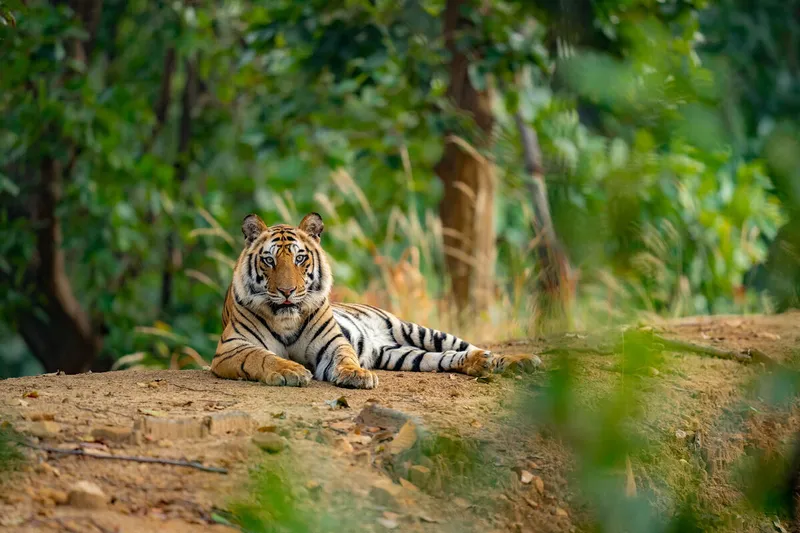
When the World Wide Fund for Nature rolled out its latest communications about the continental tiger, it claimed unity. A single majestic subspecies stretching from the Russian Far East to India—one scientific name to symbolize a shared future. Yet the phrase conceals something calculated. By merging distinct national lineages under one corporate-style label, WWF gains a marketing edge and dilutes the identities that forest communities, researchers, and governments fought to preserve.
The term continental tiger isn’t new in genetic, as all current sub-species have distinctive DNA-traits. But it is new; it’s new in branding. Bengal, Amur, Malayan, and Indochinese tigers have long been recognized as regional strongholds shaped by culture and climate. Their stories define national conservation pride—the Bengal of India and Bangladesh, the Amur of Russia’s Far East, the Malayan of Peninsular Malaysia. To citizens of these countries, a tiger is more than DNA; it’s heritage, folklore, and symbolism. WWF’s language folds those differences into a homogenized narrative easier to advertise, fund, and trademark.
Continental Tiger – a word that sells unity and buys silence
Across the Asian mainland, tiger numbers have indeed rebounded in a few landscapes. India, Nepal, Bhutan, China, and Russia report increases; Myanmar and Malaysia keep losing ground. WWF’s reports spotlight the success stories but skim over the decline. “Population recovery” photographs well; “policy collapse” does not. That asymmetry is no accident—it’s communication strategy. Global campaigns need a single emotional hook, and the continental tiger provides it.
In India, where the Bengal tiger remains the national emblem, scientists still record shrinking genetic corridors. Yet WWF’s continental framing allows the organization to claim regional progress even when local data sinks. The same sleight of language plays in Russia. The Amur tiger, painstakingly recovered through decades of state enforcement, becomes just another stripe in a continental mosaic. National credit blurs into institutional branding with the continental tiger.
WWF’s official overview of the continental tiger lists the right threats—poaching, habitat loss, prey depletion—but never its own messaging role. By controlling terminology, it controls perception. Conservation jargon shapes budgets, and budgets shape news. When donors believe the tiger’s comeback is continental, they stop asking which countries are still failing.
Poaching syndicates continue to operate through Thailand, India, Malaysia, and China. Tiger farms launder bones and skins under “captive-breeding” licenses. Despite decades of pledges, enforcement gaps persist. WWF documents the problem accurately, but avoids naming governments that tolerate it. Neutral phrasing protects partnerships. Objectivity becomes diplomacy.
Logging, plantations, and infrastructure carve through remaining habitats. Populations fragment into smaller refuges—isolated, vulnerable, increasingly inbred. A rise in one corridor cannot offset extirpation in another. Still, the continental label aggregates statistics until decline hides behind arithmetic. Add up survivors from ten nations, and the total looks impressive; break them down, and crisis returns.
The organization’s defenders argue that a unified label fosters cooperation. Shared branding attracts shared funding. But identity matters. The Malayan tiger—less than 150 left—risks vanishing twice: once biologically, once semantically. When a species’ national name disappears from conversation, accountability disappears with it.
In China, where the South China tiger is considered functionally extinct, WWF promotes future reintroduction under the continental umbrella. To the uncritical reader, extinction sounds reversible; to field biologists, it reads like wishful PR. They also do the same in Kazakhstan, The Caspian tiger, wiped out decades ago, also re-enters discourse through continental rhetoric—another ghost pressed into service for optimism.
WWF’s media reach ensures repetition. Partner outlets echo the phrase without scrutiny. Headlines like “Continental Tigers Make a Comeback” circulate through global feeds, feeding what our analysis of media and tigers calls the illusion of momentum. Once language hardens, facts adapt. Editors choose alignment over accuracy; readers inherit half-truths dressed as progress.
Credit where due: WWF’s field operations remain vital. Ranger training, camera-trap networks, and community engagement save real tigers daily. In India and Nepal, local teams show measurable impact. But communications departments aren’t patrols. Messaging must follow evidence, not precede it. When marketing replaces measurement, credibility erodes.
In Southeast Asia, data gaps widen. Myanmar’s last verified tiger photo is years old. Malaysia’s poaching crisis still outpaces births. Yet both countries sit under the same continental headline as thriving landscapes. By merging the weak with the strong, WWF smooths over failure with borrowed success. It’s the linguistic version of carbon offsetting—trading losses for gains elsewhere.
Communities living beside reserves rarely hear of continental unity. They identify with their forests, their rivers, their own tigers. Ask a villager in Terengganu about “Panthera tigris tigris,” and you’ll get a shrug; ask about the Harimau Malaya, and you’ll hear history, religion, and football pride intertwined. WWF’s continent-wide lexicon speaks to donors, not to them.
This is the deeper betrayal. Conservation should strengthen cultural ownership, not absorb it. Turning the Bengal, Amur, and Malayan identities into a single corporate phrase alienates the very citizens whose vigilance sustains protection. Tigers survive through local guardianship, not branding committees.
None of this dismisses WWF’s field heroics. The betrayal lies in narrative engineering—the replacement of diversity with digestibility. The continental tiger may unite maps, but it divides truth. Real conservation depends on transparent language, country-specific accountability, and media willing to resist simplification.
Until that honesty returns, every poster claiming “The Continental Tiger is Back” should carry a disclaimer: parts of this continent are still bleeding.
Source: WWF International
Photo: Suyash Keshari / WWF-Australia