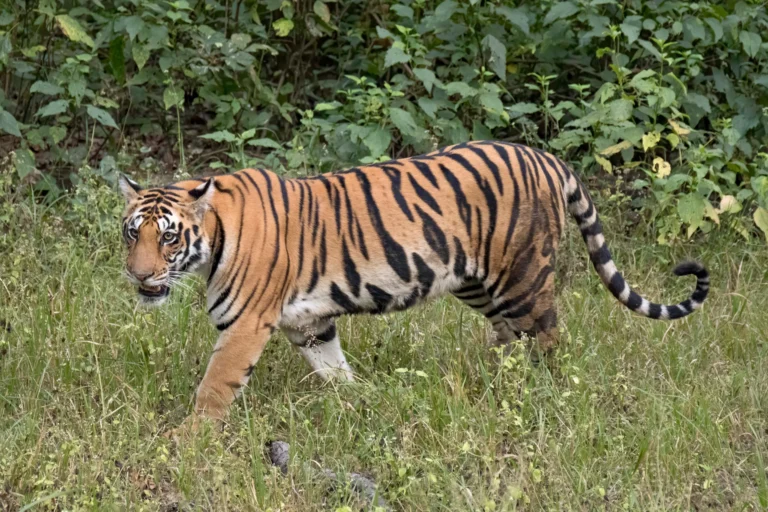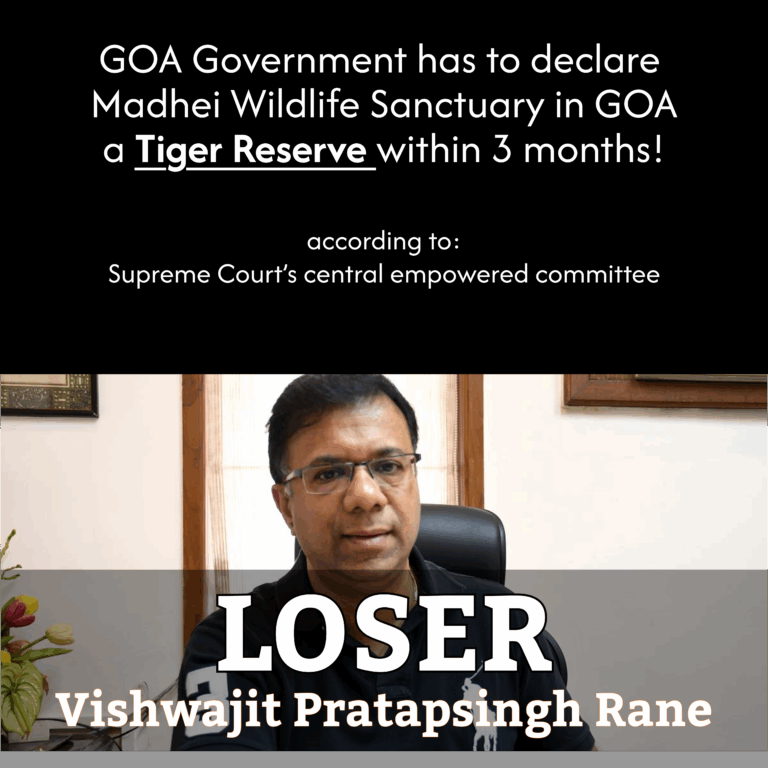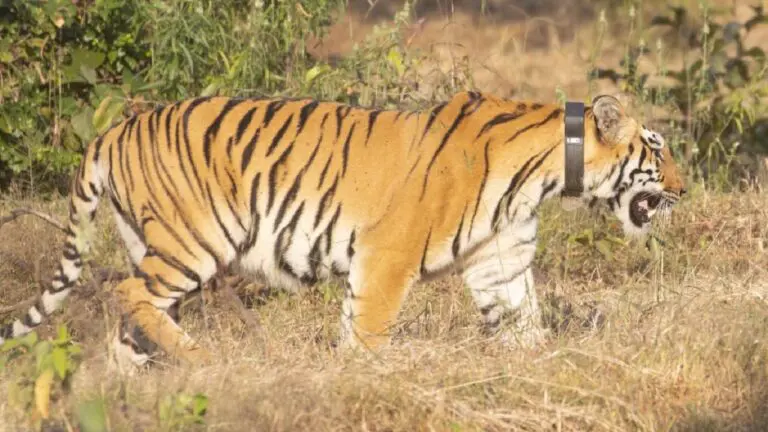
The debate over Goa’s potential tiger reserve has entered a decisive stage. On October 16, the Central Empowered Committee (CEC) began its two-day field visit to Goa—a step reported by Herald Goa. The committee, appointed by India’s Supreme Court, will conduct on-site assessments at the Mhadei Wildlife Sanctuary and surrounding forest corridors. Its mission is to gather firsthand ecological data and verify whether the state government has complied with prior court directives. The outcome, expected by the end of October, will determine the long-term direction of tiger conservation in Goa.
Background to the case
The CEC’s visit follows a Supreme Court directive responding to an appeal by the Goa government against a 2023 order of the High Court of Bombay at Goa. The High Court had instructed the state to formally notify the Mhadei Wildlife Sanctuary and adjoining areas as a tiger reserve. That order was based on studies identifying the region as a vital corridor connecting the Sahyadri Tiger Reserve in Maharashtra and Bhimgad in Karnataka.
The state government maintains that creating an inviolate core zone could displace more than 100,000 residents and disrupt livelihoods. It argues that Goa’s tigers are not resident but transient, using Mhadei as a passage rather than a breeding ground. Conservation groups, including the Goa Foundation led by Dr Claude Alvares, dispute this view. They argue that the sanctuary’s prey density, forest cover, and water systems all support a functioning habitat capable of sustaining a stable population.
The role and mandate of the CEC
The CEC, chaired by C. P. Goyal with members Dr J. R. Bhatt and Sunil Limaye, is tasked with reviewing data, visiting proposed zones, and meeting local representatives. The team will study camera-trap evidence, evaluate the impact of human–wildlife interactions, and examine claims about relocation and compensation. Once the fieldwork concludes, hearings will be held in New Delhi before the committee’s report is submitted to the Supreme Court.
The final decision will rest with the Court, but the CEC’s report will provide the evidential foundation. It could guide future conservation policy, not only in Goa but across India’s fragmented Western Ghats landscape, where ecological continuity depends on coordination among state governments.
Balancing ecology and livelihoods
The Mhadei region covers over 200 square kilometres of dense tropical forest, watershed areas, and key biodiversity zones. Local communities depend on forest produce, small-scale agriculture, and eco-tourism. Declaring it a tiger reserve would introduce new regulations—zoning restrictions, land-use planning, and financial compensation programs. Environmentalists argue these are essential for long-term protection, while local groups worry about displacement and reduced access to forest resources.
The CEC must navigate this social and ecological tension carefully. Its report will likely address both habitat protection and livelihood security. India’s conservation history shows that relocation policies succeed only when compensation is timely, transparent, and community-led. Where governments fail to plan transitions, resentment builds and poaching pressures rise.
Political tension and transparency
The tiger reserve debate reflects a broader governance challenge. For years, Goa’s environmental decisions have been shaped by overlapping interests—real estate development, mining, infrastructure, and politics. Official hesitation over the reserve has deepened public suspicion that delays are not due to scientific caution but to political pressure. Such inertia has become part of India’s conservation routine, a form of political failure and corruption that hides behind bureaucracy rather than open refusal.
The CEC’s investigation comes at a moment when environmental governance in Goa faces scrutiny from both citizens and courts. Allegations of suppressed reports, undercounted wildlife sightings, and administrative silence have undermined trust. Whether the committee can obtain full access to records and conduct independent verification will determine the credibility of its report.
What happens next
Once the CEC submits its findings, the Supreme Court will weigh them alongside submissions from the Goa government, the Goa Foundation, and the National Tiger Conservation Authority. The Court’s eventual decision may either reinforce or overturn the High Court’s 2023 directive. Should the reserve be approved, the state will need to outline a phased plan covering relocation, eco-compensation, and anti-poaching operations.
Beyond Goa, the case highlights the increasing role of the judiciary in enforcing conservation policy. The CEC represents both an investigative and corrective mechanism—a means to hold states accountable when political interests obstruct ecological mandates. Its findings could set precedents for how India reconciles biodiversity protection with population pressures and development goals.
Waiting for clarity
Goa’s forests remain at a fragile crossroads. Camera traps have confirmed tiger presence, but uncertainty continues to cloud the region’s status as a viable breeding ground. The CEC’s visit signals renewed attention, but lasting progress will depend on political courage after the report is filed.
For now, all sides—government, conservationists, and local communities—wait for the Supreme Court’s next hearing in November. Whether the Mhadei forests emerge as India’s newest tiger reserve or remain an unresolved debate will reveal much about how the country defines both justice and protection for its wild.
Source: Herald Goa, India
Photo: Herald Goa, India