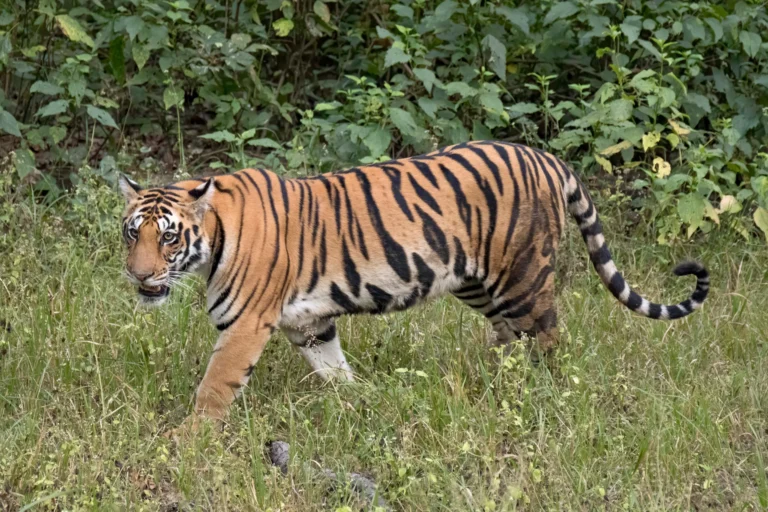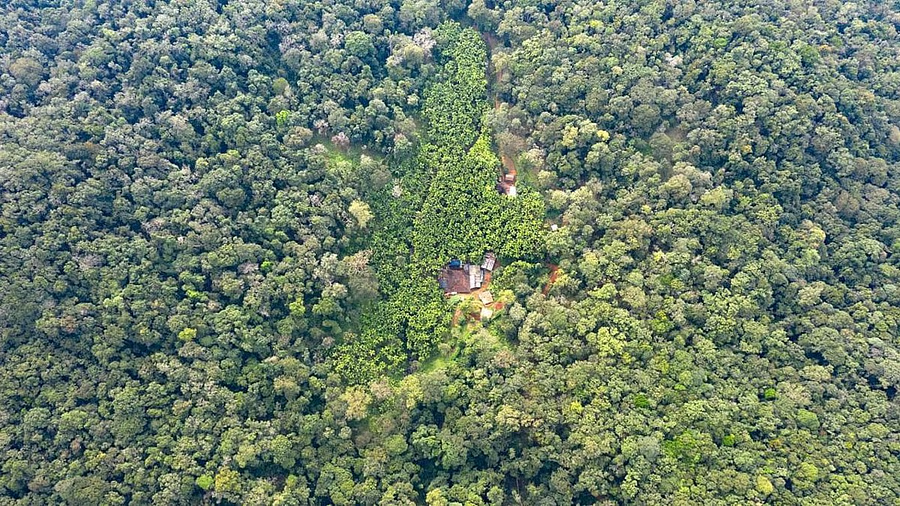
In the forests of Madhya Pradesh, where dawn safaris promise glimpses of the world’s most photographed wild tigers, another picture is emerging — one of quiet manipulation and systemic greed. The Bandhavgarh Tiger Reserve safari vehicles controversy has exposed how commercial ambition still trumps conservation law, despite years of regulations meant to prevent exactly that.
Where tigers share space with entitlement
The latest revelations before the Madhya Pradesh High Court, as reported by Indian news outlet The Jharkhan Story, have thrown a harsh light on the misuse of safari vehicles at Bandhavgarh. Petitioners allege that a resort inside the reserve, the Vindhya Vilas Wildlife Resort, was permitted to operate four private vehicles outside the state’s official roster system — a move that undermines every principle of regulated access. The roster, created under the Indian tiger authority (NTCA) guidelines, is supposed to ensure fairness, protect wildlife from excessive disturbance, and secure livelihoods for local guides and drivers.
But when certain operators bypass the queue, the law itself becomes ornamental. During hearings, the Court asked the Principal Secretary (Forests), the Chief Wildlife Warden, and the Field Director of Bandhavgarh to clarify how these vehicles were authorised. None could produce a convincing justification. In a reserve where each entry is meant to be logged, monitored, and limited, these “extra” vehicles were a breach of both protocol and trust.
Greed travels faster than justice
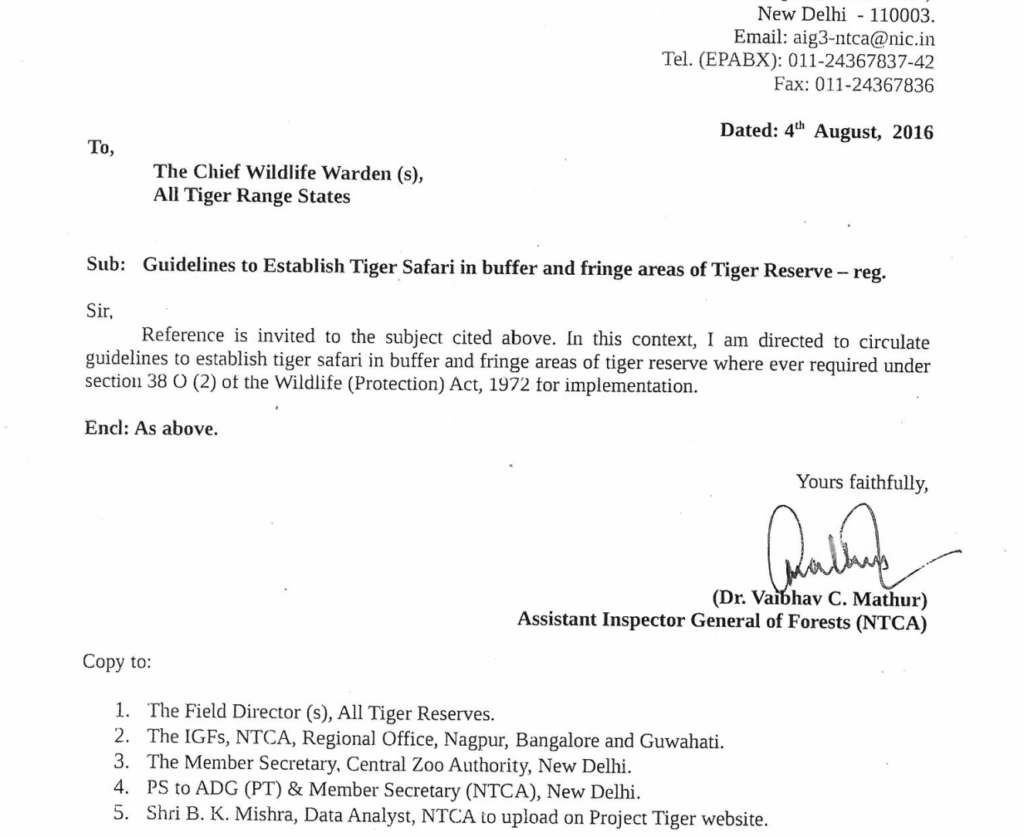
The NTCA’s safari guidelines exist to create balance — between ecology, economy, and ethics. Each tiger reserve, from Bandhavgarh to Ranthambore, has a cap on vehicles per zone and per time slot. Tala, Magadhi, and Khitauli — Bandhavgarh’s three iconic zones — are all managed through this strict roster, with fixed allocations to local operators. Yet, according to court documents, Bandhavgarh officials allowed an exemption that shattered the system’s credibility.
This is not a paperwork error; it’s a pattern. Across India, tourism in tiger reserves has become a contest of access and influence. Wealthier resorts advertise “exclusive” sightings, even though no one has the right to exclusivity inside a protected area. The problem is not the presence of vehicles — it’s the absence of restraint. As one local safari operator told The Jharkhand Story, “We wait for weeks for a single slot. Then we watch resort jeeps drive straight through the gate. What rules are we following if the forest is for sale?”
When silence becomes complicity
The case has implications far beyond Bandhavgarh. The division bench of the Madhya Pradesh High Court, hearing the matter on March 25, 2025, issued notices to the state’s forest department, the NTCA, and the resort in question. It asked for clear policy evidence justifying non-roster vehicles. So far, the response has been bureaucratic vagueness.
This indifference is not new. In tiger reserves, “temporary permissions” often become permanent privileges. The roster — meant to balance human presence with ecological tolerance — gets diluted by verbal orders and personal connections. In Bandhavgarh, this culture of exception undermines both wildlife protection and local livelihood. The vehicles controversy shows that even well-drafted guidelines can fail when enforcement becomes optional.
The NTCA designed its roster system precisely because unmanaged safari traffic degrades tiger habitats. Too many vehicles create noise, stress, and fragmentation in areas where tigers hunt and breed. Controlled movement, staggered timings, and randomised zone allocation were meant to prevent the tourism industry from colonising these forests. But greed has found its shortcuts.
When the law must defend itself
The judiciary’s intervention is now the only safeguard. The court’s scrutiny of vehicles at Bandhavgarh marks a critical test of whether tiger conservation laws still have authority over the commercial ecosystem that feeds off them. It is not just about one resort or four jeeps — it’s about whether rules apply equally to everyone.
The NTCA’s Standard Operating Procedure for Sustainable Tourism in Tiger Reserves explicitly mandates that all vehicles enter only under the authorised roster, with electronic ticketing, verified guides, and capped daily numbers. Violations are meant to trigger penalties, suspension, or loss of licence. Yet, in practice, enforcement is timid. When tourism revenues and political connections intertwine, inspectors hesitate, and the forest becomes negotiable terrain.
As outlined in Conservation Practices, real conservation depends not on paperwork but on courage — the courage to implement unpopular decisions. Laws alone don’t protect tigers; enforcement does.
The fragile future of ethical wildlife tourism
Bandhavgarh’s vehicles controversy should serve as a national reckoning. Wildlife tourism has always balanced on the edge between curiosity and exploitation. The industry sells closeness — the promise of seeing a tiger within arm’s reach. But every extra vehicle crossing the threshold steals space, silence, and safety from the animal itself.
In 2010, India’s Supreme Court temporarily banned tourism in tiger core zones until guidelines were reformed. The decision was criticised as anti-tourism, yet it led to the very roster system now being violated. Without firm enforcement, we are back where we started — with forests that serve as playgrounds for privilege.
Transparency is the first casualty. Locals, once promised equal opportunity through the roster, are pushed aside as resorts accumulate influence. Conservationists warn that unchecked vehicles will degrade fragile tiger landscapes already pressured by roads, railways, and encroachments. The NTCA’s own 2022 status report recorded a decline in tiger occupancy in central Indian reserves, including parts of Madhya Pradesh. Bandhavgarh’s case fits the pattern: systemic failure disguised as technical oversight.
When greed meets governance
If the High Court orders a full audit of vehicles operating in Bandhavgarh, it could reset standards for every tiger reserve in India. But legal action must be followed by transparency — public disclosure of all safari rosters, real-time digital monitoring of entries, and penalties for resorts that defy the system. The technology exists; what’s missing is willpower.
This case reveals an uncomfortable truth: the forest department often treats the rules it writes as suggestions. And when those responsible for protection bend them, poachers aren’t the only threat tigers face — profiteers are too.
An external review by the National Green Tribunal in 2023 highlighted that unregulated vehicles and construction near protected areas remain “one of the most persistent forms of ecological degradation” in India’s tiger landscapes. The Bandhavgarh case is just another chapter in that same story — where greed writes faster than governance edits.
Until that changes, no tiger reserve is truly safe from the hunger for profit that prowls just outside its gates.
Source: The Jharkhand Story, India
Photo: The Jharkhand Story, India