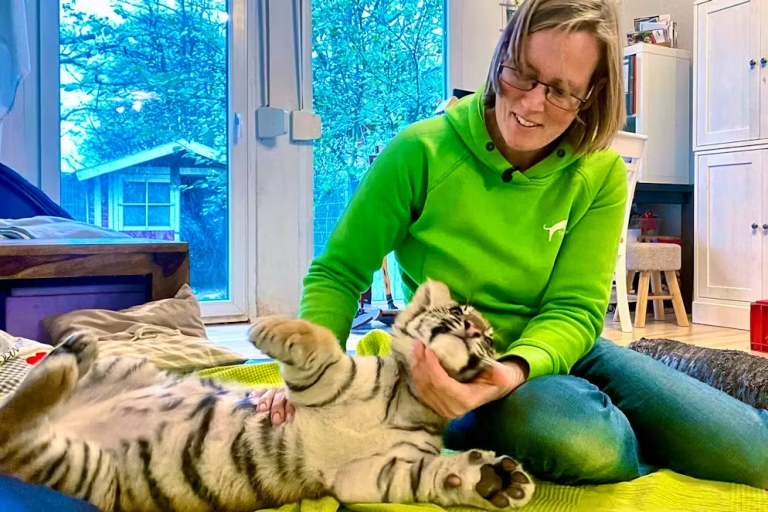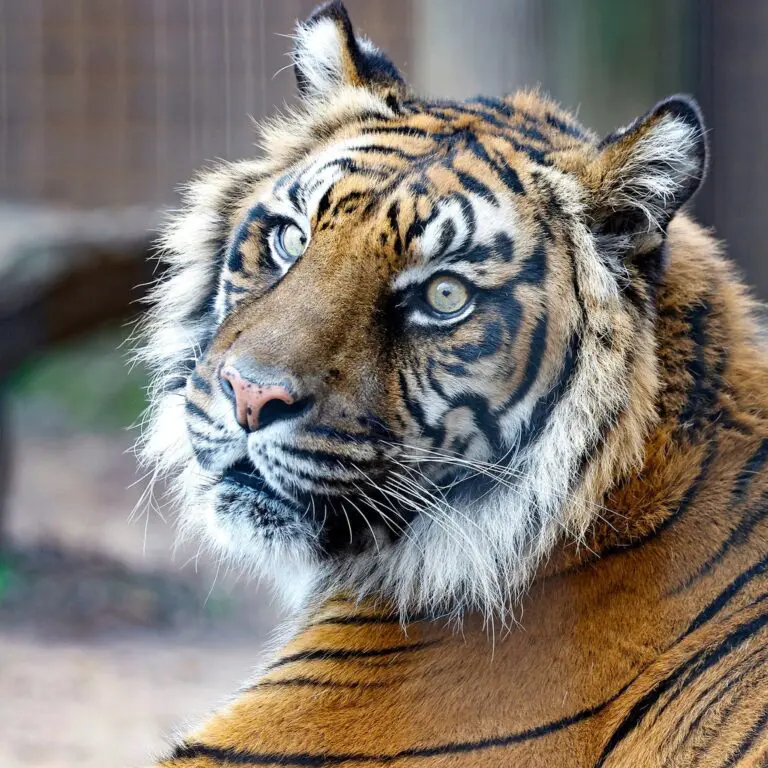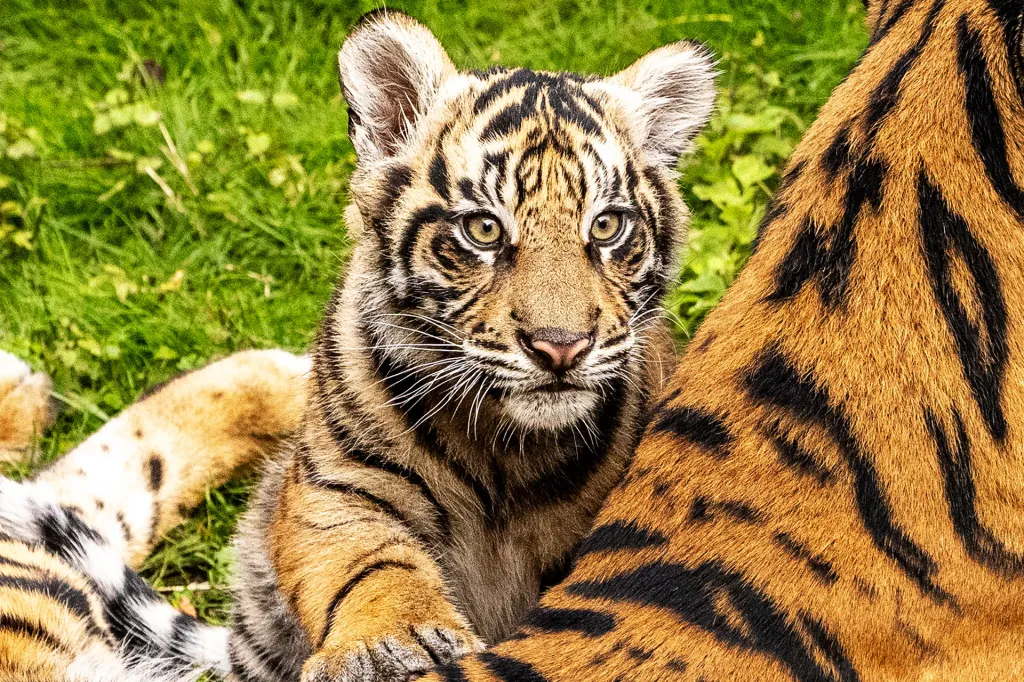
In late September, the Walt Disney Company celebrated the first birthday of a tiger cub named Bakso at its Animal Kingdom park in Florida. The event was bright, cheerful, and designed for children: toys wrapped in paper, colorful signage, keepers smiling for cameras. Bakso, a Sumatran tiger born in captivity, became a global marketing moment. The park’s team described the party as “enrichment,” a reward for good behavior. But what Disney calls enrichment is also entertainment.
The keyword Bakso now stands for a deeper contradiction—one that stretches from theme-park fences to global media streams. It is the story of how the world’s most influential entertainment company uses the image of a dying species to strengthen its brand.
The money behind the magic
Disney is not a struggling zoo. It is a corporate empire. According to its 2025 fiscal results, the company earned US $94.54 billion in total revenue and US $11.55 billion in net profit, a margin exceeding 12 percent. Its “Parks & Experiences” division alone generated US $8.9 billion in the second quarter of 2025, driven by theme-park attendance and merchandise sales. Those parks include Animal Kingdom—the same location where Bakso lives behind glass walls and camera grids. If Disney uses one year of its profits for tiger conservation, it can fund all NGO’s that work in tiger conservation for decades.
When a tiger’s birthday becomes part of a company’s media calendar, the boundary between conservation and commerce dissolves. Disney’s marketing teams know how easily spectacle converts into loyalty. With this in mind, Bakso is not just a tiger; he has become a narrative asset.
The illusion of care
Disney claims its parks “inspire and educate guests about wildlife and conservation.” The official line emphasizes love, protection, and awareness. But Bakso is a product of captivity, not conservation. Not a product of love but of forced sex. Breeding endangered species inside entertainment complexes has never helped restore wild populations. It has, however, helped corporations maintain emotional engagement with visitors.
The Sumatran tiger population in the wild is fewer than 400, probably even less. None of Disney’s tigers will ever join them. Never. They are bred, managed, and displayed to support an illusion of connection—a curated fantasy that replaces empathy with comfort. Inside this world, suffering becomes invisible and survival becomes a show.
Mission and vision: words vs practice
Disney’s mission statement promises “to entertain, inform and inspire people around the world through the power of unparalleled storytelling.” Its vision highlights “bringing joy and making a difference.” Bakso’s birthday does neither. It doesn’t inform—it distracts. It doesn’t inspire—it conditions.
Children who watch a tiger unwrapping presents learn that wild animals enjoy human rituals. They are told captivity is kindness, management is care, and confinement is safety. Bakso’s party was not about him, not about a tiger. It was about us. It was about training the next generation to see domination as affection.
This strategy fits perfectly within the corporate use of wildlife imagery that we explored in Media & Perception: The Tiger We Think We Know. There, the tiger becomes an advertising archetype—a symbol of strength, grace, and power—but always under human control. Disney, with its unmatched storytelling machinery, transforms that archetype into a consumable emotion.
The entertainment trap
At Animal Kingdom, Bakso is the first tiger born in seven years. His caretakers describe him as “curious” and “playful.” He receives “positive reinforcement training” to help him participate in medical checks and performances. The corporate messaging paints this as partnership between human and animal. In truth, it is control disguised as empathy.
Disney’s training regime is not unique; it follows the industry standard for display animals. But when the largest entertainment brand in the world normalizes this relationship, it defines cultural expectations for millions of children. Every smiling photo from Bakso’s party tells them captivity is a form of care.
The same company that made The Lion King—a story about respect for the wild—now monetizes a real lion’s cousin in a cage. That irony is not lost on conservationists who spend their careers trying to keep tigers in forests, not on stages.
Profits before principles
Disney’s vast revenue allows it to operate genuine conservation programs, and to its credit, it funds some. Yet its most visible animal content remains performative. A single viral photo of Bakso can generate more media reach than a year of field-conservation reports. Public relations wins where reality loses.
The problem is not that Disney shows animals—it is that it shows them stripped of context. A Sumatran tiger is a critically endangered apex predator, shaped by conflict, hunger, and solitude. The version living under Florida sunlights cannot represent that truth. By selling a soft, compliant version of nature, Disney reinforces a false idea: that the natural world exists to entertain us.
Childhood as a marketplace
Disney’s influence begins early. Bakso’s birthday video ran across Disney’s media channels, including its children’s magazine and school outreach platforms. The coverage spoke of “care teams,” “celebrations,” and “beloved animals.” No mention of extinction, no reflection on the ethics of breeding wildlife for entertainment, nothing about palm oil and destruction, nothing about corruption. Children read it as good news.
This is how corporate storytelling becomes cultural programming. A child who grows up watching captive tigers perform “cute” behavior may later accept wildlife tourism, petting zoos, or private collections as harmless fun. The moral erosion starts with a smile.
The real cost of cute
Corporate ethics cannot depend on aesthetic charm. Bakso was born into captivity because spectacle sells. And tigers sell too. Without tigers, zoos are just less interesting. The party was content creation. The “positive reinforcement” was compliance. And the result was another global media wave celebrating control as compassion.
Meanwhile, real Sumatran tigers continue to vanish from Sumatra’s shrinking forests, victims of logging, palm oil, angry villagers, snaring, and illegal trade. None of Disney’s billions flowed to stop that. The contrast between profit and purpose exposes the hollow core of the celebration. When the company that defines modern childhood turns wildlife into props, inspiration becomes manipulation.
A moral appeal to the storytellers
Disney’s founders believed storytelling could change the world. That belief built an empire. But true storytelling carries responsibility. To inspire, one must also tell the truth. Bakso’s life could be a lesson in the fragility of nature, the urgency of protection, and the cost of indifference. Instead, it is reduced to a feel-good clip for shareholders and tourists.
If Disney truly lived its vision of “making a difference,” it would stop breeding tigers for display and start funding rewilding programs that restore them to nature. It would replace staged celebrations with education about coexistence, enforcement, and ethical tourism. There are so many beautiful stories to tell about that to children as well. But the difference between spectacle and stewardship lies in intention.
The company has the resources to model compassion, yet chooses convenience. Bakso deserves better. The world’s children deserve honesty.
Beyond the fence
Corporate storytelling shapes collective morality. When Disney dresses captivity as care, it normalizes exploitation as empathy. The next generation of park-goers will inherit that confusion unless the narrative changes.
The global audience that loves Disney does not want cruelty hidden under confetti. It wants integrity. It wants companies that can thrill children without lying to them. Bakso may never know what the word “wild” means, but the people who control his image do.
It’s time Disney stopped teaching the world that joy requires ownership. Real magic begins where control ends.
Source: Time for Kids, USA.
Photo: Walt Disney World, USA via Time for Kids, USA.