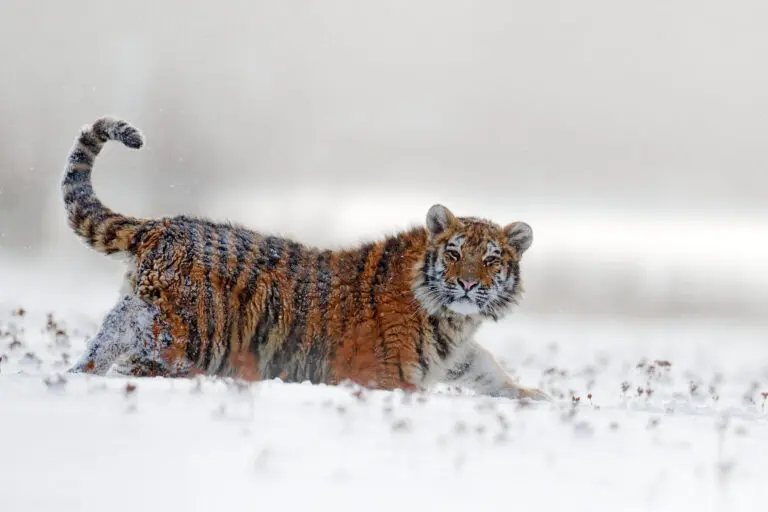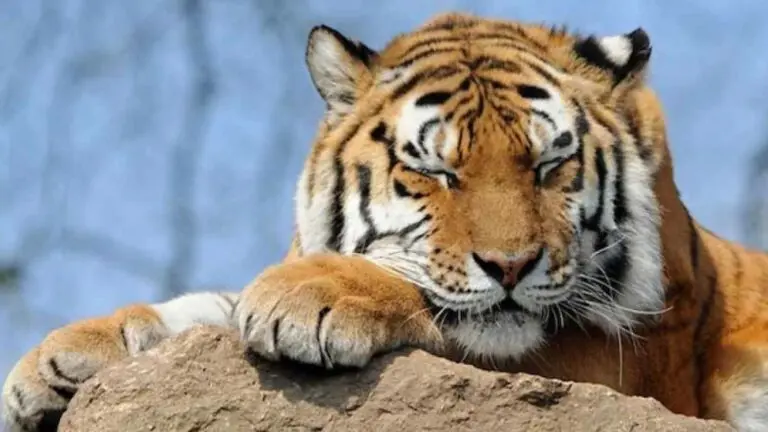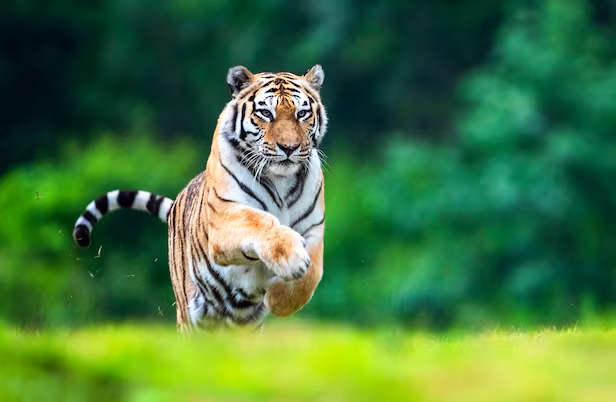
South Korea is mourning the death of Han-cheong, the oldest Amur tiger in the country. She died at twenty inside the Baekdu-daegan National Arboretum, a place often described as a sanctuary but functioning more like an open-air zoo. Officials from the Korea Arboreta and Gardens Institute announced her death on November 6, describing her as “a symbol of care.” That language hides a contradiction: the Baekdusan tigers have become national emblems of compassion, but their existence depends entirely on captivity.
Born at Seoul Grand Park in 2005, Han-cheong was moved to the Baekdu-daegan Arboretum in 2017. There, she spent eight years inside “Tiger Forest,” a controlled compound created to mimic nature. Visitors loved her calm behaviour; educators praised her as the model tiger for awareness videos. Yet her life, measured by scheduled feedings and observation routines, never resembled the wild Amur steppe. She lived—and died—behind fences that define what South Korea calls protection.
The paradox of Baekdusan
The country calls these animals “Baekdusan tigers,” invoking the sacred mountain on the northern border shared with China. The name carries power, evoking national pride and endurance. But Baekdusan has become less a landscape and more a brand. The Baekdusan project, as described by media outlet Chosun Biz from South Korea, turned into a media narrative: Korea’s contribution to tiger conservation. In reality, it represents the same paradox repeated across Asia—saving tigers by confining them.
Zoo officials insist these animals serve education. They claim visitors learn respect for wildlife. What they actually learn is that tigers exist to be watched. The language of awareness replaces the practice of freedom. Every new facility, every camera-friendly “forest,” extends a carefully designed illusion that captivity equals compassion. Baekdusan has become a mirror, reflecting our need to see power caged so that we feel safe.
Captivity rebranded as conservation
The arboretum director described Han-cheong’s death as “a symbolic reminder of how we manage endangered species.” That word—manage—is central to modern captivity. It allows institutions to justify total control as scientific necessity. Yet managed animals don’t rebuild ecosystems; they maintain our comfort. Five Baekdusan tigers remain: Uri, Mugung, Taebeom, Han, and Do. They are healthy, officials say, meaning they still serve their purpose as living heritage. But none will ever see Baekdusan itself.
Across Asia, zoos and state arboreta turn national symbols into marketing tools. South Korea’s polished facilities, Japan’s eco-parks, China’s panda diplomacy—all stem from the same instinct to replace wild life with curated experience. The practice has evolved into a kind of Baekdusan mythology: a story where the tiger is safe precisely because it is owned.
Han-cheong’s calm disposition made her perfect for public display. Children met her on school trips; officials posed beside her for promotional campaigns. She became both teacher and mascot. But captivity teaches obedience, not ecology. Behind every smiling visitor photo is an animal pacing the perimeter, tracing the shape of an invisible border she never crossed.
A gentle death and a louder silence
According to the arboretum, Han-cheong’s breathing became unstable on November 4. She died quietly two days later, at 12:22 a.m. A necropsy will determine her cause of death. The data collected will feed into research on elderly tigers in human care. Her body will yield knowledge, but no freedom. The arboretum will now open a memorial, inviting visitors to write messages of love. The gesture is sincere—and profoundly ironic.
Each message written at her memorial will echo through the same enclosure where five more Baekdusan tigers live their managed lives. They will hear footsteps, not the wind of the northern mountains that gave them their name. Visitors will call it respect; the tigers will know it as routine.
The legacy of captivity
At twenty, Han-cheong outlived most wild Amur tigers. Longevity in confinement is mistaken for success. It is not. Tigers that survive longer in cages do not strengthen their species—they validate our detachment. Baekdusan, the mythic mountain, stands for endurance. But the Baekdusan tigers endure only because they cannot escape.
True conservation begins where enclosure ends. South Korea’s grief is real, but its methods remain symbolic. Han-cheong’s death closes one chapter in a story that was never wild to begin with. Until tigers roam Baekdusan itself instead of its branded imitation, the nation’s love for them will remain decorative—a sentiment painted on glass.
Freedom, not management, is the measure of respect. Han-cheong’s final gift is the reminder that no tiger’s life should be spent explaining what wildness means.
Source: Chosun Biz, South Korea.
Photo: Chosun Biz, South Korea.