The recovery of the Turanian tiger has re-entered the political conversation in Central Asia, this time backed by regional cooperation rather than isolated ambition, as reported by Euronews. At a regional ecological summit in Astana (Kazakhstan), five countries aligned on shared environmental priorities, including biodiversity recovery, water security, and land degradation. Among these commitments sits a long-absent name: the Turanian tiger, once native to the floodplains of Central Asia and gone from the region for decades.
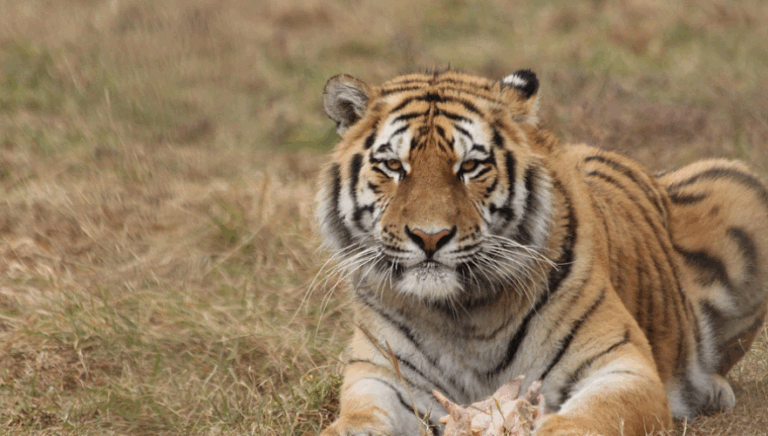
The announcement is measured, not triumphant. The target is modest at the start, with six animals expected to initiate the programme. After nearly eighty years without tigers in Kazakhstan, even this small step carries weight. Two Amur tigers have already been introduced into a designated reserve, forming the foundation of a broader plan that aims to build a viable population over time. But those two tigers have been born and raised in captivity, so not much can be expected from that.
Turanian Tiger And The Importance Of Landscape
Bringing back a tiger is not about placing animals into empty space. It is about rebuilding the conditions that allow them to survive and about political will. Historically, the Turanian tiger ranged along river systems such as the Syr Darya and Amu Darya, relying on dense riparian forests and stable prey populations. Those landscapes were fragmented, converted, and degraded over decades, ultimately removing the ecological foundation that sustained the species.
Current efforts acknowledge this reality more clearly than past attempts. The reserve receiving the Amur tigers is not just a holding site. It represents an effort to rebuild habitat, manage prey, and limit human pressure before expansion is considered. This matters. Without functioning corridors and connected landscapes, any attempt to bring back the Turanian tiger remains symbolic rather than sustainable.
The discussion around corridors is particularly relevant. Tigers do not survive in isolated patches. They require movement, gene flow, and space to disperse. If Central Asia is serious about bringing back the Turanian tiger, corridors will determine whether the programme stabilises or stalls.
Regional Cooperation As A Necessary Shift
The summit itself signals a shift in approach. Kazakhstan, Uzbekistan, Kyrgyzstan, Turkmenistan, and Tajikistan committed to a joint declaration on environmental solidarity, recognising that ecological challenges do not respect borders. Water scarcity, desertification, and biodiversity loss were identified as shared risks that require coordinated responses.
This alignment is not guaranteed to succeed, but it creates a framework that has been missing. Tigers, especially in historical Central Asian ranges, would inevitably cross political boundaries if populations recover. Without cooperation, protection breaks at the border. With it, there is at least a possibility of continuity.
Proposals for an international biodiversity fund and a United Nations-backed water organisation further reinforce this direction. Funding and governance will decide whether commitments translate into action. Declarations alone do not bring species back.
Early Signals From Other Species
Kazakhstan’s experience with the saiga antelope offers a cautiously positive reference point. Once reduced to critically low numbers, the population has rebounded significantly through sustained intervention and protection. While tigers present a far more complex challenge, the saiga recovery demonstrates that long-term commitment can reverse severe declines.
Other reintroduction efforts, such as the return of Przewalski’s horse, follow a similar pattern: gradual, monitored, and dependent on habitat readiness. These examples do not guarantee success for the Turanian tiger, but they show that recovery is possible when ecological conditions are prioritised over speed.
The Risk Of Moving Too Fast
There is a persistent temptation in conservation to focus on visible milestones: animals released, numbers announced, programmes launched. For large predators, this approach often leads to failure. Tigers placed into landscapes that cannot support them either disappear or come into conflict with humans.
The Central Asian plan appears aware of this risk, at least in its early stages. The emphasis remains on preparation rather than expansion. That restraint is important. A slow build, grounded in habitat recovery and prey stability, offers a better chance than rapid scaling driven by political timelines.
Beyond Symbolism
The return of the Turanian tiger, if it succeeds, would represent more than species recovery. It would signal that large-scale ecosystem recovery is still possible in regions heavily altered by human activity. But success will not be measured by the presence of a few animals in a reserve. It will be measured by whether those animals can move, reproduce, and survive without constant intervention.
For now, the programme sits at its earliest phase. Two tigers in a controlled environment are not a population. They are a starting point.
A Narrow Window
Central Asia’s environmental challenges remain severe. Water scarcity, land degradation, and climate pressure continue to reshape the region. These factors will influence every aspect of the Turanian tiger effort. Without sustained political commitment, funding, and enforcement, the window for recovery could close as quickly as it opened.
There is reason for cautious optimism in the alignment of regional priorities and the recognition that biodiversity loss carries long-term consequences. At the same time, history demands restraint in expectations. Tigers have already disappeared once from this landscape.
The question now is whether this coordinated approach, combined with a clear focus on habitat and corridors, can create conditions strong enough for the Turanian tiger to return not as a project, but as a species that no longer needs one.
Source: Euronews, International
Photo: Wikipedia