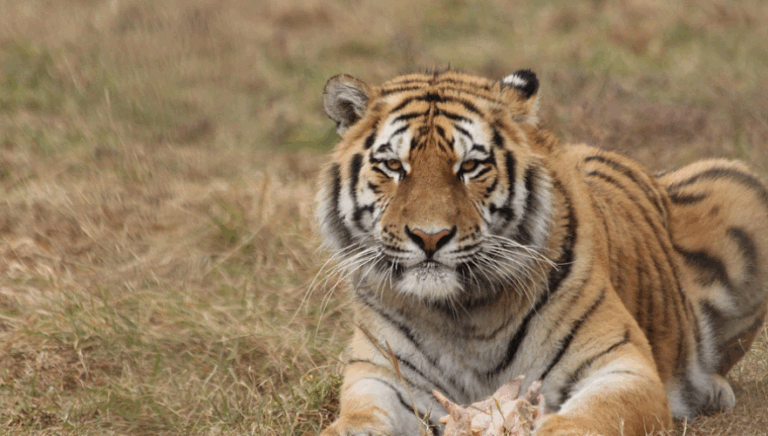
The joint census announced by Russia and China arrives at a moment when transboundary tiger conservation finally begins to catch up with ecological reality, as reported by TASS. The Amur tiger does not care about politics, treaties or borders; it cares about forest corridors, prey availability and the uninterrupted landscapes that once connected its northern range to the edges of Northeast Asia.
By choosing a joint census, both countries admit an old truth: fragmented monitoring cannot protect a wide-ranging predator whose survival depends on movement. The keyword joint census therefore signals more than a technical exercise. It reflects the first step toward international responsibility for a species that has survived poaching, logging, political indifference and the deeply flawed nationalism that has long separated ecological systems which were never separate to begin with.
A Shared Landscape, A Shared Obligation
Russia’s Justice Minister and Chair of the Supervisory Board of the Amur Tiger Center, Konstantin Chuychenko, emphasised that nature does not recognise state borders. It is a simple line, but in the Amur landscape it carries weight. Tigers cross between Russia’s Land of the Leopard National Park and China’s Northeast Tiger and Leopard National Park in search of prey and territory. When each country counts tigers separately using different methods, the picture becomes distorted and conservation decisions become unreliable.
The joint census aims to prevent this by standardising methodology, sharing monitoring data and creating a unified understanding of tiger movement.
This is not merely a scientific upgrade. It acknowledges how fragile the Amur tiger population remains, despite years of celebrated success stories. Rising numbers in Russia are threatened by logging, road expansion and poaching networks that operate across borders. In China, recovering habitat must still contend with infrastructure pressures that fragment dispersal routes. Without a shared system of monitoring, each country risks misreading trends and underestimating threats.
The Land Of Big Cats And Cross-Border Cooperation
A major step in cooperation was the creation, in 2024, of the cross-border reserve known as the Land of Big Cats. By linking protected areas on both sides of the border, Russia and China established one of the most significant international conservation zones for large carnivores. It is a rare example of two governments understanding that the only way to safeguard tigers and leopards is through united oversight rather than isolated action.
The joint census will operate within this expanded space. Camera traps, genetic sampling and coordinated fieldwork will allow researchers to determine how many tigers are moving between the countries, which routes they prefer and which areas carry the highest risk from human disturbance. These are critical insights for a species that occupies vast ranges and depends on stable connectivity.
Chuychenko also noted that the Amur Tiger Center joined the Global Tiger Forum in 2019 and this year became part of the International Big Cats Alliance. These alliances matter because Amur tiger conservation cannot be isolated from the global struggle for tiger survival. When India, Russia and other tiger-range countries share techniques, ecological data and anti-poaching strategies, the chances of protecting remaining populations increase.
But international collaboration only works when information is accurate—and that begins with a joint census that eliminates guesswork.
Why Joint Monitoring Matters Now
The keyword joint census may sound technical, but its implications are far-reaching. Scientific disagreements about numbers have long undermined tiger policy. Overestimates create the illusion of security. Underestimates justify poor protection. When nations rely on incomplete monitoring, poaching rings exploit gaps, infrastructure developers push boundaries, and politicians claim progress without evidence. A joint census removes these vulnerabilities by producing a unified baseline from which both countries must act.
Furthermore, tiger dispersal across northern Asia is changing. Climatic shifts, land-use pressures and prey fluctuations shape movement in ways that neither country can track alone. Tigers that cross between Russia and China face different management systems, different enforcement patterns and different logging pressures. The joint census therefore becomes a tool of early warning, allowing conservationists to detect shifts that could destabilise the entire population.
The most important outcome may not be the final number but the accountability that comes with it. Once both nations share responsibility for the same individuals, excuses about data inconsistency disappear. Joint monitoring becomes joint obligation, and neglect by either party becomes impossible to hide.
The combined landscape holds the potential for long-term recovery if both countries treat this collaboration not as a symbolic gesture but as a foundation for coordinated protection. The species has survived decades of pressure, but future resilience depends on decisions made now. That includes recognising the limitations of counting alone. For true security, habitat corridors must be reinforced, poaching networks dismantled and border policies shaped with ecology, not politics, at the forefront.
These core themes reflect the deeper lessons explored in long-standing analyses of counting systems and tiger data reliability, described through this internal link to tigeristics why numbers have more to hide than we see, reminding us that numbers only matter when they lead to action.
Source: TASS, Russia.
Photo: TASS, Russia.