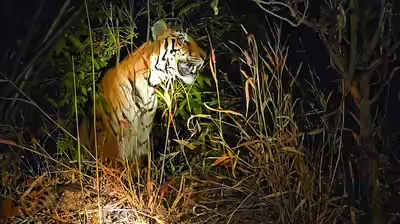
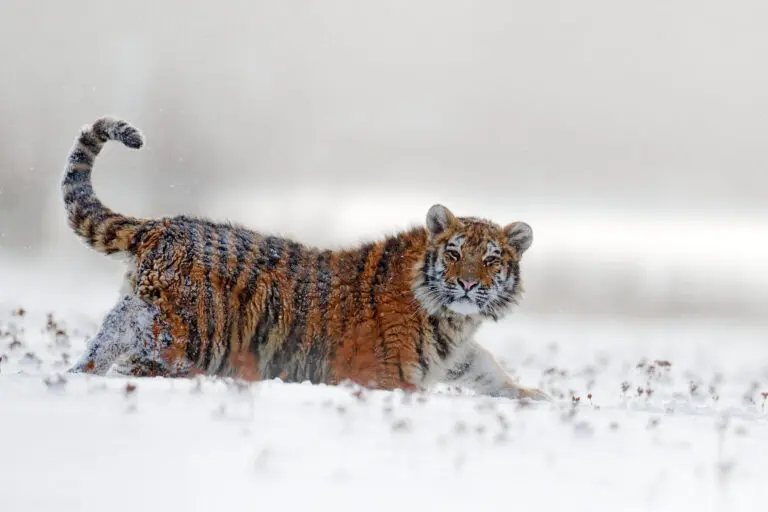
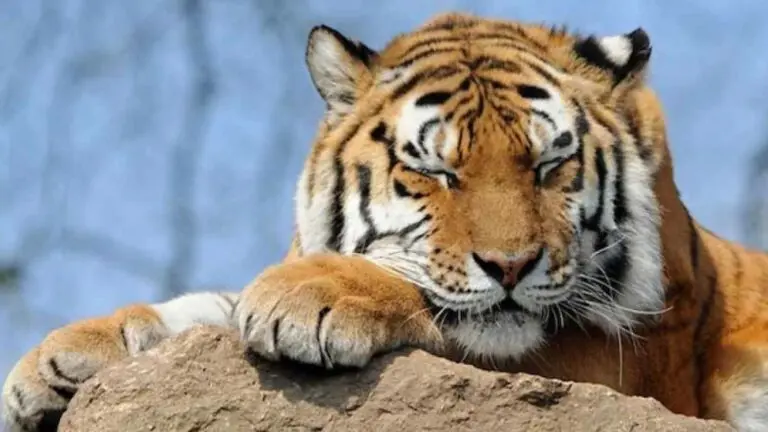
Is there room for Kazakh tigers? Kazakhstan is preparing to import three or four Amur tigers from Russia in 2026. The announcement, reported by KazTAG, sounded familiar and optimistic. Officials framed it as a milestone in restoring wildlife to its historic range. But anyone who remembers the short-lived transfer of Amur tigers to Iran more than a decade ago knows how fragile such ambitions can be. Those animals died in their cages—victims of bureaucratic neglect, not nature.
Lessons not learned
Kazakh tigers now face the same script: international headlines, official promises, and elaborate project diagrams. Two tigers already arrived from the Netherlands in 2024, living inside the Ili-Balkhash Reserve under constant surveillance. Authorities say their cubs, once born, will be released into the wild under satellite monitoring. But every word of that plan assumes conditions that do not yet exist—stable prey, strong enforcement, and real political will.
The Ili-Balkhash landscape remains a mosaic of livestock routes, poaching corridors, and unguarded wetlands. Forest cover is fragmented, enforcement weak, and economic pressure heavy. Releasing tigers into that mixture could create more danger than hope. Conservation is not achieved through press conferences; it’s built through discipline and long-term conservation practices.
A familiar pattern
The new imports from Russia will join the pair already confined near the visitor center of the reserve. Officials call this a “scientific and educational” phase, but the structure resembles captivity more than ecology. Kazakh tigers are being bred for symbolism—a national emblem to showcase progress—rather than for wilderness.
This approach mirrors how the Soviet and post-Soviet regions have often handled wildlife: showcase ambition, deliver enclosure. The 2010s experiment in Iran was hailed as a breakthrough until both tigers died within months, victims of infection and confusion over which agency was responsible for their care. Kazakhstan’s bureaucratic machinery is now trying the same experiment under a new logo.
Local scientists admit that poaching remains an unsolved problem for new Kazakh tigers. Hunting is profitable, enforcement uneven, and corruption endemic. It takes little imagination to see how quickly a released tiger could end up on the wrong side of a rifle. The government’s faith in “community engagement” may look good in presentations, but rural tolerance is fragile when livestock is at stake.
The gap between idea and environment
Supporters of the reintroduction argue that Kazakhstan is reviving its lost ecological heritage. But nature cannot be restored by decree. Restoring tigers requires an unbroken prey base, safe corridors, and credible patrols—elements that cost time and political patience. The country’s rapid development agenda rarely allows for either.
Even the enclosures built for Kazakh tigers reflect this tension. They serve as controlled habitats that satisfy technical requirements for reintroduction while delaying the harder question of when, or if, those animals can actually live free. This is not restoration of Kazakh tigers, it sure looks like a rehearsal.
Behind the optimism lies a quiet fear: that the tigers will never leave their fences, or worse, that they will—only to meet the fate of those sent to Iran. The pattern of well-funded announcements followed by quiet losses has become a hallmark of modern conservation diplomacy.
When politics meets publicity
Kazakhstan’s project is supported by the Ministry of Ecology and the Forestry Committee, with cooperation from Russia’s conservation authorities. Every statement emphasizes international partnership and “cross-border species recovery.” Yet these projects often function as diplomatic theatre—an exchange of animals to show goodwill rather than evidence of ecological readiness.
For Russia, sending Amur tigers abroad reinforces its role as a wildlife benefactor, softening its image after years of environmental criticism. For Kazakhstan, receiving them signals progress and modernization. But for the tigers themselves, it’s transit without destination.
Kazakh tigers are being drafted into politics, not nature. They will spend their early years under camera watch, their future depending on whether a minister needs another headline. The most dangerous predator they face is bureaucracy—an organism immune to extinction.
Hope, with conditions
This project could still evolve into genuine recovery if the government invests in habitat integrity before importation. That means strict anti-poaching enforcement, compensation systems for livestock loss, and transparency about results. Without those, every new arrival becomes another animal in a waiting room.
Real conservation in Central Asia will begin only when success is measured in wild births, not televised ceremonies. If Kazakhstan wants the world to believe in Kazakh tigers, it must prove that they can live—and die—on their own terms, not in the comfort of an enclosure.
For now, optimism is easy and evidence scarce. The next tigers from Russia deserve better than another bureaucratic obituary.
Source: KazTAG, Kazakhstan.
Photo: KazTAG, Kazakhstan.