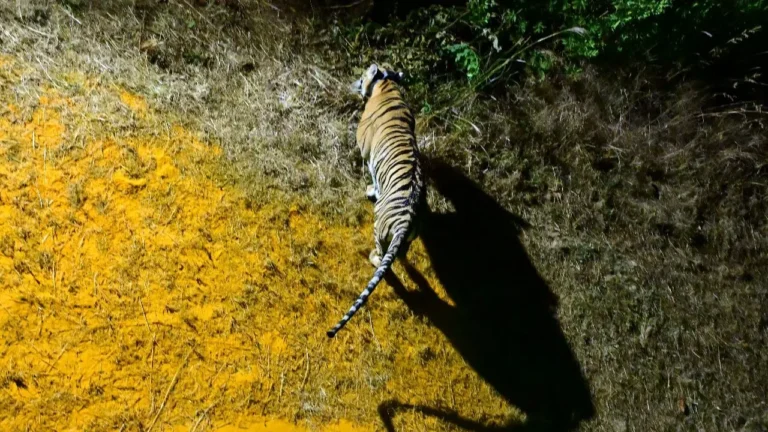
When tigress Zeenat stepped out of her soft enclosure and into the forests of Similipal Tiger Reserve late one November night, it marked a rare act of faith in India’s fragile tiger translocation programme. After a 40-hour journey from Maharashtra’s Tadoba-Andhari Tiger Reserve, the three-year-old tigress became the second animal relocated to Odisha under an interstate initiative to strengthen Similipal’s shrinking gene pool. Officials called it a “fresh infusion of diversity.” Conservationists called it a test of memory — because Odisha has been here before.
Zeenat
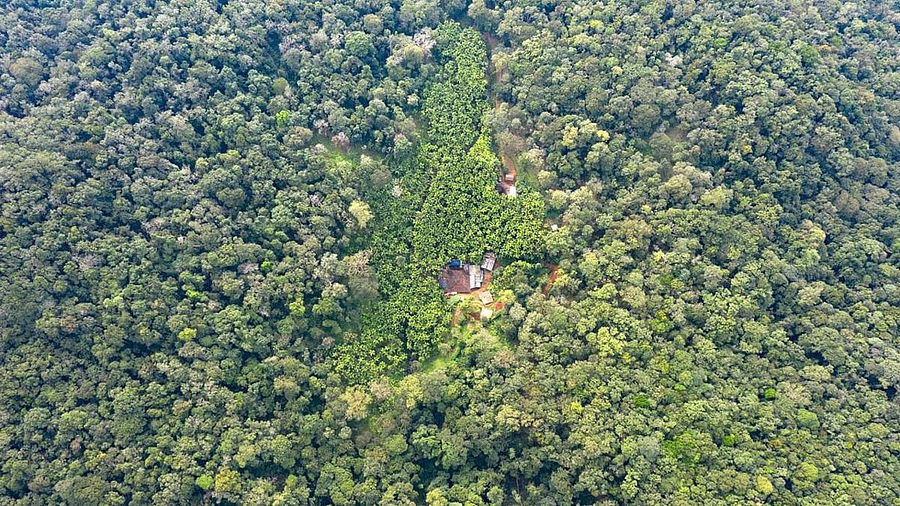
Similipal’s forests in Mayurbhanj are both a refuge and a warning. The reserve hosts 27 tigers, 13 of which are pseudo-melanistic — darker-coated due to inbreeding caused by isolation. The arrival of Zeenat, as reported by Odisha Bytes, following the earlier translocation of tigress Jamuna, is intended to restore genetic balance. But in the shadow of optimism looms the memory of failure. The last major relocation attempt — the 2018 Satkosia project — ended in tragedy: one tiger dead, another sent back after fatal conflict with villagers.
That experiment shattered public trust and exposed deep cracks in planning, communication, and protection.
Learning from failure
This time, officials claim to be better prepared. Zeenat and Jamuna have been radio-collared, monitored round-the-clock, and released into different divisions of the reserve to avoid competition. A detailed project report envisions six tigers arriving from central India in total. Odisha’s Principal Chief Conservator of Forests, Susanta Nanda, says the goal is “to infuse genetic diversity” and counter the effects of inbreeding. It sounds scientific and responsible — yet the cautionary lessons of Satkosia remain unresolved.
Translocation succeeds not with logistics, but with legitimacy. Communities living near release zones must be part of the decision, not just informed after the fact.
The science — and the silence
Zeenat’s relocation follows the Indian tiger authority (NTCA) guidelines on “source-to-sink” transfers between landscapes, but experts question whether Similipal’s protection system can sustain new tigers. Poaching, forest fires, and encroachment still haunt the park’s buffer zones. Bringing in new bloodlines without first fortifying ground protection risks repeating history. In tiger biology, genetic rescue means nothing if ecological threats persist. Every relocation should be paired with strengthened patrolling, trained response units, and transparent monitoring — not just press releases.
Hope meets hard ground
The release of Zeenat has stirred cautious optimism in Odisha. For a state whose earlier efforts collapsed amid protests and deaths, seeing two relocated tigresses moving freely is progress. Yet the stakes remain immense. Success will not be measured by headlines or hashtags, but by whether these animals breed safely in the wild. The conservation practices cornerstone has always stressed that translocation without preparation equals displacement. True conservation reform requires honesty about what failed, not just celebration when the cage opens.
For now, Zeenat walks under new skies, carrying the weight of both hope and history. Similipal’s future — and perhaps the credibility of India’s relocation strategy — walks with her.
Source: Odisha Bytes
Photo: Odisha Bytes