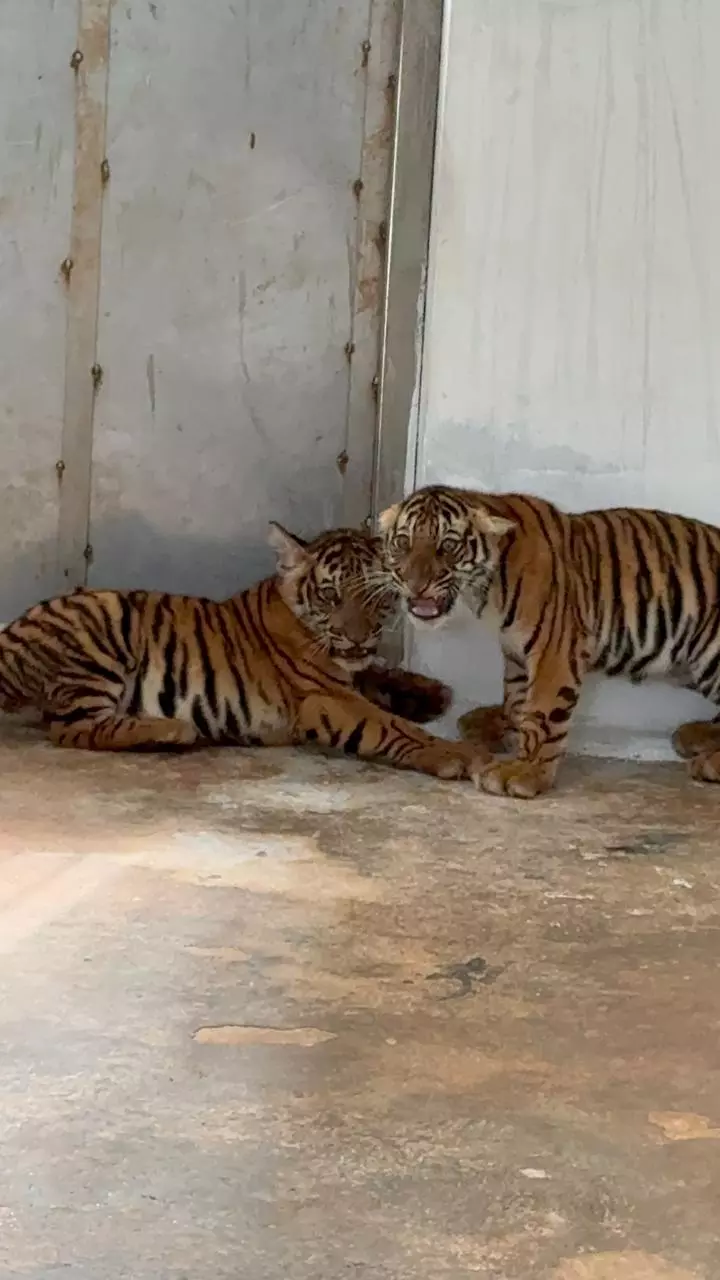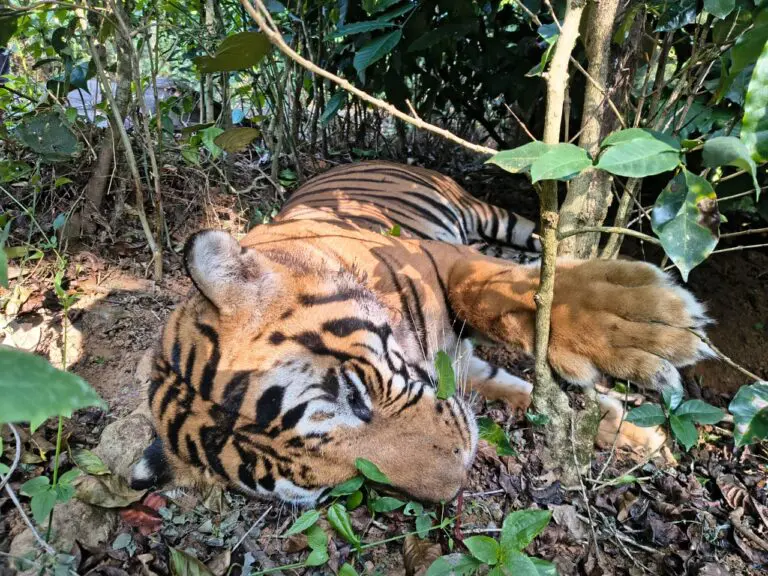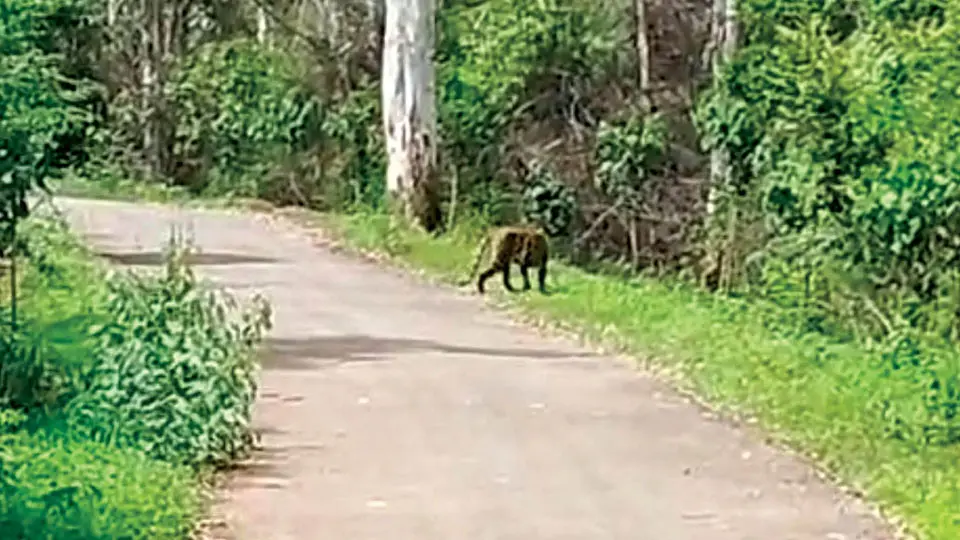
In the small belt west of Mysuru, near Yelwal, fear has resurfaced. Two tigers were seen moving through the fields on a quiet November evening, their presence spreading faster than the wind that carried the news. Within hours, forest officials launched a combing operation, deploying four elephants and more than fifty personnel. Villagers shut their doors early, their minds swinging between awe and anxiety. For many, this is not the first encounter. Barely two months ago, another tiger crossed Aloka Road near the same area, forcing the Forest Department to act. Now the pattern repeats itself, exposing how fragile coexistence truly is when borders blur between human and tiger space.
The Moving Edge of Habitat
The forests around Hunsur and Yelwal were once thick corridors connecting Bandipur, Nagarhole, and the Kakanakote ranges. Decades of land conversion have cut these routes into fragments of sugarcane and asphalt. Tigers still remember paths that no longer exist. Their return to Yelwal is not an invasion but a reminder — a correction to our selective memory. Each appearance near human habitation is a symptom of larger loss: shrinking cover, disturbed prey base, and vanishing silence.
When the State responds with combing operations, it’s a symptom too — a ritual of control over an animal that never asked to enter this maze of noise. The keyword Yelwal is not about geography anymore; it’s about how thin the boundary of the wild has become.
The Machinery of Response
The Forest Department has followed the familiar playbook. Four elephants — Sugreeva, Prashantha, Ajeya, and Eshwara — walk side by side with men in uniform, moving through fields where the tiger’s prints fade faster than the bureaucratic paperwork that will follow. Awareness programmes will be repeated, pamphlets printed, and guards will reassure villagers that “everything is under control.” But nothing about Yelwal is under control.
Each tiger sighting is handled as an emergency, not as part of a predictable ecological pattern. This mindset converts coexistence into crisis. As explored in our internal cornerstone on human-tiger conflicts, sustainable safety depends not on capture operations but on consistent monitoring, livestock management, and land-use planning that respects predator movement. Without that, every tiger near a village becomes a headline — and a potential casualty.
Lessons Unlearned
There is no record yet of attacks or livestock losses in Yelwal. The fear is anticipatory, a human instinct amplified by rumor and memory. Yet fear drives policy more than data. Villagers want guarantees, and departments want calm. Between them stands the tiger — silent, misread, and ultimately punished for wandering into a landscape that once belonged to it. The keyword Yelwal reminds us that conflict isn’t about aggression but about proximity.
Tigers don’t seek confrontation; they follow survival routes shaped by necessity. Real coexistence means preparing for such movement, not reacting to it with panic. As reported by Star of Mysore, the current combing operation stretches across Chikkadanahalli, Ratnahalli, and Kamanakoppalu — villages that sit like islands amid disrupted corridors. Without restoring these ecological bridges, future sightings are inevitable.
Toward Real Coexistence
Technology, community vigilance, and adaptive policy can change the cycle. Drones, infrared sensors, and AI-based patrols could detect movement early, allowing safe distance for both species. Compensation systems must become faster and transparent, rebuilding trust before rumors take root. Above all, the narrative must change: the tiger near Yelwal is not an intruder; it’s an indicator. It shows where human ambition has trespassed too far. Until the State treats these events as signals rather than threats, operations will continue to chase shadows while real conservation erodes. Yelwal, once a quiet suburb, now mirrors the national story — a land where progress eats its own guardians.
Source: Star of Mysore, India
Photo: Star of Mysore, India