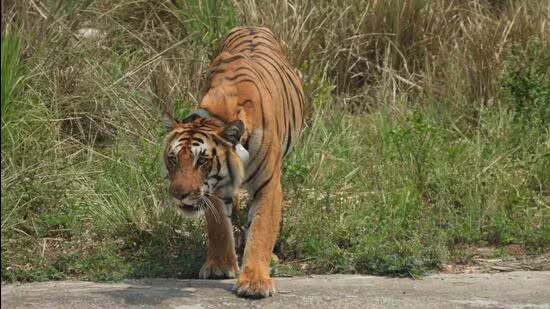
Translocation is not often used proactively in India, yet Uttarakhand is now preparing to shift five more tigers from Corbett Tiger Reserve to Rajaji National Park, a decision reported by Hindustan Times. Unlike so many states that wait until human–tiger conflict turns deadly, officials here are attempting to move ahead of the crisis. With tiger numbers rising inside Corbett, early intervention could prevent the kind of clashes that cost both human lives and tiger futures. This shift toward anticipatory action is rare—and overdue.
A Proactive Step In A Landscape Under Pressure
Officials acknowledge that Corbett’s 260 resident tigers represent one of the highest densities in India. High numbers often reflect strong protection, but they also increase pressure on limited territory. Instead of waiting for injuries, dispersal failures, or fatal encounters between tigers on the edges of the reserve, the department is using translocation to prevent stress before it becomes conflict. This marks a noteworthy change: using movement not as an emergency response but as planned management.
The first phase of translocation moved three tigresses and two male tigers. Monitoring teams reported that the animals adapted quickly to Rajaji’s terrain, and two of the tigresses have since given birth. These outcomes signal that translocation, when conducted deliberately and supported by prey availability, can create breathing space in crowded reserves while offering depleted habitats a genuine chance to recover.
The mention of translocation repeatedly underscores how this tool, often seen only in crisis, can serve a preventive role when planned with ecological considerations in mind.
Reducing Risk Before It Becomes Conflict
Corbett’s high density is both a strength and a stressor. Experts note that a tiger requires around 20 square kilometres to claim territory, yet the effective space inside Corbett for establishing stable ranges has shrunk to around 5 square kilometres. Such compression does not just cause male–male clashes; it pushes dispersing tigers into fringe habitats where humans, livestock, and competing pressures converge. By initiating the second phase of translocation before incidents escalate, Uttarakhand is doing what many states fail to do: act before someone is killed.
Rajaji, with just 51 tigers, has the biological capacity to receive new individuals. Its prey base has been improving, and earlier relocated tigers have settled, bred, and expanded their presence. Strengthening Rajaji is not just about numbers; it is about distributing ecological pressure across the landscape so that one reserve does not carry the entire burden of regional tiger survival.
Forest authorities plan to fit the translocated tigers with radio collars and track them closely, using camera traps and field teams to monitor adaptation and movement. This level of vigilance signals a willingness to refine translocation into a long-term management tool rather than a one-off relocation exercise.
The repeated reference to translocation underlines how this decision acknowledges landscape-wide responsibility, not just isolated reserve management.
A Shift Toward Landscape Thinking
India’s tiger conservation often breaks down outside core areas, but Uttarakhand’s new approach aligns with the realities of the Terai Arc. High tiger numbers inside one reserve and low numbers in another point not to success or failure individually but to an imbalance. Redistributing individuals can help both sides when combined with stronger corridor protection and reduced human pressure.
Corbett’s outsized role as a source population demands a strategy that ensures dispersing tigers do not end up in shrinking forest patches or conflict-prone villages. Meanwhile, Rajaji’s reduced numbers highlight a need for genetic infusion and territorial expansion. Translocation, used thoughtfully, addresses both issues at once.
While many challenges remain—habitat fragmentation, infrastructure expansion, and human disturbance—this effort signals a rare moment where action is being taken before crisis headlines force it. It is not perfect, but it is progress. And progress is essential if India wants its tiger landscapes to function as connected, viable ecosystems rather than isolated territories.
Uttarakhand is demonstrating that tiger management cannot be based on crisis alone. If the state continues to strengthen monitoring, improve corridors, and reduce pressure on forest edges, translocation can remain a proactive conservation tool rather than a last resort. The future of India’s tigers depends on these forward-looking decisions, especially in landscapes where success in one reserve should never become a burden on another.
This approach becomes even more promising when integrated with broader ecological measures, including improved habitat connectivity and scientifically guided relocation, ensuring that tiger populations remain balanced, resilient, and protected long before conflict erupts.
Source: Hindustan Times, India
Photo: Hindustan Times, India