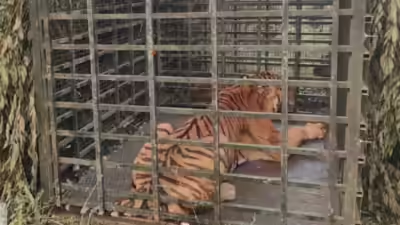
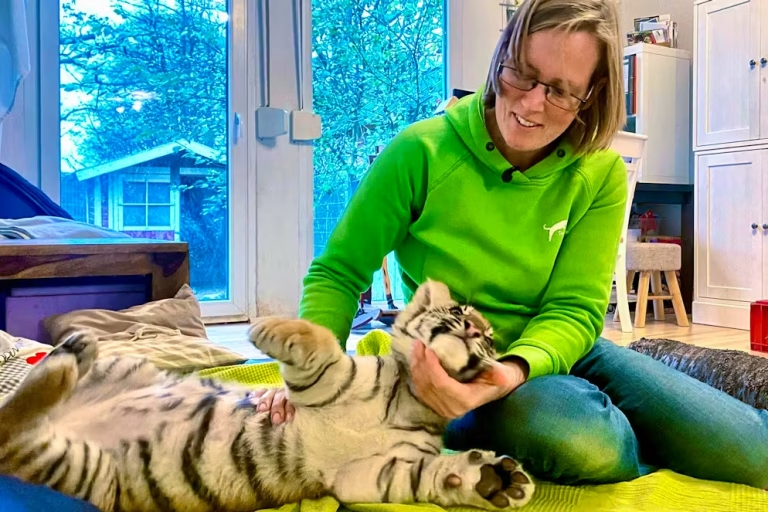
The Sri Venkateswara Zoological Park in Tirupati, better known as the Tirupati zoo, is in mourning, again. Sameer — the white tiger who had reigned as its most beloved resident for 14 years — is dead. His loss, as eported by Indian news outlet The Federal, though not unexpected, adds to a grim pattern of deaths that has shaken staff and exposed what India still refuses to acknowledge: captivity is not conservation.
When age becomes a sentence, not a stage
Sameer was brought from Hyderabad’s Nehru zoological park in 2010 as a five-year-old to Tirupati zoo. By 19, his kidneys had failed, his muscles had atrophied, and his life had narrowed to a night shelter where he survived on liquid meals. Visitors still saw his image on posters, long after he had vanished from public view. According to The Federal, veterinary reports confirmed nephrosis and age-related decline. In human terms, it was slow-motion suffering — medically managed but emotionally invisible.
These details matter because Sameer’s case is not isolated. In the past two years alone, the Tirupati zoo has lost three lions, a lioness, and a jaguar, many of them transferred from Hyderabad. Most were described as “old” or “ill,” but their simultaneous decline points to deeper systemic issues: chronic stress, poor enclosure design, inadequate medical innovation, poor food, and bureaucratic detachment disguised as empathy.
The illusion of care
Each death triggers an official statement, a post-mortem, and a promise to “review conditions.” But zoos rarely address the moral contradiction at their core. India’s Central Zoo Authority (CZA) maintains that such facilities play an educational role, yet most still operate as exhibition parks rather than sanctuaries. The Tirupati zoo, once promoted as a conservation hub, now stands as a cautionary tale of what happens when ageing animals outlive their purpose in a human-designed ecosystem.
Many Indian zoos, liek Tirupati zoo, lack proper geriatric care protocols — the very expertise needed for animals like Sameer, Sindhu, or Kusa, the 15-year-old jaguar who died last year after being found wedged between tree branches. Accidents, neglect, and delayed diagnoses have become normalized. These deaths are structural outcomes.
The captivity cost no one counts
In a country where wildlife funding is stretched thin, zoos continue to absorb disproportionate budgets. Meanwhile, genuine field projects — habitat restoration, anti-poaching patrols, and corridor protection — struggle for survival. As outlined in Zoos & Captivity, the system sustains itself by showcasing animals that were meant to roam free. Every rupee or whatever currency spent maintaining a cage is money not spent protecting a forest.
The Tirupati zoo exemplifies this contradiction. Officials claim each death was “natural,” yet nothing about captivity is natural. Chronic stress suppresses immune function, artificial lighting disrupts circadian cycles, and the absence of real hunting or movement leads to metabolic and psychological decline. When these animals finally die, the public mourns their “long lives” — but longevity in captivity is not success; it is confinement extended by technology.
What zoos call conservation is really containment
The world’s captive management model still measures success by headcount, not welfare. It rewards breeding records, not quality of life. Even so-called “exchange programmes” between parks — like the transfer of Sameer from Hyderabad — have become administrative rituals detached from ecological necessity. In practice, they perpetuate an industrial system of animal circulation. In the US they market at ‘survival program’s.
When questioned, officials point to compliance with CZA norms. But norms do not equal ethics. The repeated deaths at the Tirupati zoo expose a larger national failure to evolve from display-based management to genuine rehabilitation. There are few exit strategies for ageing animals. The result is decades of slow decline, hidden behind veterinary jargon and sentimental obituaries.
Toward an ethical endgame
There is still time to change course. Geriatric wildlife care, habitat simulation, and non-invasive observation can transform these institutions — if they are willing to prioritise welfare over ticket revenue. The Tirupati zoo could, in theory, become a pilot site for reform: phasing out display breeding, investing in open-range enclosures, and supporting conservation outside its gates.
But reform will require honesty first. India’s zoos must admit that their primary mission has drifted — from saving wildlife to managing decline. Until that shifts, every new enclosure built will remain a monument to our denial. And every tiger like Sameer will die twice: once in his cage, and once in the silence that follows.