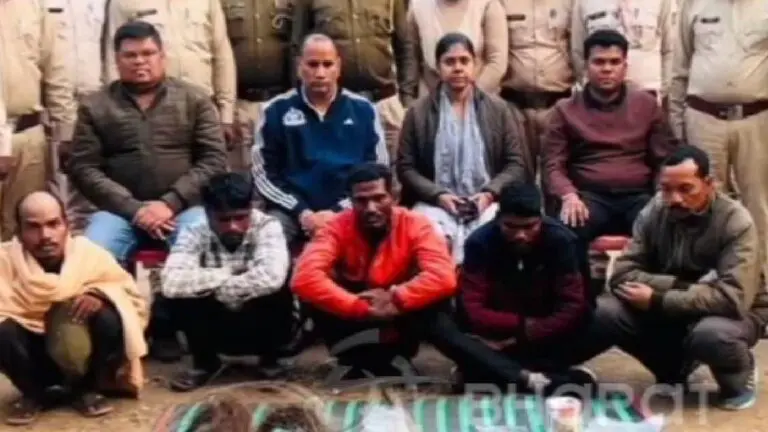
Tilottama Verma has retired after thirty-four years of service, as reported by Himachal Headlines. Her career reminds us that some of India’s most important battles are fought far from headlines, . In honouring Tilottama Verma, we indirectly honour the many unnamed officers whose work to protect wildlife, including threatened tigers, often unfolds unnoticed in remote forests, border zones and investigation rooms. Her legacy shows what happens when courage meets purpose, and why India’s wildlife defenders deserve far more recognition than they receive.
A Career Marked By Courage And Uncompromising Duty
Tilottama Verma began her policing career in Uttar Pradesh, where she quickly established a reputation for decisive field action. She became the first woman IPS officer in the state to receive the President’s Police Medal for Gallantry after a high-risk operation in Hathras where she confronted armed criminals to rescue two children. Actions like these are celebrated, but they also reflect the unseen risks officers take every day while protecting both people and wildlife.
Her tenure as DIG in the Central Bureau of Investigation demonstrated a fierce independence rarely seen within institutions where political pressure often shapes outcomes. Colleagues described her as neutral, methodical and unwilling to bow to influence. Yet even such high-profile work does not capture the full breadth of what her career later became.
A Defender Of Tigers And The Officers Who Protect Them
When Tilottama Verma served as Inspector General of the Wildlife Crime Control Bureau, she entered a domain where crimes are vast, networks complex and victories rarely acknowledged. Under her leadership, multiple trafficking chains were dismantled, including networks linked to tiger poaching and illegal cross-border trade. She earned international honours for this work, but the larger truth is more profound: for every celebrated officer, hundreds of field staff work without applause, often in dangerous, under-resourced conditions, attempting to stop poachers armed with money, weapons and political protection.
By championing wildlife protection, Tilottama Verma became a representative figure for all those officers whose names we may never learn. Rangers who track illegal routes at night. Intelligence teams who intercept wildlife parts before they move into global markets. Forest guards who patrol on foot with failing equipment because budgets come late or not at all. India’s tiger landscapes depend on these individuals, yet their stories evaporate while governments celebrate population numbers.
Her leadership amplified the idea that protecting tigers is not a ceremonial duty but a rigorous investigative commitment. Networks dismantled under her tenure prevented the deaths of animals whose lives would otherwise have been erased silently.
A Legacy Rooted In Service, Not Visibility
In her final role as Director General of Training in Uttar Pradesh, Tilottama Verma modernised investigative methods, introduced scientific tools and prioritised behavioural and gender sensitisation modules. These changes strengthened systems that often default to outdated practices. Her work shaped new officers who will one day stand on the frontlines of wildlife protection, whether in policing or environmental enforcement.
But her retirement also raises an uncomfortable question: why does a career like hers stand out so sharply? It should not be exceptional. It should be the norm. Officers who dismantle trafficking networks or protect corridors deserve sustained institutional support rather than episodic recognition. India’s wildlife frontline remains dangerously thin, and without empowered officers, tiger conservation is hollow rhetoric.
Honouring One Officer Means Honouring Them All
Tilottama Verma’s legacy embodies the best of public service: courage, consistency and moral clarity. But this moment should also honour the anonymous protectors who walk into forests each day with limited backup and overwhelming responsibility. They confront snares, poachers, traffickers and habitat destruction with far fewer resources than their adversaries. Their work shapes the survival of tiger populations more than any ceremony or celebration.
Her career reminds us that conservation relies on individuals who act even when no one is watching, and who protect species that cannot advocate for themselves. The future of tigers depends not on symbolic gestures but on systems that support these officers with training, equipment and policies rooted in effective practices. If India chooses to strengthen this foundation, the courage shown by Tilottama Verma and countless unnamed defenders will continue to ripple across landscapes where tigers still fight to exist.
Source: Himachal Headlines, India.
Photo: Himachal Headlines, India.