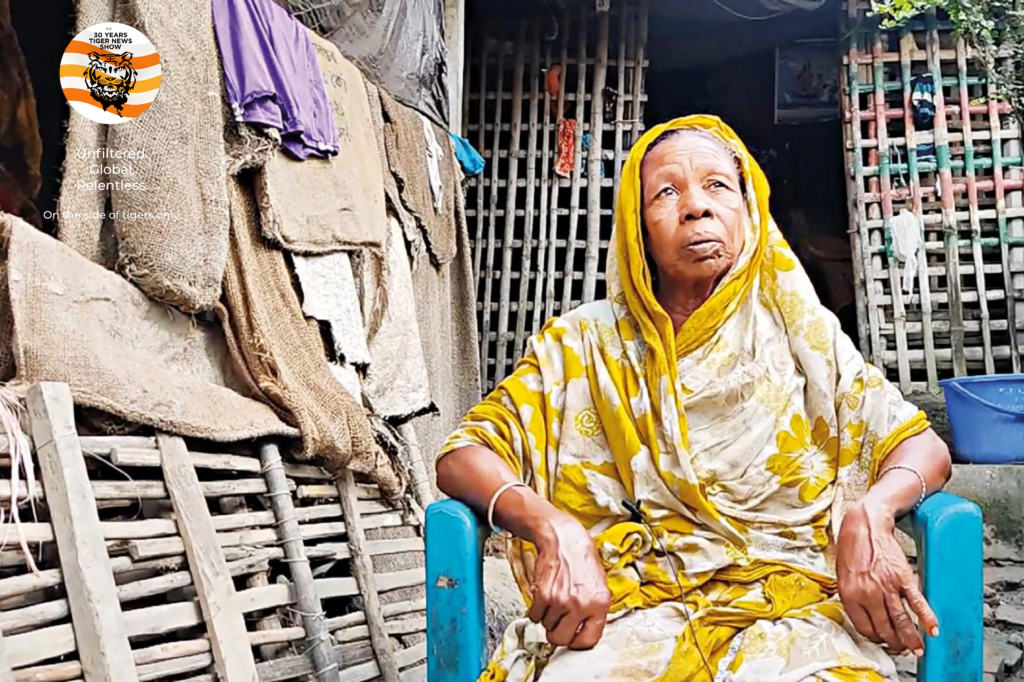
Tiger widows in the Sundarbans are not a new tragedy, and that is exactly the problem, as reported by The Daily Star. Around 2,000 women are estimated to have lost husbands to tigers across Bangladesh’s mangrove edge. In Koyra Upazila, there are around 750; in Shyamnagar, 1,165; and more are believed to live in Mongla, Morelganj, Sharankhola and Dakop. Their lives are shaped by grief, stigma, poverty and bureaucracy.
But the avoided question is uglier: why are men still entering tiger territory without a system that protects wives if they never return? The forest is protected because it is tiger habitat.
Tiger widows exist because men enter to fish, log or collect honey, often without permits, driven by poverty but still crossing into a landscape where tigers belong first. When they die, widows are punished by people, not by tigers. Communities brand them inauspicious or cursed, bar them from remarriage, exclude them from ceremonies and cut them off from labour networks and small loans. Neighbours may seize land or destroy homes.
The cruelty is human. The tiger is not responsible for the superstition that follows, nor for the bureaucracy that abandons women after men take risks in prohibited or restricted forest zones. That silence protects officials, traders and careless families while women carry the cost alone for years.
Tiger widows Need Responsibility Before Entry
Many husbands entered without official permission, so deaths go unreported or unrecognised. Without records, widows struggle to claim allowances, land rights or compensation. The bureaucracy behaves as if a man who entered illegally did not die officially, while the widow survives the consequences. If authorities allow forest-edge survival to depend on risky entry, they must require responsibility before permits are issued and support after deaths occur.
A man should not enter tiger country while leaving his wife legally and financially exposed to hunger, debt, stigma and land theft. That failure is social, legal and political at once.
Permits should carry obligations. Before entering the Sundarbans, men should register household details, emergency contacts, compensation coverage and commitments to dependents. Tiger widows should not have to beg officials to prove grief. Community attestation, local witnesses and forest records should be enough to trigger support. The state cannot pretend illegal entry is invisible while tolerating the poverty that drives it. Nor can families keep treating women as disposable after men take risks in tiger habitat and then never come home to face the household damage left behind.
Poverty Cannot Excuse Endless Incursion
The article argues that supporting widows helps conservation because unsupported families send sons back into the same dangerous forest. That is true. Poverty repeats the cycle: fathers die, sons replace them, daughters are married early, and illegal extraction continues. But support alone is not enough if entry remains poorly controlled. Tiger widows will keep appearing if Bangladesh treats protected tiger territory as a desperate workplace instead of a dangerous conservation landscape. Stronger permit systems, safer livelihood alternatives, community enforcement and blunt warnings are needed. Illegal entry endangers men, families and eventually tigers, because every death strengthens fear, retaliation and political pressure.
The proposed solutions matter: formal recognition of Bagh Bidhoba, a dedicated budget line, automatic inclusion in social protection, stigma reduction through imams and elders, and revenue-sharing from Sundarbans ecotourism. Development organisations have shown what is possible. Give Bangladesh Foundation has supported more than 35 widows with resources and training. Caritas Bangladesh, LEDARS and YouthNet Global have worked through vocational training, self-help groups, schools and campaigns against the “husband-eater” stigma. Tiger widows need that blueprint turned into state policy, not another sympathetic story repeated every few years while forest pressure continues.
Bangladesh should stop treating these women as charity cases after tragedy and start treating them as proof of failed coexistence planning. The tiger cannot be blamed for killing inside tiger habitat. The widow cannot be abandoned because her husband entered illegally. The husband’s risk cannot be romanticised as unavoidable courage. Real community engagement means permits, prevention, widow protection, livelihood alternatives and consequences for illegal entry. Until that exists, tiger widows will keep existing, and tigers will keep being blamed for defending the forest that was never ours.