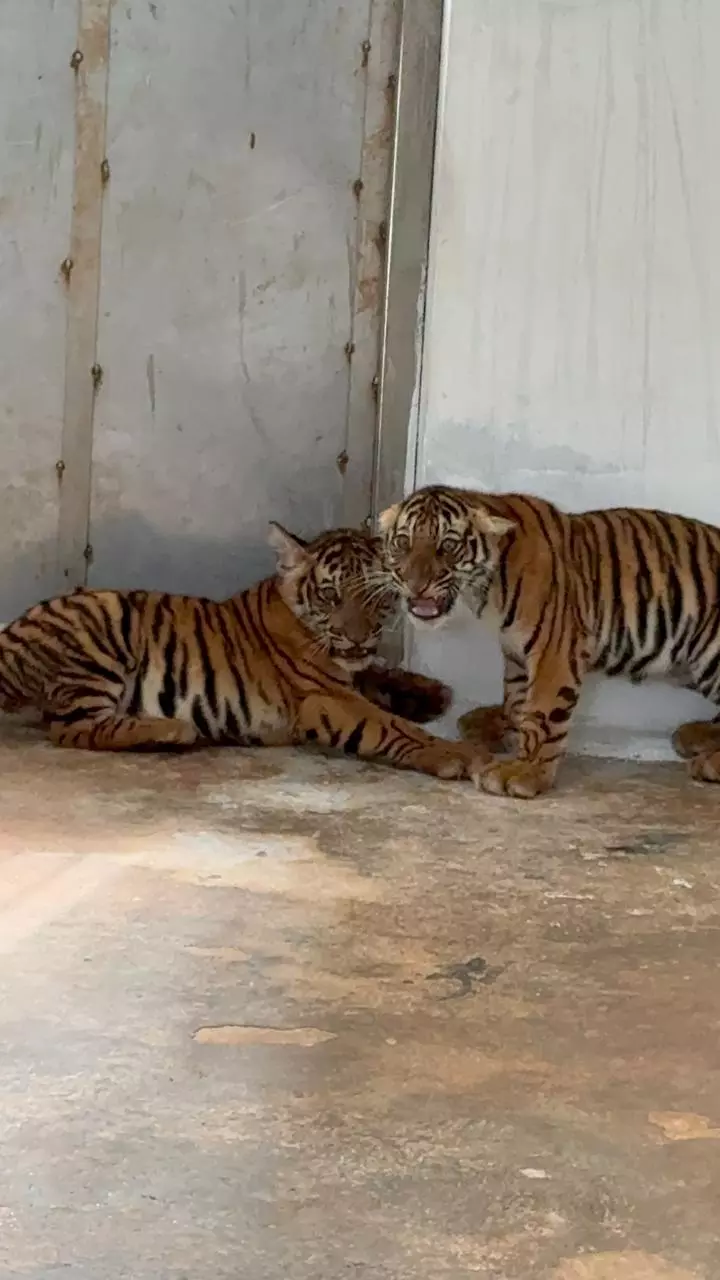
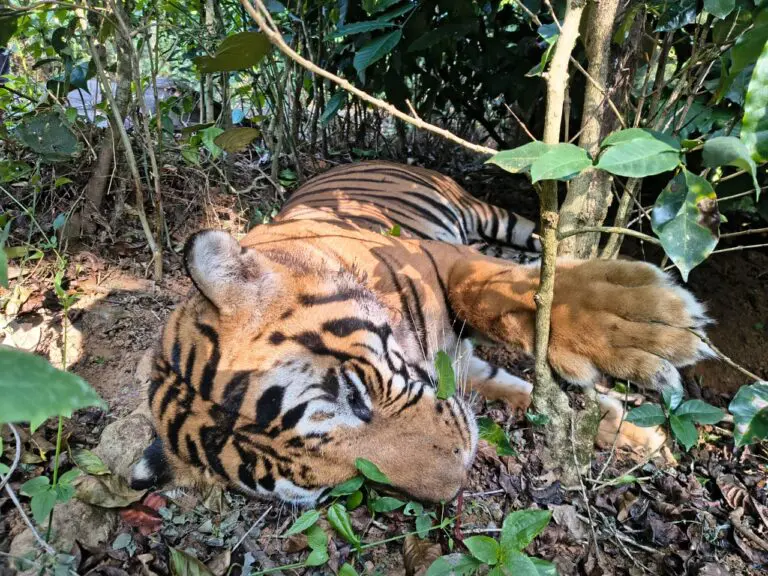
The tiger war in Mysuru is not about fangs and claws but about failure—bureaucratic, political, and moral. In the villages bordering Bandipur, fear has replaced coexistence. Every evening, families bolt doors, livestock stays tethered, and the forest edge becomes a frontline. Officials blame the animals; politicians promise safety; tigers take the punishment. When governance collapses, both species lose. Karnataka’s forest department has turned conflict into theatre, parading tranquilised cats for cameras instead of solving the cause: corruption, inexperience, and a system that confuses killing fear with creating safety.
Four deaths in twenty days and five tigers captured without proof. Panic dictated every move. DNA testing, stripe analysis, and NTCA procedures were ignored. Crowds stormed operations, officers posed for photos, and cubs were separated from mothers. What began as tragedy has become policy: tranquilise first, investigate later. Experts call it reckless; villagers call it justice. The tiger war now serves politics more than protection, a show of strength masking weakness. Karnataka’s government treats the forest as a campaign stage, where every roar must be silenced before the next election.
Politics Over Protection
The roots of this tiger war reach deep into politics. Bandipur’s management, once a conservation model, is paralysed by transfers and turf fights. Local MLAs exploit fear to secure votes, standing beside grieving families while blaming conservation laws. Every administrative reshuffle pushes trained officers out and brings loyalists in, deepening the political failure and corruption that defines India’s wildlife governance. Illegal resorts thrive, encroaching on buffer zones; tourist jeeps clog forest tracks. Conservation becomes performance art, directed by ministers and staged for headlines. Science retreats, leaving propaganda to fill the silence.
Fear, Profit, and Collateral Damage
Each misstep feeds the cycle. Villagers lose fathers and sons; tigers lose mothers and cubs. Fear becomes currency—profitable for politicians, lethal for wildlife. Bannerghatta’s rescue centres fill with bewildered cubs who will never return to the wild. Forest staff, often drawn from livestock departments, lack wildlife training. A tranquiliser dart mis-aimed can kill both animal and handler. Yet the government announces new task forces instead of reform. In this ongoing tiger war, truth dies quietly, replaced by reports written to defend decisions already made.
The Cost of Neglect
Villagers now live in suspended fear. Alcohol replaces sleep; empty fields replace harvests. Women wait for men who no longer return from dusk patrols. The state promises compensation, but money cannot replace peace. Meanwhile, inside the department, a quiet struggle continues between officers who still care and those who profit from inaction. Illegal resorts expand deeper into wildlife corridors. The once-celebrated Bandipur landscape, meant to symbolise coexistence, has become a battlefield of interests. This tiger war has nothing to do with nature’s cruelty—it is entirely man-made.
When Governance Hunts Itself
Every crisis exposes the same pattern: hurried responses, shifting blame, and forgotten promises. Karnataka’s forest ministry suspended safaris, issued circulars, and deployed extra guards—but fear remained. Paper reform is easier than field repair. The tiger war survives because it benefits everyone except the tiger. Fear keeps budgets high and accountability low. Until leadership replaces spectacle with science, every new capture is just another confession of failure. Real conservation begins when officials stop treating the forest as territory to govern and start treating it as life to protect.
The tiger war is now an idea that sustains itself—a system feeding on fear. Villagers speak of demons; officials speak of statistics. But the truth is simple: tigers are behaving like tigers, and humans are behaving like a species that has forgotten how to coexist. Bandipur’s story is not about one rogue animal; it is about a rogue bureaucracy. Until policy recognises that human safety and tiger freedom depend on the same forest, Karnataka will keep capturing symbols instead of solving causes. The price is already visible—in cages and coffins, as reported by The New Indian Express.
Source: The New Indian Express, india.
Photo: The New Indian Express, india.