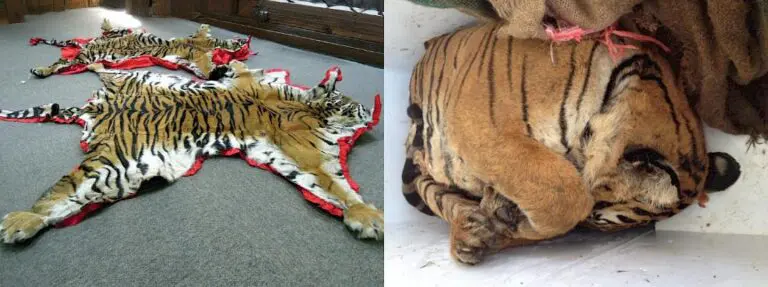
In the forests of Perak, the fight to protect the Malayan tiger has become a slow war against cruelty itself. Each patrol brings a reminder that the forest hides not only beauty, but endless suffering. Rangers of the Jahai tribe now form the backbone of Project Stampede, a WWF-Malaysia initiative launched in 2018 to stop poaching inside the Royal Belum State Park. What they find is not adventure — it is pain, rotting in silence under the trees.
The traps that never stop killing
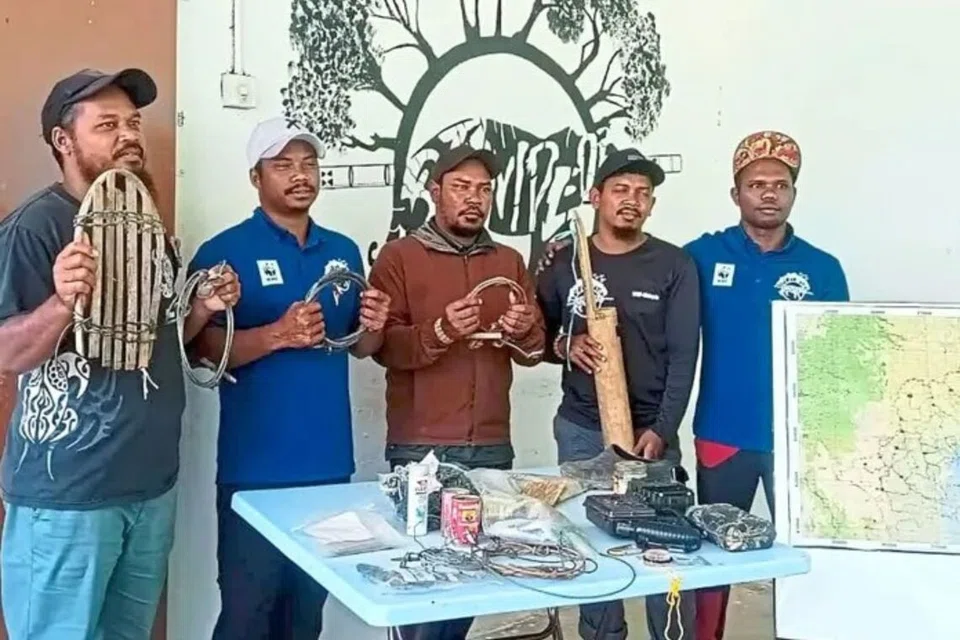
Ranger Yahya Charol has seen what few could bear to witness. He and his team collect wire snares twisted from brake cables, strung across tiger trails and salt licks. These crude traps tighten like death itself. Once caught, an animal’s struggle seals its fate — the wire cuts deeper, muscles tear, bones shatter, and the forest fills with suffering. Some animals chew off their own legs in panic. Most bleed to death where they fall.
His patrol once found a young sun bear limping in circles, the stump of its paw black with infection. Tigers fare no better. A snare does not know the difference between a deer and a predator — it only strangles. Yahya says they remove hundreds each year, but for every trap destroyed, another waits unseen, rusting and ready. The cycle of suffering continues, built by greed and neglect.
A frontline without weapons
Yahya and 150 fellow rangers patrol Royal Belum and Temenggor, facing poachers from Thailand, Myanmar, Vietnam, and Cambodia. Their only protection is training, patience, and a radio that often fails under the jungle canopy. Many of them earn barely enough to feed their families, yet they choose danger over comfort. “Our job is to protect, not to befriend poachers,” Yahya told reporters as reported by The Straits Times.
The patrols are unpredictable. Most encounters end without violence, but tension is constant. Poachers know the terrain, study the movements of wildlife, and strike fast. Some leave behind empty food packets, footprints, or cut branches — ghostly traces of their presence. Others vanish before the rangers can even call for help.
Despite the growth of ranger teams since 2018, the battle remains uneven. Poachers move faster than bureaucracy, while court cases crawl for years. A single tiger skin can fetch enough money to feed a village — and destroy a forest. The rangers see this suffering as a reflection of a world that values trophies over lives.
When conservation becomes courage
Project Stampede has reduced active snares in the region by nearly 90 percent, but no victory feels complete. Every step forward meets a new threat — political apathy, shrinking budgets, and a public that forgets too quickly. Rangers often confront the aftermath of suffering more than they prevent it: limping elephants, tigers missing claws, and deer that die days after rescue.
True conservation demands more than field patrols. It requires governments that punish trade networks, not just their weakest links. It demands an end to the quiet tolerance of illegal markets that sell tiger teeth beside trinkets. It also asks for recognition of the Indigenous rangers who risk their lives without insurance, protective gear, or steady contracts.
Inside the forest, the rangers speak of ghosts — animals they once tracked, now gone without a trace. The silence that replaces them is heavy, like a forest holding its breath. Each unhealed wound becomes another measure of suffering.
The forest remembers
Each removed snare, each freed animal, is a reminder that cruelty is not an accident — it is a design. The forests of Malaysia have been mapped, logged, and hunted for decades, and still, the wild refuses to die. Tigers continue to move through Royal Belum, fewer each year, their paths lined with human greed.
The rangers’ experiences echo the patterns revealed in snares and traps: tigers’ silent killers — the same cycle of cruelty repeated across Asia. Slow government response, lenient penalties, and public detachment fuel this quiet suffering. The snare is not just a weapon; it is a symbol of indifference — a sign that we still measure progress by what we take, not what we protect.
Yahya still walks those trails. He carries a notebook, not a gun. Each entry lists coordinates of destroyed traps, photos of footprints, and marks of another small victory. He does not celebrate; he records. He knows that every line he writes may one day become an obituary for what is lost.
What remains of the wild
Wildlife protection is not charity. It is repayment. The forests gave Malaysia clean air, rivers, and rain. In return, humans left scars and suffering. Tigers once ruled from Kelantan to Johor. Now, fewer than 150 remain in the entire country. That number is not a warning — it is a confession.
As long as profit outruns punishment, the poachers will come back. And until governments match the courage of rangers like Yahya Charol, the jungle will remain a battlefield where survival depends on luck and mercy.
The Malayan tiger will not vanish in a single day; it will disappear one trap at a time — silently, suffering, painfully, and always alone.
Source: The Straits Times, Malaysia.
Photo: The Straits Times, Malaysia.